The global AI surge has fundamentally shifted the epicenter of the semiconductor industry, elevating high-performance memory to the status of a critical strategic asset. While Nvidia has emerged as the uncontested titan of logic processing, SK hynix has cemented its position as the primary beneficiary within the specialized memory landscape. Yet, this meteoric rise has birthed a paradox: a trap of hyper-inflated expectations that now outweighs even record-breaking financial milestones. The current climate reveals a stark disconnect between tangible corporate growth and the relentless demands of market analysts.
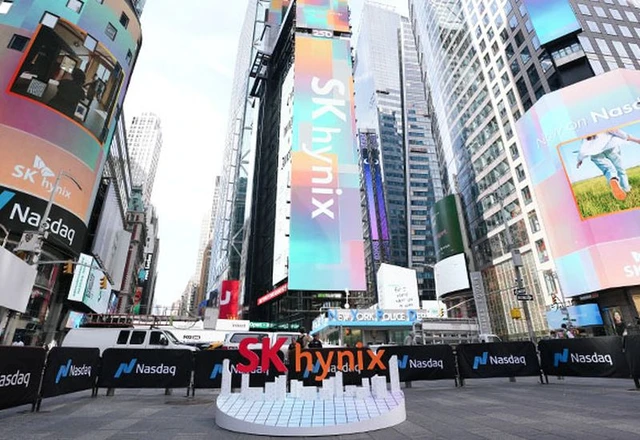
In the contemporary hierarchy of AI hardware, High Bandwidth Memory (HBM) serves as a critical linchpin determining the velocity of neural network training. SK hynix, having emerged as a primary provider of these solutions, is demonstrating growth trajectories that would be considered phenomenal under normal market conditions. For the second quarter, revenue reached $54.55 billion—a staggering 257% increase year-over-year. Operating profit saw an even more dramatic vertical ascent, surging 557% to hit $41.6 billion.
Despite these figures, the financial markets reacted with measured restraint. The crux of the issue lies in the LSEG SmartEstimates consensus forecasts, which were even more bullish; consequently, even record-breaking results failed to satisfy expectations. This highlights a peculiar dynamic within today's tech sector: when a company becomes the "poster child" for a technological trend, any result short of the superhuman is perceived as a shortfall.
The company’s technology stack continues to evolve. In Q2, SK hynix transitioned to mass shipments of HBM4—a memory standard delivering the increased density and data transfer speeds essential for modern Large Language Models (LLMs). Simultaneously, the company is scaling production of 321-layer NAND flash; by year-end, this storage type is expected to comprise roughly half of the total output across its South Korean facilities. This strategy allows for portfolio diversification, mitigating over-reliance on a single product line.
However, market tensions are escalating. The rivalry with Samsung Electronics has shifted into the realm of pricing strategies. There is prevailing sentiment that Samsung is employing more aggressive pricing, which may have capped SK hynix's operating profit and contributed to the discrepancy with analyst forecasts. Nevertheless, the company’s financial resilience remains robust, with free cash flow exceeding $60 billion by the end of the period.
A critical nuance emerges when analyzing second-quarter net profit, which grew more than thirteenfold to reach $64.5 billion. A closer inspection reveals that two-thirds of this sum were generated not by operational memory production, but via investment income—most likely stemming from the divestment of its stake in Kioxia. This bifurcation between "operational" and "investment" profit provides a clearer picture of business efficiency: while the company is generating massive sums, a portion of its success is driven by astute asset management rather than chip sales alone.
Looking ahead, SK hynix intends to maintain its leadership at any cost. Capital expenditures for the current year are projected at $27.5 billion. These funds are earmarked for the construction of new fabrication plants and the expansion of production capacity, signaling the company's conviction in the long-term demand for AI infrastructure.
 The Phenomenon of Chinese 96GB AI Accelerators