Modern metropolises are increasingly besieged by the "urban heat island" effect, a crisis exacerbated by traditional HVAC systems that vent waste heat back into the streets while consuming colossal amounts of energy. This drive for sustainable alternatives is prompting researchers to revisit fundamental physical processes known since antiquity: evaporative cooling. By leveraging this mechanism, it is possible to lower ambient temperatures without relying on power-hungry electronics or complex engineering grids. Integrating such principles into modern construction paves the way for a new generation of autonomous, self-cooling architectural spaces.
At its core, the concept of passive cooling relies on a fundamental law of physics: the absorption of thermal energy from the environment during the phase transition of water from liquid to gas. For millennia, this effect has been utilized in everyday life—most notably in porous clay vessels that kept beverages cool even under extreme heat. Today, engineers at the Graz University of Technology have set out to scale this natural mechanism, transforming it into a fully realized structural building element.
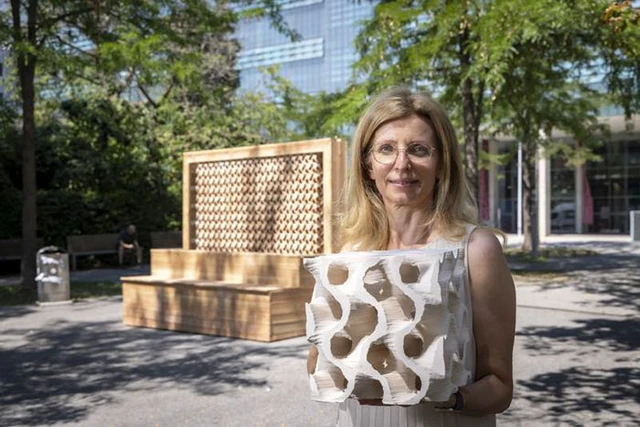
The result of their research is a system of self-cooling walls composed of ceramic modules created via additive manufacturing. Unlike traditional concrete or brick partitions, these structures function as active heat exchangers. A full-scale prototype wall covering four square meters is currently undergoing testing on the university campus, demonstrating the potential for complete autonomy from energy grids.
The technical complexity of the system is embedded within each module—a cube with a side length of approximately 23 centimeters. These are crafted using a specialized clay mixture subjected to relatively low-temperature firing. This process preserves the material's high porosity, which is critical for the capillary transport of water.
Particular attention has been paid to the internal geometry of the blocks. The engineers employed the concept of Triply Periodic Minimal Surfaces (TPMS). From a mathematical and design perspective, such structures maximize the surface area contact between the material and the air while minimizing the volume of raw materials used. This creates an intricate network of channels through which water rises via capillary action, ensuring uniform humidification across the entire wall surface.
To optimize the pore structure, the team implemented an unconventional bioengineering strategy: sawdust and fungal mycelium are integrated into the clay mixture. During preparation, the mycelium grows throughout the material, forming a dense web of organic fibers. Upon subsequent firing, these organic components burn away completely, leaving behind a complex system of micro- and macro-pores. This "skeleton" of voids significantly increases the evaporation rate and, consequently, the efficiency of heat dissipation. As a prospective enhancement, the team is considering the use of sediments from Lake Neusiedl, which would allow for the simultaneous ecological remediation of water bodies and the production of construction materials.
Practical trials conducted in an overheated attic yielded impressive results: the air temperature immediately adjacent to the wall surface dropped by nearly 7°C. The cooling effect extended into the rest of the room, although it diminished as the distance from the structure increased.
Despite its promise, the technology faces inherent physical constraints. The efficiency of evaporative cooling is directly dependent on relative humidity. The system operates at peak productivity in hot, dry climates where the rate of water evaporation is highest. In high-humidity environments, efficiency drops, making this solution ideal for specific geographic zones and building types—ranging from office centers and schools to public waiting areas.
Ultimately, this approach marks a shift from actively combating nature through energy-intensive air conditioning toward a synergy with physical processes. By leveraging 3D printing and biomaterials, ordinary clay is transformed into a high-tech tool for climate control, returning architecture to the principles of sustainability and natural equilibrium.
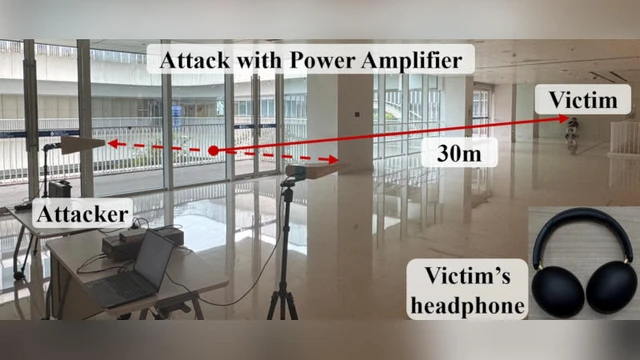 Through-Wall Radio-Acoustic Espionage