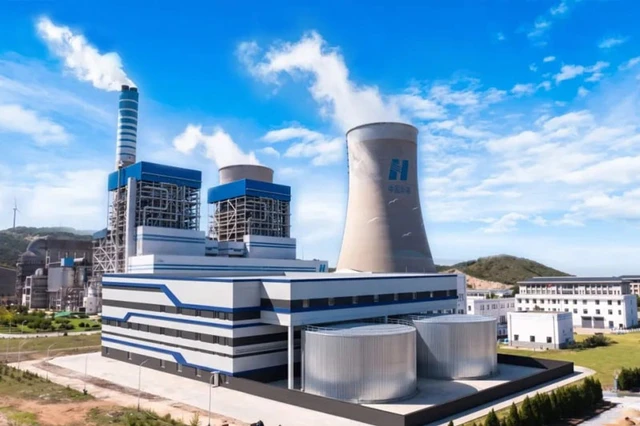
The global race for AI supremacy has evolved beyond a mere contest of algorithms and silicon. Today, the critical bottleneck is access to massive, stable power grids capable of sustaining gargantuan computing clusters. Confronted by technological constraints, China has pivoted toward a comprehensive expansion of nuclear energy—a strategy that positions the "peaceful atom" as the bedrock of digital sovereignty and long-term economic growth.
The current era of artificial intelligence evolution is placing demands on the energy sector that are virtually impossible to meet using traditional renewable sources alone. Cloud computing and the training of neural networks require more than just raw power; they demand unwavering stability and a seamless 24/7 energy supply. In this landscape, China is leveraging its legacy advantage—a formidable industrial base and a sophisticated power distribution network established during its initial industrial surge.
The scale of current construction is staggering: of the 58 new nuclear reactors currently being built worldwide, more than half are concentrated in a single country. Beijing is executing a multi-tiered strategy, simultaneously developing conventional nuclear power plants, Small Modular Reactors (SMRs), and experimental nuclear fusion installations. This approach allows the state not only to satiate the insatiable appetite of data centers but also to systematically reduce its carbon footprint while fortifying energy independence.
Energy consumption trends underscore the criticality of this trajectory. According to analytics from Wood Mackenzie, the power requirements of Chinese data centers could nearly quadruple by 2030, reaching 774 TWh annually. On a global scale, the trend is even more pronounced: while AI and data processing accounted for approximately 460 TWh in 2022, this figure could exceed 1,000 TWh by the end of 2026.
Particular emphasis is being placed on the development of Small Modular Reactors (SMRs). Unlike traditional nuclear plants, SMRs are characterized by their compactness and the potential for standardized factory production of components, which radically reduces both the timeline and the cost of commissioning. A prime example of this approach is the work of Junhe Atomic, which aims to bring its capacities online by 2031. From a strategic standpoint, the repurposing of legacy coal-fired power plants is pivotal: utilizing existing sites and grid infrastructure allows nuclear generation to be integrated into the energy system with minimal expenditure while preserving local employment.
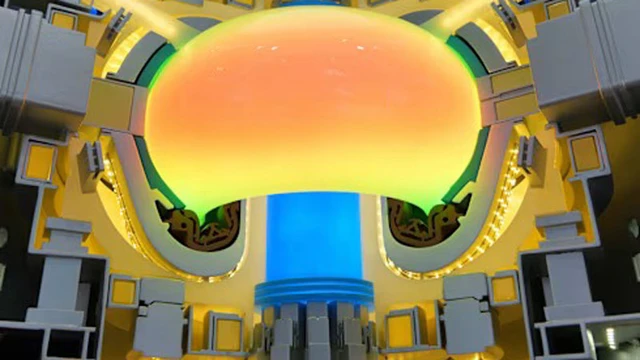
However, the most ambitious and technologically complex vector remains controlled nuclear fusion—the "Holy Grail" of energy, promising a virtually infinite source of clean power. China is aggressively developing its own experimental installations, attracting private capital and the expertise of specialists who have operated in Western laboratories.
One of the most promising avenues in this field is the development of Field-Reversed Configuration (FRC) reactors. This technology, which already underpins projects by companies such as Helion Energy, is now being actively advanced in China, notably by NovaFusionX. It is expected that the first net energy gain from a fusion reaction will be achieved by 2030.
Despite the optimism, a pragmatic lens suggests that full-scale industrial nuclear fusion plants will not emerge before 2050. Nevertheless, systemic investment in fundamental science and strategic state regulation are creating the conditions under which China could become the first nation to transform the theoretical physics of fusion into a tangible lever for economic dominance.
 Qualcomm’s New Standard for Mobile Performance