The global energy transition has encountered a fundamental bottleneck: the capacity of distribution grids to manage the inherent volatility of power generation. While the world has leaned heavily on lithium-ion solutions, these prove economically and technically untenable when scaled to the level of entire cities and regions. China is now pivoting toward the implementation of radical engineering paradigms that fuse thermodynamics with advanced materials science. The Ruitan project has emerged as a primary testing ground for the synergy between molten salts and supercritical carbon dioxide.
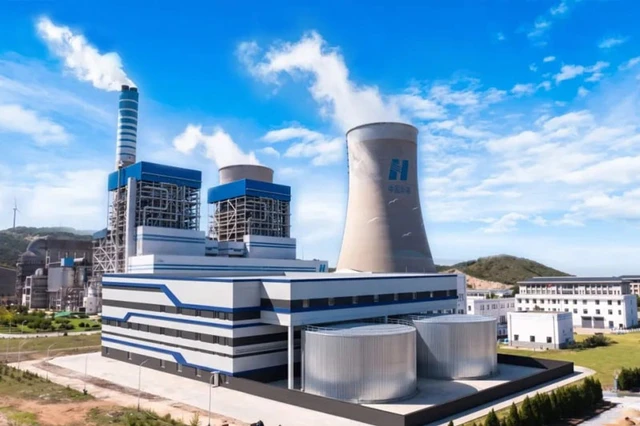
Modern power grids are plagued by the temporal disconnect between electricity generation and consumption. Conventional balancing mechanisms, reliant on the inertia of coal or gas-fired plants, are far too sluggish for the era of renewables. In this context, China is pivoting toward alternative storage modalities, ranging from gravitational systems to compressed air and thermal accumulators. The latest Ruitan project, deployed at the Bajiao power plant in Shandong Province, represents a strategic attempt to engineer a high-efficiency energy buffer capable of instantaneous response to grid fluctuations.
The core technological breakthrough lies in the utilization of supercritical carbon dioxide ($\text{sCO}_2$). In this state, achieved at specific temperature and pressure thresholds, the substance transcends the traditional boundaries of gas and liquid, inheriting the advantageous properties of both. From a thermodynamic perspective, this allows for a radical increase in energy density and overall plant efficiency while significantly reducing the equipment's physical footprint. This approach holds immense promise not only for terrestrial grids but also for space-based nuclear power systems, where every centimeter of volume is critical.
The operational architecture of the Ruitan complex is predicated on the decoupling of storage and generation. Molten salts serve as the "battery," leveraging their immense heat capacity to retain energy over extended periods. Whenever the grid detects a power surplus—whether from peak solar and wind output or coal units operating during low-demand windows—this energy is channeled into heating the salt reservoir.
During peak demand, the stored thermal energy is transferred into the supercritical $\text{CO}_2$ loop. The heated fluid drives a turbine, generating electricity and feeding it back into the grid. The technical specifications of the project's first phase are impressive: a 50 MW $\text{sCO}_2$ cycle plant supported by a 100 MW thermal storage system with a total capacity of 400 MWh.
The primary advantage of such a system over conventional steam cycles is its response latency. The system's reaction to grid requests is four times faster than that of traditional coal-fired plants. This transforms Ruitan from a passive storage facility into an active grid stabilization instrument, mitigating the risks of sudden voltage spikes or power deficits.
The deployment of these technologies in China is already beginning to scale. The Chaotan One project in Guizhou Province has demonstrated the efficacy of utilizing industrial waste heat for such cycles, while specialized salt buffers are being developed in Tibet to support high-altitude solar arrays. The transition from theoretical models to industrial prototypes paves the way for a global network of thermal storage facilities, potentially solving the inherent instability of "green" energy once and for all.
 China’s Pivot Away from Coal Dependency