The contemporary space race is evolving, shifting from a mere demonstration of capabilities toward the establishment of a robust, long-term infrastructure. Seeking to cement its position as a preeminent space power, China is embarking on a radical expansion of its orbital footprint. Plans to double the scale of the Tiangong space station, coupled with the deployment of a high-tech observatory, signal a transition into a new era of profound scientific exploration. This strategic pivot is transforming China's presence in Low Earth Orbit (LEO) into a comprehensive, multifunctional hub.
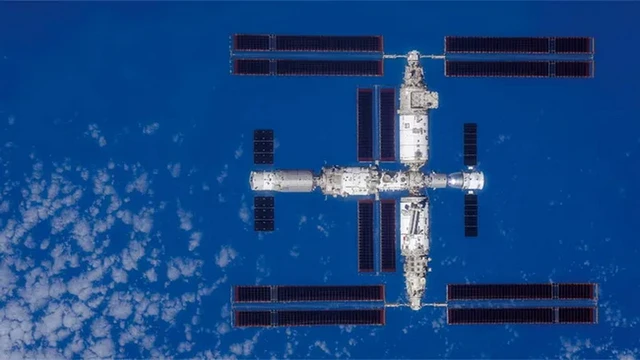
Deployed between 2021 and 2022, the Tiangong space station began as a compact, T-shaped configuration comprising three modules. However, the accelerating pace of scientific research and the increasing intensity of taikonaut missions have necessitated a strategic scaling of the facility. According to the roadmap established by the China Aerospace Science and Technology Corporation (CASC), the station is slated to evolve from a localized research outpost into an expansive orbital hub.
The proposed expansion involves increasing the module count from three to six, effectively doubling the station's total mass from 90 to 180 tons. The first phase of this expansion will see the launch of a 20-ton multifunctional module, designed for integration with the Tianhe core hub.
This increase in spatial capacity is driven not only by scientific imperatives but also by logistical necessity. Expanding the number of docking ports will eliminate potential bottlenecks for transport spacecraft and provide critical reserve space for emergency scenarios. In essence, Tiangong is being transformed into a sophisticated orbital terminal capable of sustaining high-frequency cargo and crew rotations.
Parallel to the expansion of living and working quarters, China is overhauling its transport infrastructure. The venerable Shenzhou spacecraft, designed for a crew of three, is being succeeded by the new Mengzhou crew vehicle. The Mengzhou represents a significant leap in capability, with the capacity to transport up to seven crew members per flight. This paradigm shift in orbital logistics will enable more ambitious experiments and facilitate longer-duration human presence in space.
However, the crown jewel of this new strategy is the launch of the Xuntian space observatory. Roughly the size of a transit bus, this telescope features a primary mirror 2 meters in diameter. While its aperture is only slightly smaller than that of the Hubble Space Telescope, its operational capabilities surpass those of its American predecessor in several key areas.
The primary advantage of Xuntian lies in its vast field of view, which is approximately 300 times larger than Hubble's. Equipped with a 2.5-gigapixel camera, the observatory is projected to map nearly 40% of the celestial sphere over its ten-year operational lifespan.
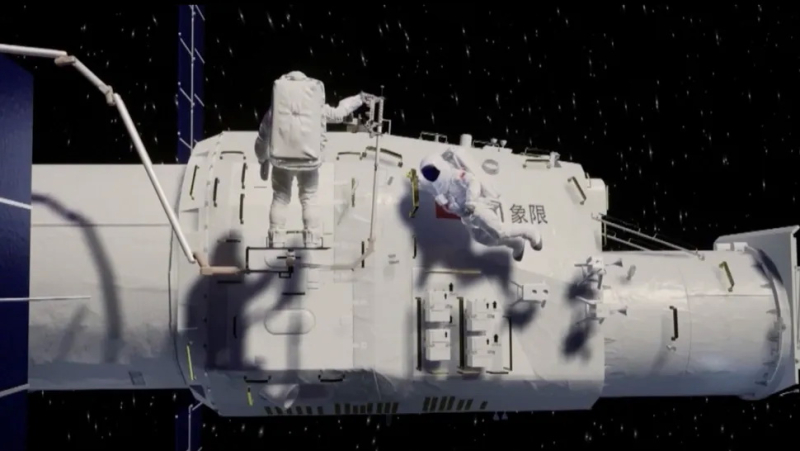
Of particular technological interest is the telescope's orbital positioning. Xuntian will share the same orbit as the Tiangong station, creating a unique synergy. Unlike most space telescopes, which are deployed on deep-space trajectories and remain inaccessible for repair, Xuntian can dock with the station. This configuration allows for routine servicing, refueling, and—most critically—hardware upgrades directly in orbit, significantly extending the observatory's lifespan and allowing its instrumentation to evolve alongside technological advancements.
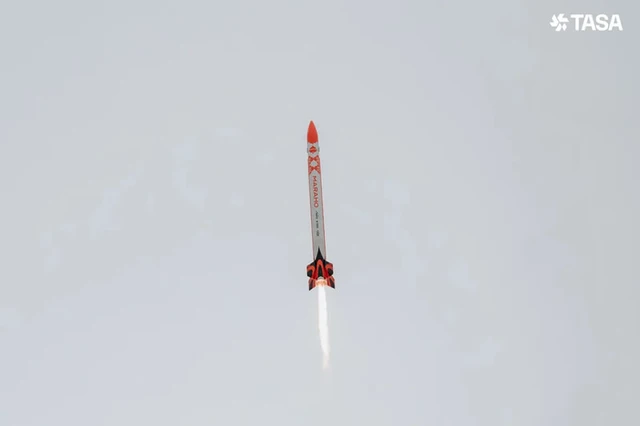 Taiwan's Space Program: The First Major Milestone