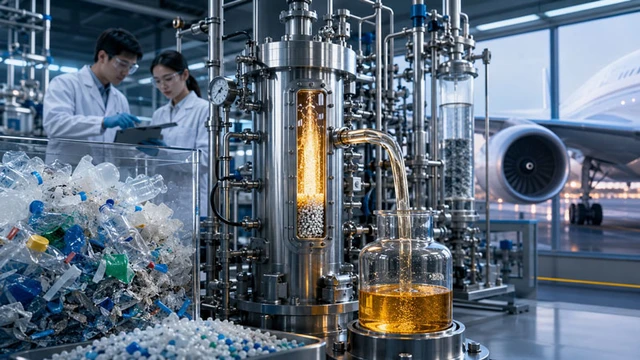
The global plastic pollution crisis demands a fundamental shift—moving beyond mere waste collection toward advanced chemical recycling. Conventional polymer disposal methods are frequently plagued by environmental concerns or rendered economically unviable due to the prohibitive cost of catalysts. A promising solution lies in converting plastics into high-value hydrocarbon fuels with properties comparable to aviation kerosene. New research from Chinese chemists proposes a pathway to make this process scalable and accessible by replacing precious metals with efficient, industrially viable alternatives.
The challenge of polyolefin recycling—specifically polyethylene and polypropylene—has reached a critical juncture, as these materials account for over 60% of all global plastic waste. From a chemical perspective, these polymers consist of long molecular chains composed almost exclusively of carbon and hydrogen, making them an ideal feedstock for producing C8–C16 alkanes—the fundamental building blocks of modern aviation fuel. For years, however, the primary barrier to industrial implementation has been cost: efficient catalytic cracking traditionally required the use of precious metals such as platinum, gold, or ruthenium.
A significant breakthrough has been achieved by a joint research team from the Shanghai Institute of Advanced Research at the Chinese Academy of Sciences and Fudan University. They have developed a bimetallic catalyst, 10Ni–2Co/SiO2, featuring nickel and cobalt dispersed on a silica support. Utilizing hydrogenolysis—the cleavage of carbon-carbon bonds under the influence of hydrogen—the system operates at a temperature of 280°C and a pressure of 3 MPa. The results are impressive: the liquid product yield reached 82.3%, with 79% of that liquid falling precisely within the target C8–C16 hydrocarbon range. Ultimately, the net yield of the kerosene fraction was approximately 65.1% by mass of the original plastic, significantly outperforming most existing pyrolysis systems.
The secret to the method's efficiency lies in metallic synergy. A small addition of cobalt radically alters the electronic state of the nickel, creating specific active sites on the catalyst's surface. These sites simultaneously activate hydrogen and facilitate the rupture of internal C–C bonds within the polymer chain. In traditional methods, cleavage typically occurred at the ends of the chains, leading to an excess of methane and light gases—essentially causing the valuable product to "evaporate." This new catalyst, however, precisely controls the molecular fragmentation process, steering the reaction toward the synthesis of liquid compounds of the exact length required for aviation fuel.
Beyond technical efficiency, the technology demonstrates substantial environmental potential. Life cycle analysis indicates that, when powered by renewable energy sources, the carbon footprint of such production could be 80% lower than that of traditional petroleum extraction and refining. This shifts the perception of plastic waste from an ecological burden to a strategic resource.
Despite its success, the technology remains in the laboratory testing phase. The transition from controlled environments to industrial scales always entails risks, including catalyst degradation and the complexities of processing contaminated, real-world plastics. Nevertheless, replacing prohibitively expensive noble metals with accessible nickel and cobalt renders this concept economically viable, opening the door to a global infrastructure dedicated to transforming polymer waste into high-energy fuel.
 The Return of the Modular Era: Acer Vero 16