For too long, the consumer electronics industry has been driven by the logic of planned obsolescence, reducing high-performance machines to little more than disposable commodities. Yet, a global shift toward sustainability and the burgeoning "right to repair" movement is fundamentally reshaping the paradigm of hardware engineering. The new Acer Vero 16 emerges as a bold response to this shift, reintroducing the principles of modularity into the premium laptop segment. This device seeks to break the cycle of perpetual hardware churn, granting users deliberate control over the entire lifecycle of their machine.
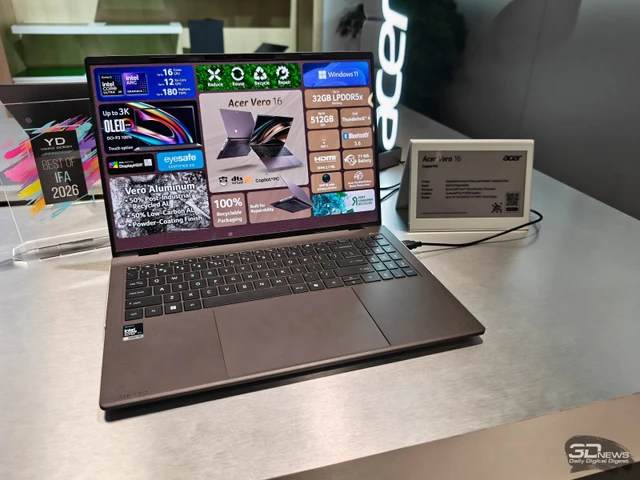
The philosophy behind the Acer Vero 16 transcends the mere use of recycled plastics. At its core lies the principle of a circular economy, where every element of the chassis is engineered with its eventual recovery or recycling in mind. The top cover and palm rest are crafted from a hybrid alloy—half recycled industrial aluminum and half low-carbon aluminum. The bottom chassis is composed of 60% post-consumer recycled (PCR) plastics, while the display bezels incorporate 30% recycled polymers. Crucially, this ecological commitment does not come at the expense of durability; the device is MIL-STD-810H certified, ensuring resilience against rigorous external stressors.
The engineering approach to repairability is pursued with almost fanatical precision. To ensure users aren't left powerless against a sealed chassis, a visual disassembly guide is etched directly onto the frame. Internal components are accessible via a specialized latch on the rear cover, allowing the battery or SSD to be replaced entirely tool-free. Furthermore, Acer has implemented detachable display hinges and I/O ports—components that are traditionally the most vulnerable points of failure in any laptop architecture.
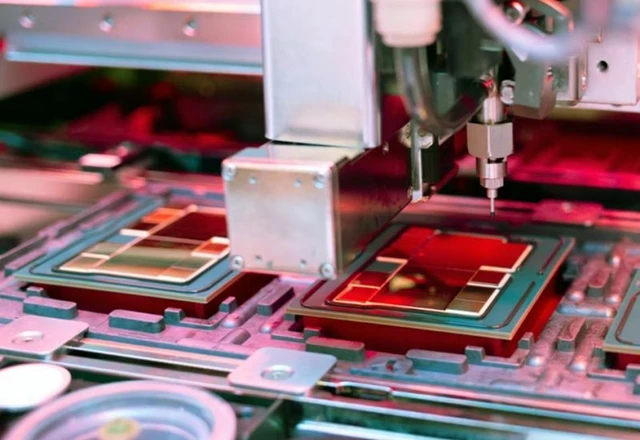
However, the Vero 16's primary technological breakthrough is its solution to the stagnation of computing power. In an era where processors are permanently soldered to motherboards, Acer has introduced a system of removable processor modules. The CPU resides on a discrete block that can be replaced in its entirety. This means that upgrading to a more powerful generation of processors no longer requires replacing the entire machine or an expensive motherboard—simply swapping a single module suffices. This approach effectively restores the flexibility of desktop PCs to a compact form factor.
The device's technical specifications align with the highest contemporary standards. The processor lineup ranges from the Intel Core Ultra 5 322 to the flagship Core Ultra X9 388H, capable of delivering up to 180 TOPS (trillions of operations per second), which is critical for running neural networks locally. The visual experience is driven by a 16-inch OLED display with WQXGA+ (3K) resolution, complemented by 32 GB of LPDDR5x RAM and a high-speed 512 GB SSD.
The I/O array is tailored for professionals: it features an SD card slot, HDMI 2.1 with HDCP support, and two Thunderbolt 4 ports. Of particular note are the USB Type-A ports, which support external device charging even when the laptop is powered down. Connectivity is handled by the latest Wi-Fi 7 standard, and workflow optimization is enhanced by the programmable Acer MyKey.
The software ecosystem is powered by Windows 11 and categorized as a Copilot+ PC, enabling deep AI integration at the system level. Acer's proprietary developments, such as PurifiedView and PurifiedVoice, leverage neural networks for intelligent image correction and real-time noise filtration, transforming the laptop into a professional-grade communication station.
The Acer Vero 16 is slated for release in Europe, the Middle East, and Africa in the first quarter of 2027. This device signals a pivotal shift in the industry: "premium" is no longer defined solely by material quality and chip performance, but by how long a device can remain relevant and functional without inevitably ending up in a landfill.
 The Horizon of China's Technological Sovereignty in Lithography