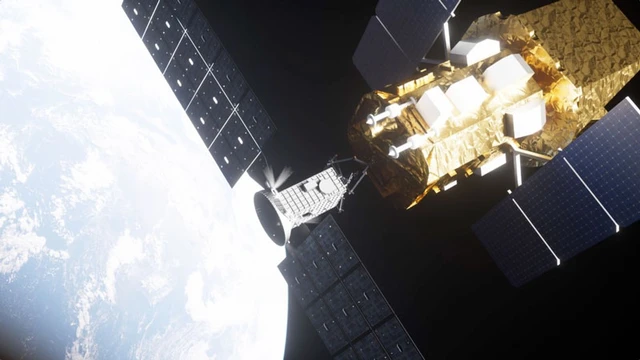
The quest to unravel the fundamental mysteries of dark energy and the accelerating expansion of the universe has entered a new technological era. NASA has successfully deployed the Nancy Grace Roman Space Telescope, an ambitious $4 billion venture engineered to fundamentally reshape our understanding of the cosmos. Diverging from its predecessors, this instrument is optimized for wide-field panoramic surveys, blending high-precision scientific optics with an unprecedented rate of data acquisition. This milestone marks a paradigm shift: moving away from the targeted study of isolated objects toward the construction of a comprehensive, three-dimensional map of the galactic expanse.
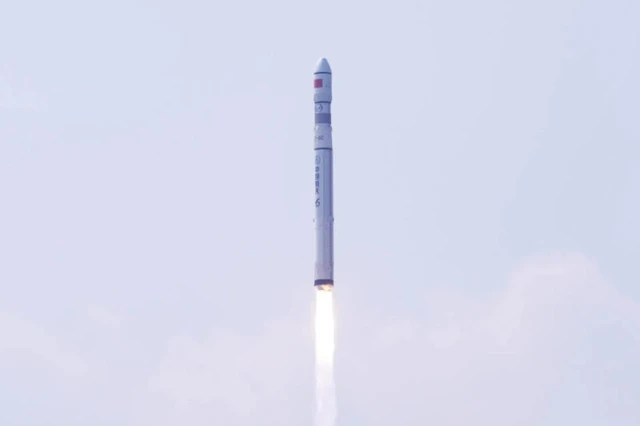
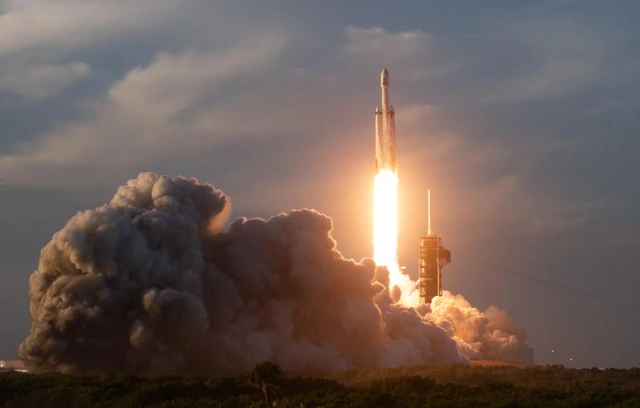
The observatory lifted off from Launch Complex 39A at the Kennedy Space Center, propelled by a SpaceX Falcon Heavy. Following separation from the second stage and the successful deployment of its solar arrays, the telescope began its three-month transit to the L2 Lagrange point. Situated 1.5 million kilometers from Earth, this region provides the gravitational stability and thermal environment essential for the operation of ultra-sensitive instrumentation. While the James Webb Space Telescope already operates here, Roman will occupy its own orbit, complementing Webb’s capabilities and creating a powerful instrumental synergy.
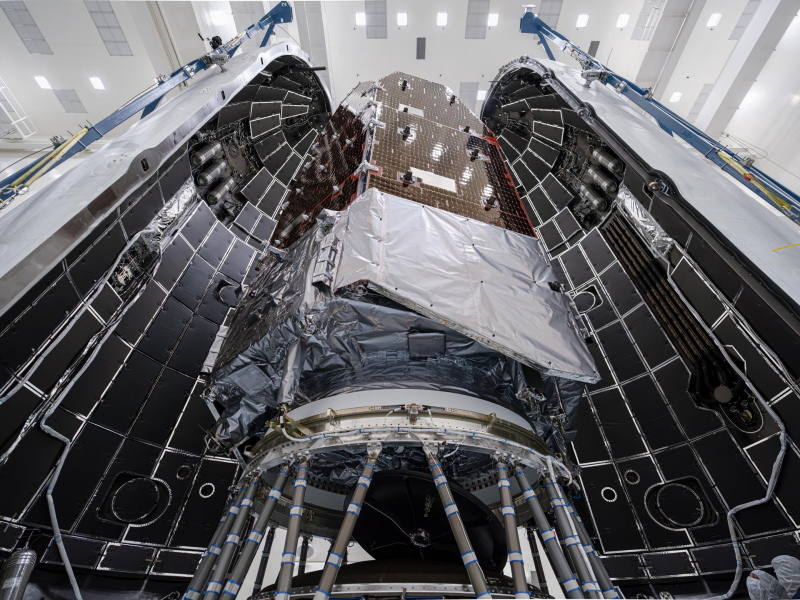
When compared to the legendary Hubble, the two share a primary mirror diameter of 2.4 meters and comparable resolution. However, the fundamental difference lies in the field of view. The 300-megapixel Wide Field Instrument (WFI) can capture a swath of the sky 100 times larger than Hubble's. This effectively positions Roman as the "wide-angle lens" of space astronomy: a single image is equivalent to a hundred of its predecessor's frames. Consequently, within its first five years of operation, the observatory will survey an area of the sky 50 times larger than what Hubble explored over three decades.
Such scale is imperative for addressing the defining cosmological challenge of the modern era: the study of dark matter and dark energy, which constitute approximately 95% of the universe's total mass and energy. NASA's roadmap involves observing over two billion galaxies to construct a detailed three-dimensional map of matter distribution. By analyzing gravitational lensing and the behavior of supernovae, scientists aim to uncover why the expansion of the universe is accelerating and determine how precisely General Relativity describes processes on intergalactic scales.
Parallel to its cosmological research, Roman will undertake a global "census" of planetary systems within the Milky Way. The primary tool for this will be gravitational microlensing; by detecting transient fluctuations in stellar brightness, the telescope can identify exoplanets in distant orbits and even "rogue planets" drifting through space untethered to any star. It is expected that roughly 2,500 new worlds will be discovered this way, while the use of the transit method could increase that number by tens of thousands.
Of particular interest is the experimental coronagraph—a device designed for the direct imaging of exoplanets. By blocking the blinding light of a host star, the instrument will allow astronomers to detect the faint reflected glow of gas giants comparable to Jupiter. This technology will serve as a critical proving ground for the future Habitable Worlds Observatory, whose primary goal is the search for life-sustaining planets.
An intriguing detail lies in the provenance of the telescope's optical system. It is based on an unused assembly transferred from the National Reconnaissance Office (NRO) to NASA back in 2012. Originally designed for intelligence gathering and Earth observation, this high-precision optics system has been given a second life for peaceful scientific purposes, demonstrating the efficacy of repurposing sophisticated government technology.
The observatory, named after Nancy Grace Roman—the first woman to lead a NASA astronomy program—is set to become one of the most data-rich instruments in history. The data stream transmitted to Earth will reach approximately 1.4 terabytes per day, necessitating novel approaches to the processing and analysis of astrophysical information. The first results of this ambitious mission are expected to be released to the public in early 2027.
 Navigating via Earth's Gravitational Anomalies