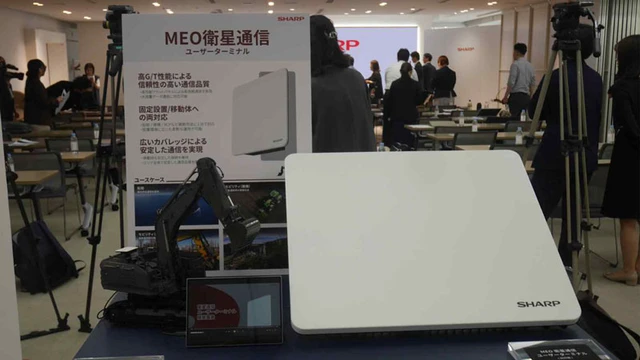
The contemporary satellite communications market is racing toward global ubiquity, yet this expansion is unfolding within the confines of closed, proprietary ecosystems. Currently, users are effectively locked into single-operator dependencies—a dynamic that stifles flexibility and fosters the rise of orbital tech monopolies. The Japanese giant Sharp aims to disrupt this status quo by introducing the concept of a universal terminal. This strategic shift promises to transform satellite connectivity from a provider-specific privilege into an open, agile infrastructure.
For years, satellite communications were synonymous with cumbersome parabolic dishes that required precise mechanical alignment with a specific point in space. With the advent of Low Earth Orbit (LEO) constellations like Starlink, the industry has entered a new era, pivoting toward flat-panel phased array antennas. This technology enables electronic beam steering by modulating the phase of individual elements, allowing for instantaneous switching between satellites streaking across the horizon at immense speeds. Yet, the current implementation remains stubbornly proprietary: hardware from one operator is fundamentally incompatible with the networks of another.
Sharp aims to dismantle these barriers. The company is developing a next-generation terminal designed to serve as a "universal key" to space-based internet. Rather than tethering the user to a single provider, the device will be capable of interoperating with various satellite constellations, selecting the optimal communication channel based on signal quality, data costs, or operational conditions.
This technological leap is powered by Sharp’s deep expertise in RF (radio frequency) components. Leveraging its experience in creating miniaturized modules for modern smartphones, Sharp's engineers are working to radically shrink the hardware's footprint while simultaneously boosting data throughput and minimizing electromagnetic interference. This transforms the satellite terminal from a stationary installation into a truly mobile tool.
Such versatility unlocks entirely new possibilities for sectors where connectivity reliability is mission-critical. In maritime transport, industrial construction, or the management of unmanned systems, reliance on a single provider introduces significant risk. The transition to multi-network terminals will provide essential redundancy: should one network fail or its quality degrade, the device will automatically switch to an alternative constellation.
In essence, Sharp is proposing to transpose the evolution of 20th-century mobile telephony into outer space. Smartphones long ago ceased to be bound to a single carrier, allowing users to swap SIM cards and roam between networks without replacing the device itself. Implementing this principle within the satellite industry could, by 2030, foster an open market where competition is driven not by hardware lock-in, but by the quality of the service provided.
This paradigm shift will inevitably lead to the decentralization of orbital internet governance and create an environment where multiple competing operators coexist across different orbits, ultimately making global connectivity more accessible and resilient.
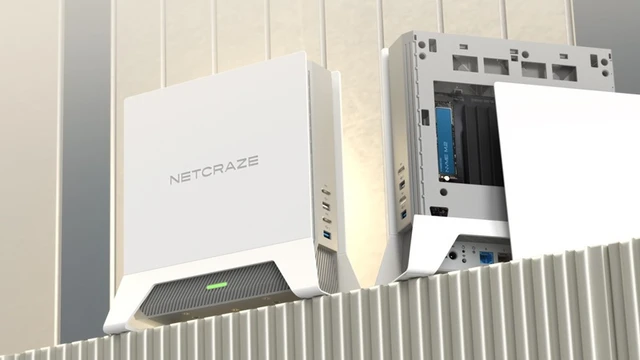 Netcraze Titan SE Hybrid Network Node