The contemporary electric vehicle market has reached a saturation point, compelling tech titans to seek new frontiers for expansion. For Tesla, that breakthrough is Optimus—an ambitious humanoid robotics venture poised to redefine the very essence of industrial automation. Yet, the leap from polished prototypes to full-scale production lines is fraught with fundamental engineering hurdles. Elon Musk acknowledges that the road to mass adoption will be incremental, necessitating a comprehensive overhaul of manufacturing logistics.
Tesla's electric vehicle sales have recently exhibited a troubling deceleration in growth. Faced with intensifying competition and shifting consumer preferences, the company is compelled to diversify its portfolio, pivoting from pure automotive manufacturing toward artificial intelligence and robotics. Consequently, Robotaxis and the Optimus humanoid robots have emerged as the cornerstones of the brand's long-term strategy for survival and technological dominance.
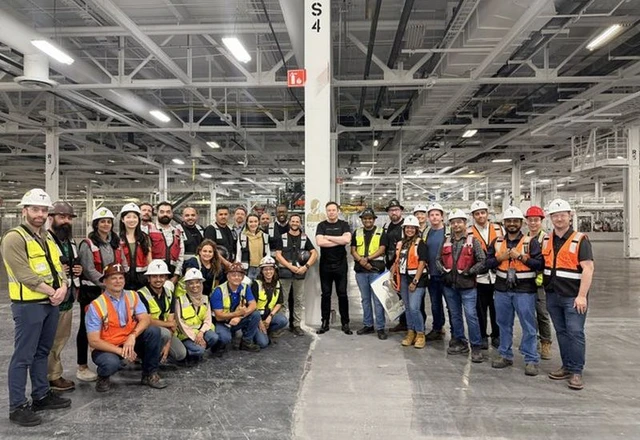
This transformation is epitomized by the repurposing of one of Tesla's legacy production sites in California. The Fremont plant, which for decades served as the cradle for the flagship Model S and Model X, is effectively shifting its specialization. The cessation of these premium EV lines at this facility was driven by the need to liberate space and resources for the deployment of Optimus assembly lines. This decision underscores the primacy of robotics: the company is willing to sacrifice traditional product lines to pioneer an entirely new class of devices.
However, scaling the production of a humanoid robot is an order of magnitude more complex than assembling a vehicle. According to Tesla leadership, the manufacturing processes for Optimus bear little resemblance to the traditional automotive assembly line. While a car is essentially a sophisticated electric platform integrated with software, a humanoid requires surgical precision in every single joint and component.
The project's technical complexity is reflected in the numbers: a single Optimus unit requires approximately 10,000 unique components. This places an immense strain on supply chains and necessitates the development of entirely new quality control methodologies. Every actuator, sensor, and servo must operate in perfect synchronization to achieve a balance and motor skill comparable to that of a human. Orchestrating the logistics for such a vast array of specialized parts is a time-intensive process requiring niche expertise, rendering an immediate leap to mass production impossible.
Consequently, Tesla is adhering to a cautious roadmap. Low-volume production is slated for this summer, allowing the company to refine its technology stack and identify critical failures in real-world conditions. Full-scale production deployment is not expected until next year. This transitional phase will serve as a "stress test" for Tesla's engineering prowess, determining whether the company can evolve Optimus from an ambitious visionary project into a viable commercial product capable of reshaping the global industrial landscape.
 Anthropic’s Strategic Push for Hardware Independence