Global warming and the "urban heat island" effect are compelling us to seek infrastructure cooling solutions that move beyond energy-intensive air conditioning. Conventional strategies for mitigating overheating in buildings and industrial facilities often create a vicious cycle, exacerbating heat emissions and driving up electricity demand. The solution may lie in the adoption of passive materials capable of autonomously regulating thermal exchange with their surroundings. A recent breakthrough by Chinese researchers is paving the way for cities that cool themselves naturally, leveraging the fundamental laws of physics.
At the heart of this new technology lies the concept of passive radiative cooling. Unlike conventional reflective coatings that merely block solar radiation, this formulation employs a dual-action mechanism. First, it exhibits an exceptionally high solar reflectance coefficient. Second, it efficiently radiates accumulated heat within the infrared spectrum, leveraging the "atmospheric window"—a spectral range of wavelengths between 8 and 13 μm where the Earth's atmosphere is virtually transparent. This allows heat to bypass the surrounding air and escape directly into deep space.
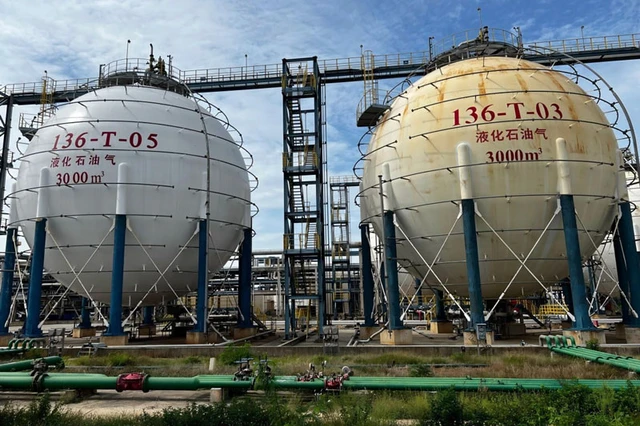
The practical efficacy of this method was validated through large-scale trials at a petrochemical plant in Hainan Province. The test subject was a 3,000 m³ liquefied gas storage tank. On a typical summer day with an ambient air temperature of approximately 30°C, the surface of the coated tank remained 25°C cooler than that of a neighboring tank with traditional coating. This significant temperature gradient had a direct impact on the internal environment, reducing the temperature of the contents by 7°C.
From a resource-efficiency perspective, this technology represents a quantum leap. Achieving a comparable cooling effect through traditional methods would require the daily application of approximately 35 tons of water via spray nozzles. By transitioning to a passive coating, energy and water expenditures are entirely eliminated, effectively transforming a static wall or tank surface into an autonomous, active heat pump.
Interestingly, while developing the formulation, researchers from the Harbin Institute of Technology and the Suzhou State Construction Company drew upon the principles of biomimicry. They were inspired by the microstructure of human skin, where specific epidermal ridges and textures facilitate efficient heat dissipation. Translating these biological principles into the paint's chemical composition allowed for structural optimization. Consequently, the applied layer thickness was reduced from 500 μm to 100 μm without compromising performance, significantly lowering material consumption and the overall weight of the coating.
The potential applications of this technology extend far beyond the industrial sector. When integrated into urban infrastructure, the coating can lower indoor temperatures by up to 4°C—and by 1°C in tropical regions—which, on a metropolitan scale, could substantially alleviate the load on power grids.
The project has already moved beyond the R&D phase. A comprehensive industrial process has been developed, enabling production to scale up to 600,000 tons of the coating annually. This transforms the theoretical possibility of radiative cooling into a viable tool for urban planning and industrial engineering, offering a sustainable alternative to active climate control systems.
 Through-Wall Radio-Acoustic Espionage