11 Aug 2026
 Microsoft’s Pursuit of Hardware Sovereignty
The global AI arms race has fundamentally shifted from the realm of algorithms to the domain of silicon. For too long, the world's leading cloud providers have been beholden to Nvidia’s pricing strategies and supply chain bottlenecks. Microsoft now intends to break this cycle by developing a comprehensive, proprietary hardware stack. The upcoming release of Maia 300 marks a pivotal milestone in the corporation's pursuit of strategic technological autonomy.
11 Aug 2026
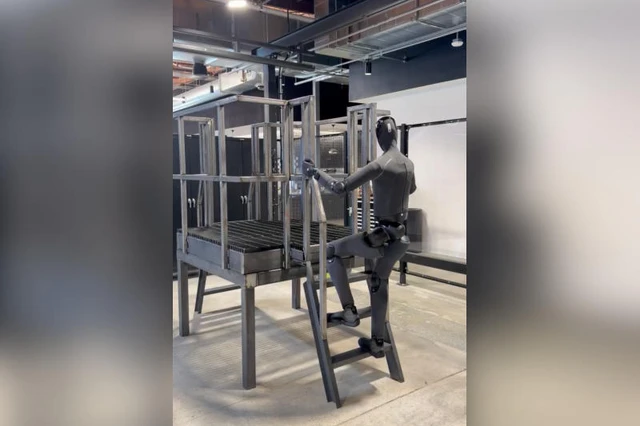 Overcoming Vertical Barriers Figure 03
Developing a general-purpose humanoid robot hinges on overcoming a fundamental challenge: adapting to the inherent unpredictability of the physical environment. For years, vertical obstacles have represented a critical bottleneck for most autonomous systems, primarily due to the immense complexities involved in dynamic balancing and motor coordination. The latest breakthroughs from Figure 03 signal a quantum leap in motion control, elevating humanoid mobility to an entirely new echelon. We are no longer discussing mere mechanical locomotion; we are witnessing the emergence of comprehensive spatial awareness and environmental perception.
11 Aug 2026
 Technological Sovereignty in Extreme Ultraviolet (EUV) Technology
The modern semiconductor industry is effectively held captive by a narrow oligopoly of lithography equipment suppliers. Access to Extreme Ultraviolet (EUV) technology has become the sole viable pathway for producing chips below the 7-nanometer threshold, transforming these machines into potent instruments of geopolitical leverage. Sidelined from this market since 2019, China is now aggressively pursuing total autonomy in the production of critical components. Recent breakthroughs by domestic researchers in developing a light source mark the beginning of a long and arduous journey toward breaking this technological dependency.
11 Aug 2026
 The Sony-TSMC Technological Alliance in Japan
Modern mobile photography has long transcended the realm of pure optics, evolving instead into a high-stakes clash of semiconductor engineering and materials science. In today’s hyper-competitive smartphone landscape, dominance is reserved for those capable of embedding cutting-edge lithography directly into sensor architecture. The strategic alliance between Sony and TSMC signals a pivotal shift in the evolution of digital imaging; this joint venture is designed to fuse Japanese visionary engineering with the industrial might of the world's preeminent semiconductor powerhouse.
11 Aug 2026
 Samsung’s Strategic Gamble in the Nanometer Race
The global semiconductor industry has entered a phase of extreme technological attrition, where the battle is fought over every single angstrom. At the heart of this struggle lies High-NA EUV lithography—prohibitively expensive scanners engineered to drastically amplify transistor density and accelerate wafer throughput. Yet, raw technical superiority is now colliding with stark economic realities and the cold calculus of operational efficiency. Samsung is opting for a pragmatic path, deferring the wide-scale deployment of this technology until the era of sub-one-nanometer chips.
11 Aug 2026
 The Pricing Paradox of the GeForce RTX 50 Series
The contemporary high-end GPU market has evolved into a battlefield where corporate rhetoric clashes with the brutal realities of supply and demand. Once the disparity between the suggested retail price and the actual street price hits a breaking point, the very notion of MSRP becomes an exercise in futility. The rollout of the GeForce RTX 50 series underscores a systemic crisis in the accessibility of flagship hardware on a global scale; at this juncture, Nvidia's official pricing serves less as a reliable benchmark for consumers and more as a carefully curated marketing facade.
11 Aug 2026
 Lenovo’s Horizontal Expansion into Display Technology
The personal computing landscape is undergoing a fundamental metamorphosis of form factors, as static panels are supplanted by dynamic surfaces. This evolution—shifting from foldable displays toward expandable, sliding screens—is charting new territories for multitasking and the ergonomics of mobile workstations. Lenovo has emerged as the primary catalyst in this transition, distilling bold engineering hypotheses into functional prototypes. The latest milestone in this trajectory is Project Swan: a device designed to fundamentally reimagine the very concept of the workspace.
11 Aug 2026
 The GeForce RTX 4080 Memory Expansion Phenomenon
The global surge in demand for AI compute has catapulted video memory (VRAM) into one of the most critical bottlenecks of the modern tech industry. While hardware vendors maintain rigid product segmentation strategies to protect their margins, Asia's grey market is pioneering ingenious workarounds to bypass these artificial hardware constraints. In China, there is a proliferation of mass-produced modified GPUs, where consumer-grade cards are being repurposed into professional-tier tools. This trend underscores the desperate market hunger for accessible, high-capacity VRAM essential for operating large-scale neural networks.
11 Aug 2026
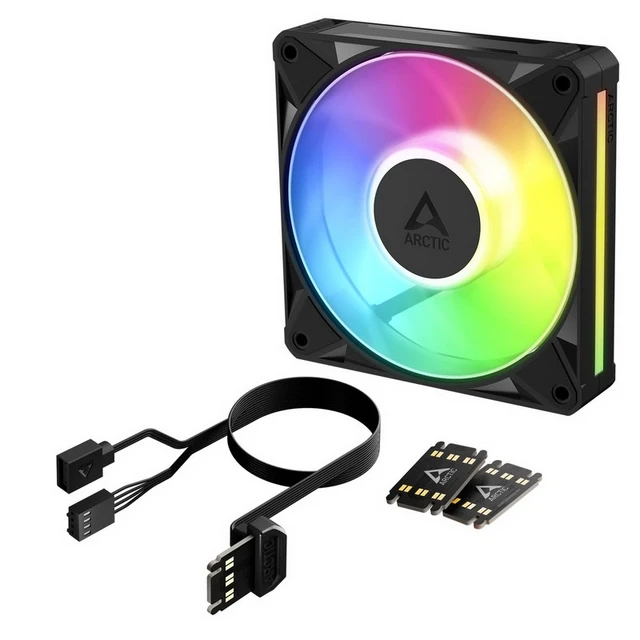 The Evolution of Arctic BioniX Fan Performance
Modern high-performance systems demand an uncompromising approach to thermal management, where every single degree is critical to maintaining component stability. For years, the market has forced users into a compromise: choosing between the visual allure of ARGB lighting and raw cooling efficiency. Arctic’s latest offerings aim to dissolve this dichotomy, seamlessly blending high-RPM performance with a sophisticated aesthetic. The BioniX P12 and P14 series are engineered specifically for those who demand professional-grade power delivered in a striking package.
10 Aug 2026
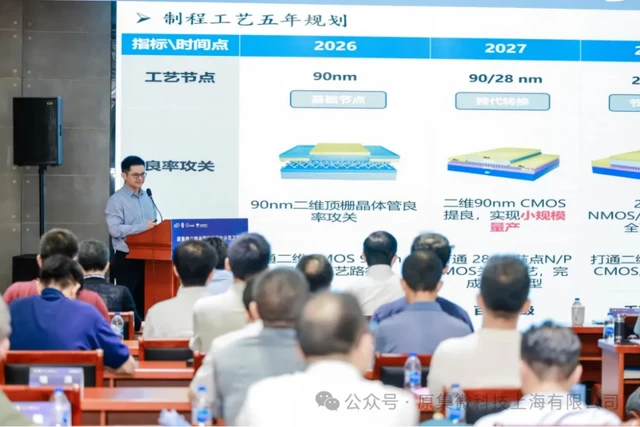 The Era of Hybrid Semiconductor Bonding
Modern microelectronics has reached a physical and economic impasse in traditional scaling, where every single nanometer of progress now demands an exponential surge in investment. Faced with a shortage of cutting-edge EUV lithography systems, the industry is pivoting its strategy to increase transistor density—shifting the trajectory of development from the horizontal plane toward verticality. Hybrid bonding technology has emerged as the critical bridge, enabling the unification of computing power not through cumbersome interfaces, but via the direct molecular fusion of dies. This marks a fundamental paradigm shift: the battle is no longer about shrinking the individual element, but about maximizing signal velocity and the efficiency of three-dimensional integration.
10 Aug 2026
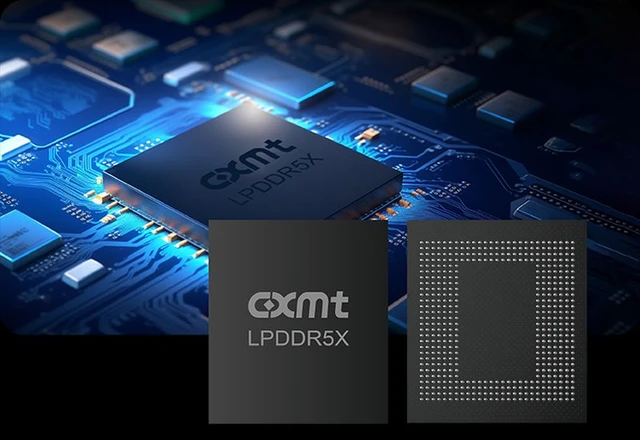 China’s Strategic Memory Push for Apple Devices
Global high-tech supply chains are increasingly entangled in geopolitical friction, forcing industry titans to rethink their optimization strategies. Against this backdrop, Apple is executing a measured yet pivotal strategic pivot, exploring the potential integration of memory modules from the Chinese manufacturer CXMT. The objective is a delicate balancing act: weighing economic efficiency against the stringent regulatory constraints imposed by the United States. This maneuver could fundamentally shape the architecture of future iPhone and MacBook generations tailored for Eastern markets.
10 Aug 2026
 The Price of Reputation in an Age of Memory Scarcity
Today's high-tech hardware market frequently serves as a battleground where aggressive corporate cost-cutting clashes with fundamental consumer rights. The recent controversy surrounding Crucial illustrates just how precarious user trust becomes when warranty obligations are reduced to mere formalities. The attempt to substitute high-end equipment with a nominal cash payout has sparked significant backlash across the professional tech community, exposing deep-seated systemic failures in product support that often emerge following the restructuring or dissolution of consumer-facing divisions within major vendors.
