The global AI boom has catapulted the semiconductor market into the crosshairs of intense geopolitical rivalry. South Korean tech giants find themselves at the epicenter of this shift, reaping windfall profits from the surging demand for high-performance memory. Now, Washington is recalibrating its approach, seeking a share of these extraordinary gains by citing the overwhelming market leverage wielded by American customers. Such a strategy effectively reduces commercial enterprise to a mere instrument of political bargaining.
The contemporary AI arms race has triggered an unprecedented surge in demand for specialized memory, specifically High Bandwidth Memory (HBM) modules, a sector currently dominated by South Korean titans Samsung Electronics and SK hynix. This technological leap has given rise to so-called "windfall profits"—earnings that far exceed standard market expectations, driven by a unique convergence of circumstances. It is precisely these surpluses that have now drawn the scrutiny of the U.S. government.
Geopolitical friction has intensified following a series of meetings where the American side advanced the thesis that it is entitled to a share of these gains. Washington's logic rests on the assertion that the U.S. market, with its insatiable appetite for computational power, served as the primary catalyst for the Korean companies' growth. Consequently, the massive procurement efforts of American corporations are being framed not merely as commercial transactions, but as contributions to the manufacturers' success—contributions that Washington believes should be compensated.
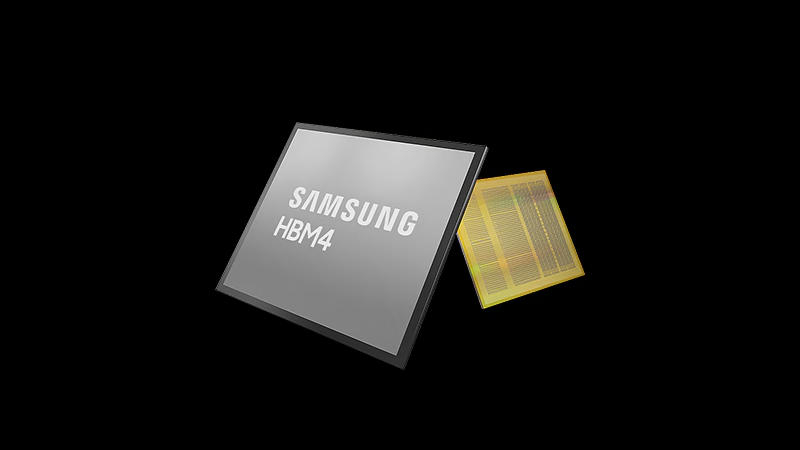
The situation is further complicated by an internal debate within South Korea regarding the nature of these "excess profits." Discussions are underway over whether such funds should be redistributed among subcontractors or allocated toward public works and infrastructure developed via taxpayer funding. However, the U.S. attempt to elevate this domestic economic dispute to an international level creates a perilous precedent, where commercial rationality is superseded by political pressure.
Statistical data underscores the staggering magnitude of this surge. Semiconductor exports from Korea in the first half of this year reached $192.43 billion, representing a 162.5% increase over the previous year. The U.S. trajectory is even more aggressive: shipments to the United States nearly doubled, hitting $26.4 billion. This peaked in June, when export volumes to the U.S. skyrocketed by 377.2% compared to the same period last year, totaling $6.49 billion in a single month.
Until now, Washington's strategy centered on incentivizing production localization. The goal was to reshore manufacturing to reduce reliance on external supplies and secure the integrity of value chains. While Samsung and SK hynix have already announced significant investments in U.S. infrastructure, a central point of contention remains: the Korean giants continue to avoid building their most advanced DRAM and NAND fabrication plants on American soil.
Ultimately, we are witnessing a fundamental shift in the partnership paradigm between these technological allies. Where the discourse once revolved around joint ventures and capital equipment investment, it has now pivoted toward the direct distribution of profits. This casts doubt on the stability of the global chip market, where economic efficiency is beginning to depend less on product quality or process optimization, and more on the ability to negotiate with the regulator of the world's largest consumer.
 Nvidia N1X and the New Era of Arm PCs