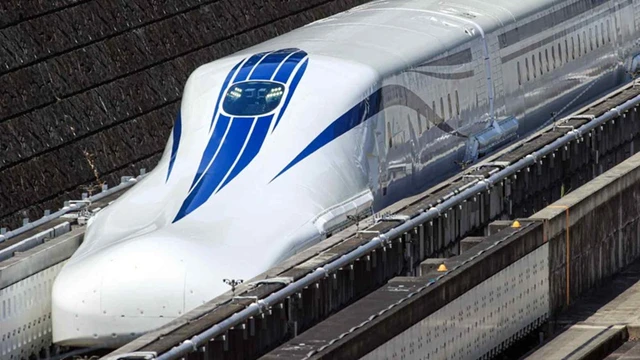
The vision of intercity travel exceeding 500 km/h continues to stand as one of the most formidable engineering frontiers of the modern era. In Japan, the Linear Chuo Shinkansen project has languished for years, stalled by a combination of political friction and mounting environmental anxieties. A recent pivot by officials in Shizuoka Prefecture has finally thawed the deadlock, clearing the path for the deployment of this ultra-high-speed transit network. Yet, persistent technical hurdles and inherent geological risks ensure that the project's actual commissioning date remains a subject of intense debate.
Japan's transportation industry is making a decisive leap forward, overcoming one of the most protracted bureaucratic and environmental impasses of recent years. The construction of a critical segment of the maglev high-speed line connecting Tokyo and Nagoya has finally received approval in Shizuoka Prefecture. For a decade, this region served as the project's primary bottleneck, with previous administrations blocking progress over fears of catastrophic impacts on the local ecosystem.
A shift in political direction and the decision by current Governor Yasutomo Suzuki have provided the Linear Chuo Shinkansen project with much-needed momentum. While support from neighboring Aichi and Nagano prefectures underscores the line's national strategic importance, official optimism is colliding with a harsh engineering reality.
When Central Japan Railway (JR Central) established the project's framework in 2017, the estimated construction timeline for the Tokyo-Nagoya segment was approximately ten years. By that logic, the line should have been operational by 2036. However, current leadership—specifically President Shunsuke Niwa—has openly admitted that reality has proven far more complex than initial projections.
The primary challenge lies in the region's unique topography. Routing the line requires extensive tunneling through the Japanese Southern Alps, inevitably risking the area's hydrological balance. Particular concern is centered on preserving the water resources of the Oi River—a critical natural asset that could be compromised by large-scale excavation. Similar complications have surfaced in neighboring Yamanashi and Nagano prefectures, where construction speeds have also decelerated due to unforeseen geological variables.
Implementing maglev technology is not merely about laying tracks; it involves creating an incredibly complex system of tunnels where the train effectively flies above the guideway. However, such power requires massive subterranean intervention. A sobering example occurred in the Okute district of Mizunami (Gifu Prefecture), where tunnel construction led to a significant drop in groundwater levels. This triggered local protests and a total halt to operations in 2024. The disappearance of water from natural springs transformed an engineering challenge into a social conflict, now falling under the purview of Gifu Governor Yoshihide Esaki.
JR Central is currently entering the preparatory phase: tree clearing and detailed subterranean analysis are underway. Before full-scale drilling commences, the company plans to hold a series of briefings to outline environmental protection measures. Only then will the official groundbreaking ceremony take place and heavy machinery be deployed.
Despite the political breakthrough in Shizuoka, the exact launch date remains elusive. Recent experience demonstrates that projections of this scale are secondary to geological reality. Until engineers complete their environmental impact analysis and find a solution for groundwater stabilization, 2036 remains a target rather than a guarantee.
 Tesla Cybercab: The Autonomous Expansion