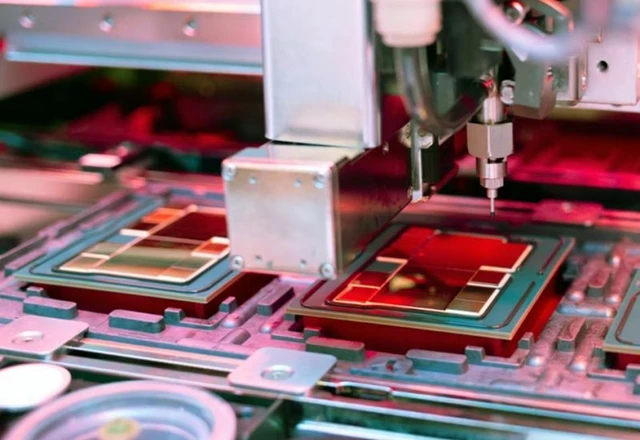
The global semiconductor race has evolved into a high-stakes geopolitical standoff, where the ultimate prize is the capacity to manufacture next-generation chips. Central to this success is Extreme Ultraviolet (EUV) lithography—a technology effectively monopolized by the Netherlands-based ASML. Now facing technological isolation, China is striving to develop its own equivalent; however, the gap in technical expertise remains staggering. Analysts suggest that the road to true technological sovereignty in this domain could span decades.
Since 2019, China’s access to cutting-edge semiconductor fabrication technology has been effectively severed. ASML, the Dutch behemoth and the world's sole provider of Extreme Ultraviolet (EUV) lithography systems, has been prohibited from shipping its flagship scanners to the PRC. This has created a critical bottleneck: without EUV, the economically viable production of chips at the 7-nanometer node and below becomes virtually impossible. Consequently, the Chinese industry faces an existential crossroads—either find a way to circumvent sanctions or architect an entire technological ecosystem from the ground up.
The challenge is compounded by the fact that EUV lithography is not merely a set of blueprints, but the zenith of engineering, integrating advanced optics, vacuum systems, and ultra-precision mechanics. According to analysis by UBS, current Chinese development capabilities are comparable to where ASML stood back in 2004. This represents a technological deficit of approximately 15 years. Even with massive state subsidies and aggressive patent filing, a full-scale transition to the mass production of EUV equipment may not materialize until 2040.
Furthermore, the question of commercial viability looms large. Even if Beijing manages to breach the technical barrier, these systems may find little demand beyond the domestic market. The technological gap relative to ASML, coupled with stringent Western regulatory frameworks, risks turning Chinese scanners into tools for internal survival rather than competitive export products.
As a stopgap measure, China is pivoting toward Deep Ultraviolet (DUV) immersion lithography. While less sophisticated than EUV, DUV is significantly more attainable. UBS forecasts that mass production of such systems within China could be established within the next two to five years. Reports suggest that some local players have already entered serial production: while output may hover around five units this year, it could scale to twenty by next year.
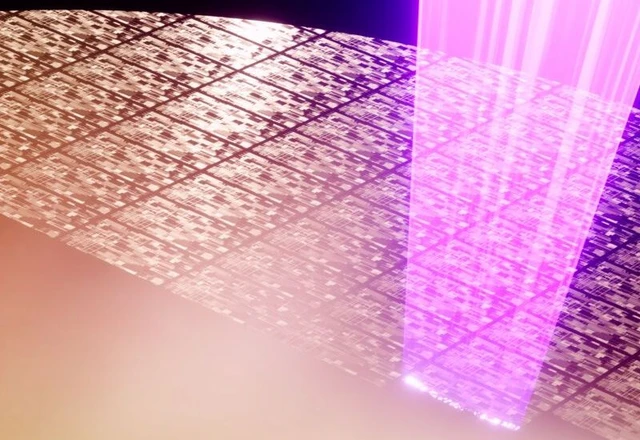
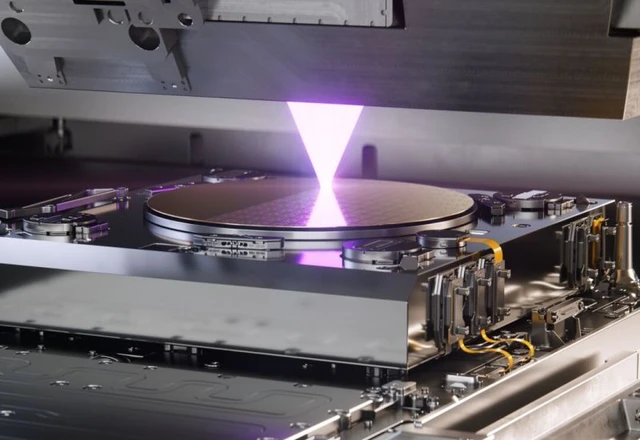
It is worth noting that attempts to build a fully functional EUV scanner are already underway. Early last year, Chinese engineers assembled a prototype, though its functionality remains severely limited. Currently, the system can generate laser radiation of the required power and wavelength, but it is still unable to pattern actual structures onto a silicon wafer. This underscores the reality that creating the light source is only a fraction of the challenge; the true complexity lies in manipulating that light and achieving nanometric positioning precision.
 The Horizon of China's Technological Sovereignty in Lithography