The semiconductor industry has emerged as the epicenter of a global geopolitical struggle. The capacity to manufacture chips at nodes below 7nm is inextricably linked to the mastery of Extreme Ultraviolet (EUV) lithography. While Beijing pursues total technological sovereignty, the chasm between its current capabilities and Western benchmarks remains vast. Industry analysts suggest that bridging this divide could require more than a decade of intensive R&D.
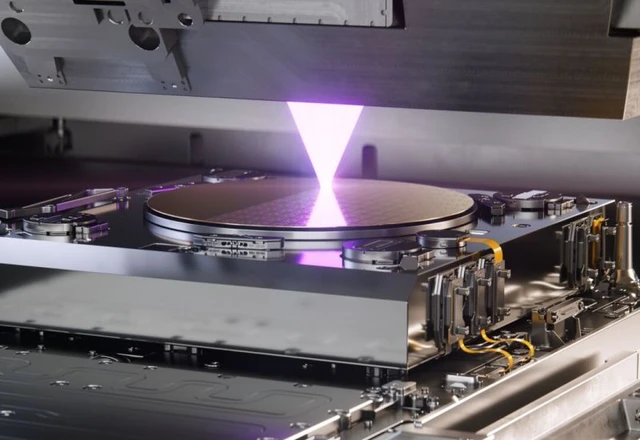
The contemporary microelectronics landscape is underpinned by a unique symbiosis of a few key players who have established a nearly insurmountable technological barrier. The linchpin of this ecosystem is Extreme Ultraviolet (EUV) lithography—a process utilizing ultra-short wavelength light to etch nanometer-scale transistors. Without this tool, the production of cutting-edge processors and energy-efficient chips is simply impossible. Currently, a virtual monopoly exists in this domain, held by the Netherlands-based ASML, the sole provider of these high-end scanners, and the Zeiss Group of Germany, which equips these machines with essential precision optics.
For China, this situation is further complicated by stringent export controls imposed by the United States and the Netherlands. Direct shipments of EUV equipment to the PRC have been blocked, effectively severing the country's access to the most advanced semiconductor manufacturing methods. In response, Beijing has launched a massive import-substitution program, attempting to develop its own proprietary stack of lithographic systems. However, the challenge transcends mere blueprint replication; it is a matter of fundamental physics and materials science, where precision is measured in atomic units.
Market analysts and representatives from the Zeiss Group concur that China's path toward mastering EUV technology independently will span at least 15 years. This timeline is realistic, given that the development of optical systems for extreme ultraviolet light requires decades of iteration and access to unique manufacturing capabilities. Even with vast state investment, the technological gap remains critical, and Western industry leaders maintain a significant advantage in the precision and stability of their instrumentation.
There is also a compelling paradox regarding previous-generation hardware—Deep Ultraviolet (DUV) lithography. Unlike EUV, DUV systems are supplied to China with few restrictions, excluding the most advanced models. However, experts note a dangerous trend: any further tightening of sanctions on DUV shipments could act as a catalyst. Rather than slowing China's progress, such measures may only intensify domestic development, forcing Chinese engineers to seek workarounds and accelerate the creation of homegrown alternatives.
The scale of Western technological influence on the global market is difficult to overstate. Zeiss optical components are utilized in the production of approximately 80% of all integrated circuits worldwide. This positions the company not merely as a supplier, but as the actual foundation of the modern digital economy. Within this framework, China's pursuit of autonomy becomes a long-term marathon, where the outcome will depend not only on financial resources but on the ability to engineer an entirely new baseline for precision optics.
 Intel’s Strategic Play for Advanced Packaging Supremacy