The contemporary tech landscape is frequently propelled by hype cycles, where companies pivot toward trending sectors to secure venture capital and government funding. Dreame Technology, an established leader in home robotics, attempted a similar leap into the automotive industry with its ambitious "Starry Sky" project. However, the chasm between marketing promises and engineering reality proved insurmountable. This narrative serves as a cautionary tale regarding the risks of producing "vaporware" in an era of high stakes and soaring venture expectations.
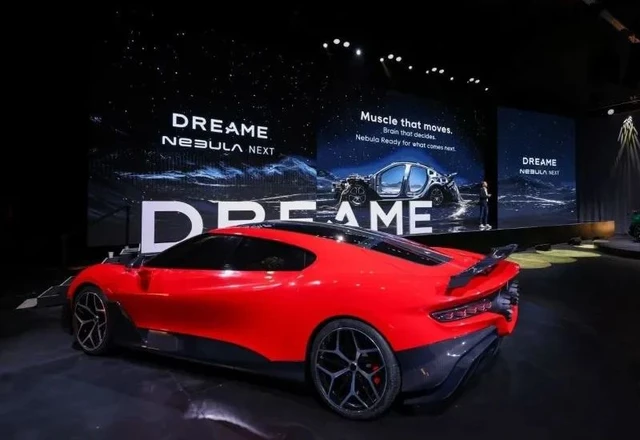
Dreame Technology’s foray into the automotive industry followed the classic playbook of a tech giant’s expansion. Having already secured a dominant position in the smart vacuum market, the company began boldly showcasing sports electric vehicle prototypes at the world's premier stages, including CES in Las Vegas. The centerpiece of these ambitions was the Nebula Next 01 Jet Edition—a concept designed to redefine the very notion of dynamics. Its claimed specifications were staggering: acceleration from 0 to 100 km/h in under one second, powered by an innovative jet propulsion system, alongside the integration of solid-state batteries across other models in the lineup.
Beneath the veneer of spectacle and media hype, however, lay a different reality. Project Starry Sky, intended to be the brand's next evolutionary leap, had effectively devolved into a costly exercise in brand positioning. It later emerged that the celebrated "jet supercar" was little more than a non-functional shell, commissioned from a third-party Shanghai contractor for a few hundred thousand dollars. The vehicle possessed none of the claimed performance and could only move at low speeds via remote control. The jet nozzles, which served as the model's signature feature, were installed purely for theatrical effect to create the illusion of a technological breakthrough.
This strategy of "conspicuous consumption" demanded significant resources. At its peak, Dreame’s automotive division ballooned to a workforce of a thousand employees. The company aggressively poached leading engineers from across the industry, offering exorbitant salaries to maintain the appearance of a fully operational R&D center. Yet, behind this performative recruitment, no actual development was taking place. A gradual downsizing began as early as the spring, and by the time the division was officially shuttered, only a few dozen people remained—with the technical specialists being the first to exit the project.
Beyond internal failures, the project faced mounting regulatory scrutiny. In China, there is a long-standing tradition of government grants for emerging automakers, an opportunity Dreame leveraged aggressively. However, the Chinese authorities' focus on the targeted use of funds led to rigorous audits. Suspicions regarding the misappropriation of state subsidies became one of the primary catalysts for the collapse of the company's automotive ambitions. It became evident that the division was less about engineering transport and more about securing financial resources under the guise of innovation.
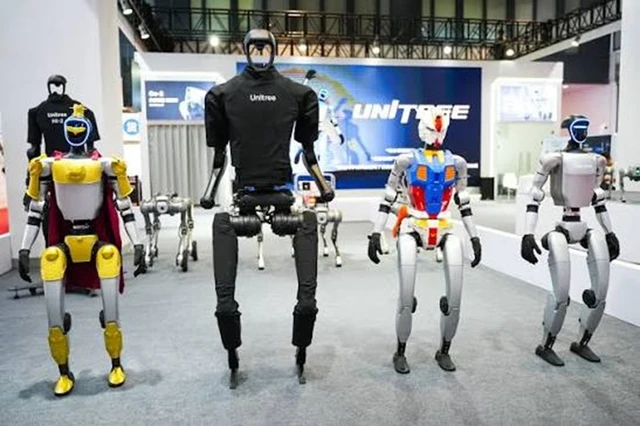
Ultimately, leadership decided to pivot back to its core competencies. CEO Yu Hao ordered a consolidation of all resources toward the company's flagship product lines: robotic vacuums, automated lawnmowers, two-wheeled electric transport, and the development of the Magic Atom robot series. Despite the high-profile failure in the automotive sector, the company's strategic goal—an IPO—remains intact. However, it will now be built upon the foundation of tangible products rather than remote-controlled mock-ups.
 The Economic Paradox of the GeForce RTX 5090