The high-performance GPU market is grappling with a renewed wave of acute shortages, effectively pricing gamers out of the flagship tier. Prices for the GeForce RTX 5090 have skyrocketed across both retail and secondary markets, transforming a consumer-grade product into a high-value scarce asset. This surge is driven by an explosion in demand from firms specializing in neural network development and artificial intelligence systems. The current climate signals a fundamental pivot in the perception of gaming hardware, which has definitively evolved from a leisure luxury into a critical computational tool.
The contemporary graphics card market is undergoing a peculiar metamorphosis: a device originally engineered for rendering gaming worlds has become the primary target for seekers of raw computational power. While the MSRP for the GeForce RTX 5090 was set at $2,000, the market reality has proven far more brutal. In the US, available units have soared to $5,000, while European prices have breached the €5,200 threshold. This price disparity signals a fundamental shift: the consumer segment is no longer the primary driver for flagship hardware.
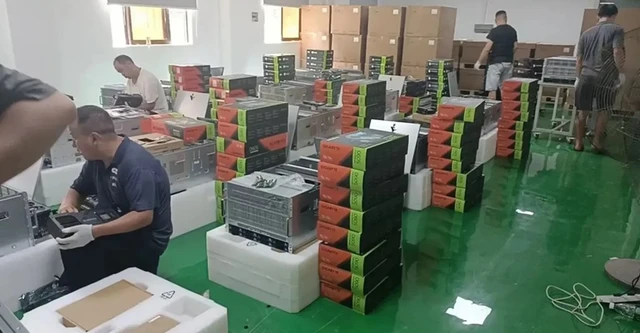
History is repeating itself, albeit with a different trajectory. A few years ago, the market was engulfed by a cryptocurrency mining frenzy that created artificial scarcity and inflated prices; today, the catalyst is the proliferation of artificial intelligence. Gaming cards are being acquired by the pallet to build bespoke AI servers. Evidence shows that enthusiasts and boutique firms are constructing systems that cluster up to seven such accelerators into a single machine to secure massive VRAM pools and high-speed data processing.
Technical scrutiny of the situation reveals a telling pattern in resource distribution. There is a pronounced indifference toward the GeForce RTX 5090 D. This variant was designed specifically to comply with export restrictions, resulting in an artificial degradation of AI performance while maintaining gaming benchmarks. The disparity in computational throughput is stark: while the standard RTX 5090 delivers 3,352 TOPS, the "D" version is capped at 2,375 TOPS. Furthermore, the D modification is programmatically throttled to prevent efficient multi-GPU scaling, rendering it virtually useless for constructing server clusters.
This leaves Nvidia in a paradoxical position. The company possesses every mechanism necessary to curb bulk acquisitions of consumer cards via distributors, as every unit carries a unique serial number. Yet, no meaningful measures to restrict pallet-scale sales—even within the Chinese market—have been implemented. This silence appears strategically calculated: Nvidia is keen to ensure its ecosystem and hardware penetrate the AI sector as deeply as possible, even if that occurs through the "backdoor" of its consumer lineups.
Ultimately, we are witnessing the erosion of the very definition of a "gaming graphics card." The GeForce RTX 5090 has ceased to be a mere instrument for 4K gaming. It has evolved into an accessible (relative to professional-grade solutions) AI training accelerator that, incidentally, happens to be capable of running games.
 Anthropic’s Strategic Financial Surge Ahead of Its IPO