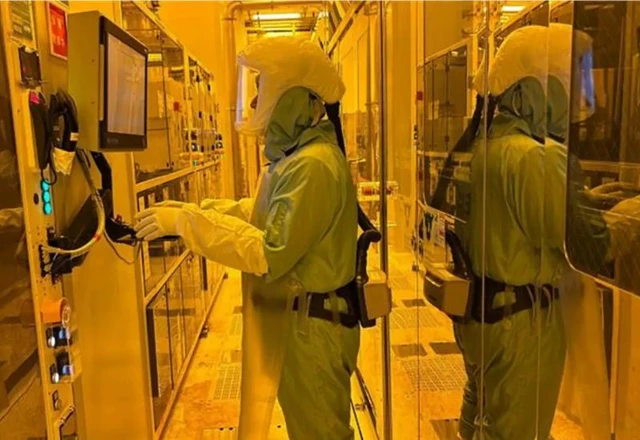
The global pursuit of technological sovereignty within the semiconductor industry has long since evolved beyond the battle over lithography hardware. Today, the primary theater of conflict has shifted toward Electronic Design Automation (EDA) software. China is doubling down on the deep integration of AI agents, aiming to drastically compress design and verification cycles. This transition represents a fundamental paradigm shift: a move away from the manual operation of tools toward the orchestration of intelligent systems.
Achieving full sovereignty in semiconductor manufacturing is impossible without mastery of the design toolchain. In the semiconductor industry, this phase is driven by Electronic Design Automation (EDA) systems, which enable the creation of intricate chip topologies before they are sent to the fab. Historically, this process demanded immense human capital and hundreds of manual iterations, rendering development slow and prohibitively expensive.
The current evolutionary phase of the industry is defined by a shift toward autonomous AI agents. Unlike rudimentary automation scripts, these agents are capable of independently optimizing designs and simulating the performance of future devices. In practice, this approach can slash chip layout timelines from four weeks to just one—a fourfold acceleration of a critical development stage that provides a massive competitive edge in time-to-market.
The fundamental shift lies in the role of the engineer itself. We are witnessing a transformation from a software operator into a manager of intelligent systems. Rather than interacting directly with design tools, the specialist now orchestrates a network of AI agents that handle routine optimization and topological debugging.
Parallel to this technological leap, the economic model for EDA providers is evolving. The traditional "per-seat" licensing model is becoming obsolete, replaced by a consumption-based model driven by AI tokens. This effectively turns chip design into a service, where payment is based on the actual intellectual output delivered rather than mere access to software.
To scale this approach, specialized platforms are being developed to ensure seamless interoperability between a developer's internal agents and those of external partners. Such an ecosystem allows the expertise of multiple firms to be integrated into a single, automated design pipeline.
However, China is not the sole contender in this race. In the US, Cadence has already unveiled the ChipStack AI Super Agent—a specialized "AI engineer" designed for the verification of highly complex data flows. Consequently, the industry is moving toward a state where semiconductor design becomes a competition of optimization algorithms rather than just the physical capabilities of fabrication plants. The strategic objective of capturing the global market for specialized software by 2030 now depends directly on whose AI agents prove most effective at solving the challenges of ultra-complex integration.

 Anthropic’s Strategic Financial Surge Ahead of Its IPO