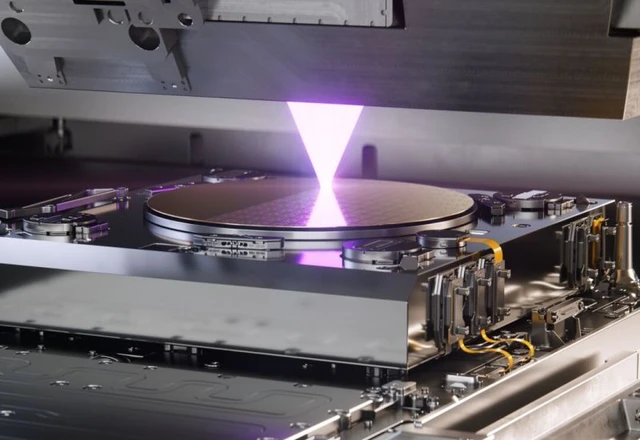
The observable universe represents but a fraction of reality; behind the luminous facade of stars and galaxies lies a colossal expanse of invisible mass. For decades, researchers have sought the elusive particle acting as the "cosmic glue" holding the fabric of existence together—a substance that has remained stubbornly invisible to every sensor deployed. A recent experiment conducted deep within the Earth's crust in the United States may have provided the first tangible evidence of this mysterious substance. We are witnessing a development that could fundamentally reshape our understanding of the very architecture of the cosmos.
Modern cosmology is grappling with a profound paradox: everything we can detect via telescopes and spectrometers—from the smallest hydrogen atoms to supermassive black holes—accounts for only about 15% of the universe's total matter. The remaining 85% consists of dark matter, a substance that neither emits, absorbs, nor reflects light. Its presence is betrayed only by gravity, which prevents galaxies from flying apart and steers the evolution of stellar clusters.
The quest to identify this elusive substance has become one of the most challenging hunts in scientific history. The leading candidate for the "dark matter particle" is the WIMP—the Weakly Interacting Massive Particle. According to theoretical models, millions of these particles stream through us every second, barely interacting with ordinary matter.
To capture such a rare event, researchers required radical isolation. The LUX-ZEPLIN (LZ) experiment is deployed 1.5 kilometers underground in South Dakota, situated within a former gold mine. This depth is essential to shield the experiment from "noise"—the cosmic rays and background radiation that could mimic a dark matter signal.
At the core of the apparatus is a massive cylindrical tank filled with ten tons of liquid xenon. The system operates on the anticipation of an exceedingly rare occurrence: a WIMP colliding with the nucleus of a xenon atom. Such an impact triggers what is known as "nuclear recoil," where the nucleus shifts, producing a faint flash of ultraviolet light. It is precisely this type of signal that was recorded during recent observations.
Data analysis, presented at a scientific conference in Japan and published in Physical Review Letters, indicates an interaction that aligns almost perfectly with a WIMP collision scenario. However, in high-energy physics, a single event does not constitute a discovery. An official announcement requires reaching a specific statistical threshold to rule out the possibility of random noise or unaccounted-for external interference.
At this stage, researchers are focused on rigorous data verification. Every alternative explanation must be exhausted before the event can be classified as extraordinary. This is a critical phase, as the detection of dark matter would effectively necessitate an expansion of the Standard Model of particle physics.
Understanding the nature of dark matter and its counterpart, dark energy, would provide the answer to how the structures of the universe originated. Without this "gravitational scaffolding," the Milky Way and our Solar System might never have formed, or they would have taken an entirely different shape.
Today, the search strategy is being pursued on three fronts: observing gravitational anomalies on galactic scales, attempting to synthesize particles in accelerators, and direct detection via deep-underground sensors like LZ. While a single flash of light in a xenon tank is not yet a definitive triumph, it offers physicists hope that the invisible side of our world is finally beginning to reveal itself.

 A Pragmatic Approach to Lunar Equipment Design