Humanity is transitioning from an era of fleeting lunar excursions toward the establishment of a comprehensive infrastructure for a permanent presence. The primary obstacle in this endeavor is the hostile nature of lunar regolith, which demands a fundamental paradigm shift in construction methodologies. Today, the strategic focus is pivoting from pure scientific exploration toward the industrialization of the Moon's surface. In this evolution, robotic systems have emerged as the critical catalyst for transforming a desolate landscape into a habitable outpost.
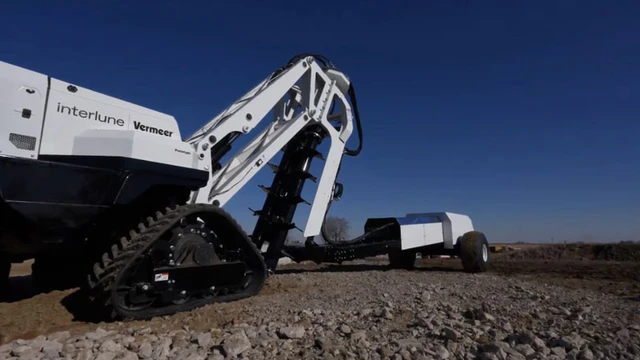
The prospect of lunar colonization necessitates a fundamental shift from isolated experiments to the industrial-scale production of specialized machinery. To this end, Interlune has joined forces with Vermeer, a global leader in heavy equipment. Their objective is the development of fully autonomous robotic platforms designed to handle the most grueling aspects of extraterrestrial settlement: site preparation, debris clearance, and soil compaction.
The technical approach to lunar surface processing diverges significantly from terrestrial methods. Rather than relying on traditional bucket excavators, engineers are pivoting toward a massive rotating milling drum. This tool allows for the efficient stripping of the upper regolith layer and the smoothing of irregularities, creating a stable foundation for landing pads, habitat modules, and infrastructure. In the long term, this toolkit will be expanded to include trenchers for utility installation and systems for constructing protective berms around power hubs.
Performance and energy efficiency are paramount. The developed system is capable of processing up to 100 metric tons of regolith per hour, ensuring a continuous material flow. In a low-gravity environment, relying on sheer machine mass would be counterproductive; consequently, the design has been optimized to minimize power consumption and—critically—to reduce the volume of airborne dust, which remains one of the primary threats to lunar electronics and EVA suits.
Interestingly, the project originally evolved around the concept of mining Helium-3—a precious isotope essential for future thermonuclear reactors. However, a shift in NASA's priorities has redirected the mission: the primary focus is now the accelerated construction of permanent lunar bases. This pivot transforms heavy construction machinery from a supporting tool into a strategic asset.
One of the most daunting engineering hurdles is overcoming the disparity in gravitational regimes. On Earth, heavy machinery leverages its own weight to generate the necessary downward pressure when engaging with rock or soil. On the Moon, where gravity is only one-sixth that of Earth, this principle fails. To solve this, Interlune is collaborating with the Colorado School of Mines to develop sophisticated physical models, calculating the optimal angle of attack for the tooling, penetration force, and component wear rates.
The challenge is compounded by the extreme abrasiveness of lunar dust. In the absence of an atmosphere and liquid water, regolith particles possess jagged, sharp edges that effectively grind down metal surfaces. Rigorous testing using soil simulants aims to eliminate the risk of mechanical seizure and premature equipment failure. The first demonstration complex is slated for deployment between 2028 and 2029, marking the first real-world test of industrial construction beyond Earth.
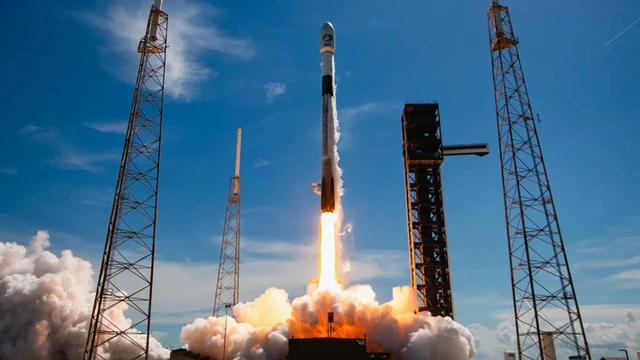 The Era of Seven Hundred Falcon Family Launches