The global energy transition demands a search for resources that transcend conventional engineering boundaries. For too long, traditional wind power has been constrained by the physical limits of tower height and the inherent volatility of surface-level air currents. China is now proposing a radical shift, relocating power generation directly into the sky. Project S4000 heralds a new era of atmospheric exploration, transforming stratospheric winds into a viable and consistent source of energy.
Modern wind energy faces a fundamental physical constraint: the lower the turbine, the more it is plagued by turbulence and topographical irregularities. At higher altitudes, however, air currents become denser, more stable, and more powerful, allowing for a dramatic increase in the capacity factor. This principle is the cornerstone of the S4000, a system that recently completed successful trials at an altitude of 4,000 meters.
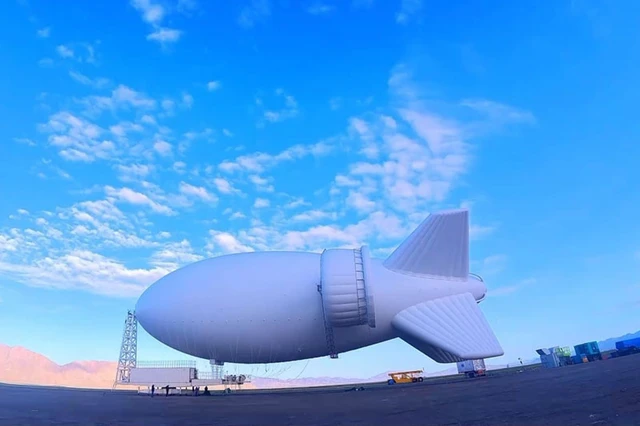
Technically, the S4000 is a hybrid of an aerostat and a power plant. In terms of scale, the platform is comparable to a Boeing 747, measuring 76 meters in length. A helium-filled envelope provides the necessary lift, allowing the system to essentially float within the airstream. Unlike traditional wind farms, which require colossal concrete foundations and steel towers to reach necessary heights, the S4000 leverages the atmosphere itself as its support. Compact wind turbines integrated into the platform's structure convert the wind's kinetic energy into electricity, which is then transmitted to the ground via a specialized cable integrated into the tether.
The advantages of this approach transcend mere efficiency. The system's mobility makes it indispensable in extreme environments: deserts, high-altitude regions, or remote islands where permanent infrastructure is either economically unfeasible or technically impossible. Furthermore, such installations could become critical tools in the wake of industrial or natural disasters, enabling the rapid deployment of power where ground-based infrastructure has been decimated.
The transition from the previous S2000 version to the current S4000 prototype represented a formidable engineering feat. Doubling the altitude required a complete overhaul of the stabilization system. Engineers had to tackle a complex array of challenges, from ensuring the stability of a massive object against violent wind gusts to developing automated station-keeping systems and ensuring reliable power transmission over an ultra-long cable, which possesses significant weight of its own.
Currently, the S4000 serves as a demonstration prototype, yet its potential is striking: the platform's total generation capacity is estimated at approximately 3 MW. The system's developer, SAWES Energy, is already seeing commercial interest in the smaller S1500 and S2000 versions, signaling the market viability of the concept.
This initiative is part of China's broader national energy strategy. Alongside aerostat platforms, other high-altitude technologies are emerging, such as giant energy kites with surface areas up to 5,000 m². In these systems, the thrust of the airflow is used to drive ground-based generators via a tether system. Together, these developments are forming a comprehensive technological stack for "high-altitude energy," which could fundamentally reshape the global landscape of distributed generation.
 Semiconductors for 600°C Operation