The global arms race in artificial intelligence and robotics is entering an era of overt protectionism. The U.S. Federal Communications Commission's decision to restrict the import of foreign robots has triggered a new escalation in tensions between the world's two largest economies. At stake are not only consumer electronics but also advanced humanoid robotics—a sector where China currently holds a competitive edge. This conflict underscores Washington's drive toward absolute technological sovereignty, pursued even at the cost of fracturing global supply chains.
The technological divide between the US and China has evolved beyond mere patent disputes or trade tariffs; it now concerns the physical embodiment of artificial intelligence. The Federal Communications Commission's (FCC) intent to ban foreign robotics—ranging from simple domestic vacuums to sophisticated humanoid systems—effectively represents an attempt to erect a digital and mechanical firewall around the American market. For Beijing, this move signals a shift toward a strategy of total containment, triggering a predictable response from China's Ministry of Commerce.
Beijing emphasizes that it has maintained a policy of restraint regarding trade restrictions until now, but warns that these new FCC measures jeopardize the economic stability of both nations. In response to this pressure, China's Ministry of Commerce has openly signaled the possibility of countermeasures. This confrontation transcends simple market protectionism; it is fundamentally about data sovereignty and security, as any modern robot serves as a mobile sensor capable of harvesting vast quantities of environmental intelligence.
The political climate only heightens the tension. The anticipated meeting between Donald Trump and Xi Jinping unfolds against a backdrop of escalating AI rhetoric. Accusations of "stealing" AI models, voiced by US Treasury Secretary Scott Bessent, suggest that Washington views Chinese breakthroughs as products of industrial espionage rather than indigenous innovation. Simultaneously, the US administration is performing a delicate balancing act between stringent regulation and the need for strategic flexibility to preserve a technological leadership that now feels precarious.
The paradox of the current landscape is that Chinese firms are currently demonstrating superior velocity in the deployment of humanoid robots. According to Counterpoint data, the global top three—Agibot, Unitree, and UBTech—are exclusively Chinese. Even Tesla’s ambitious Optimus project, long considered the industry benchmark, ranks only fifth globally. Chinese manufacturers have successfully scaled production and optimized component costs more rapidly, building a robust ecosystem that is now colliding with a political wall.
The market reaction was instantaneous and severe. UBTech shares on the Hong Kong Stock Exchange saw a marked decline, reflecting investor anxiety over the loss of one of the world's most lucrative markets. Concurrently, a restructuring of supply chains is underway: North American distributors, such as Robostore, have already begun sourcing alternative domestic suppliers. This confirms the defining trend of the decade—the fragmentation of the global tech stack into isolated blocs, where political alignment outweighs technical superiority.

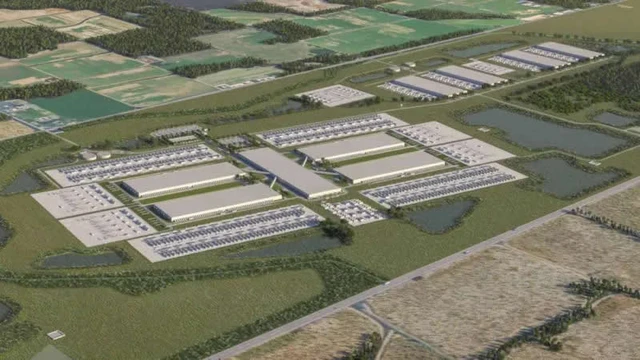 The Environmental Toll of U.S. Technological Leadership