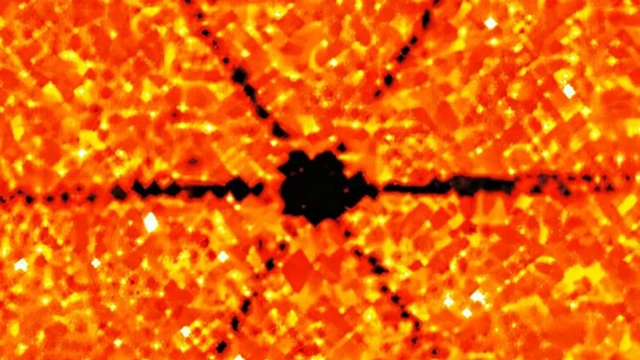
The threshold separating the surreal realm of quantum phenomena from the classical reality we experience daily has long stood as one of physics' most captivating enigmas. For decades, the scientific ambition to project quantum properties onto macroscopic objects—entities tangible to the human touch—seemed little more than a utopian fantasy. Yet, cutting-edge breakthroughs in materials science are now demonstrating that quantum entanglement can indeed manifest within objects on a centimeter scale. The discovery of collective particle behavior within so-called "strange metals" is paving the way for a fundamental reimagining of electrical conductivity and the architecture of quantum information.
For four decades, physicists have been locked in a struggle to decode the nature of "strange metals." These materials represent a profound anomaly, defying the conventions of Fermi liquid theory—the standard framework used to describe electron behavior in ordinary conductors. In the classical paradigm, a metal is viewed as a system where electrons behave as quasiparticles, generating a predictable flow of charge. Strange metals, typically complex alloys, occupy a liminal space between dielectrics and conductors; while they possess free electrons, their characteristic conductivity properties only emerge under extreme conditions, specifically near absolute zero.
One of the most enduring mysteries of these materials is the nature of their electrical current. In conventional conductors, current is transported discretely through the collective behavior of quasiparticles, a process accompanied by specific fluctuations. In strange metals, however, the current flows with an anomalous fluidity, resembling a continuous stream of liquid rather than a flow of discrete particles. This phenomenon remained inexplicable for years, until researchers began applying the concept of macroscopic quantum entanglement.
A significant breakthrough arrived via researchers at the TU Wien (Vienna University of Technology). The team synthesized a crystal of $\text{Ce}3\text{Pd}{20}\text{Si}_6$, composed of cerium, palladium, and silicon. At ultralow temperatures, this material exhibits a non-standard state: its electrical resistance scales almost linearly with temperature—a finding that fundamentally contradicts the laws of Fermi liquid theory, where the relationship follows a different mathematical trajectory.
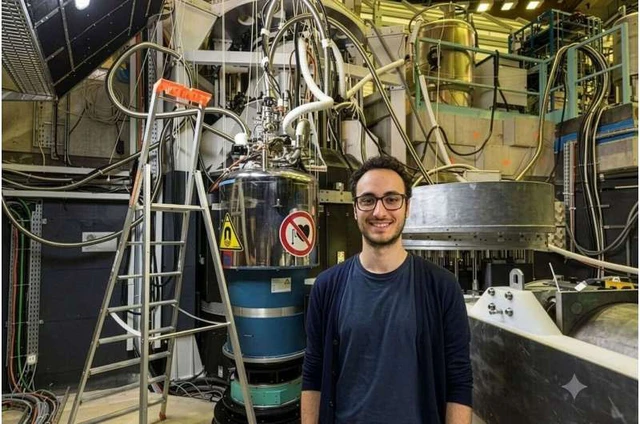
To probe this phenomenon, the team employed inelastic neutron scattering at the Institut Laue-Langevin in Grenoble. The crystal was cooled to tens of millikelvins and subjected to a powerful magnetic field of 1.73 T. During the experiment, neutron irradiation revealed an unexpected systemic response. Rather than transferring energy to a single, isolated particle—the norm for standard materials—the crystal responded collectively.
The key to unlocking this process was the Quantum Fisher Information (QFI), a specialized parameter in quantum metrology. QFI allows scientists to determine the sensitivity of a system and quantify the degree of correlation between its particles. Data analysis revealed that the system's response could not be explained by the actions of independent electrons. Instead, the researchers discovered group quantum entanglement: at least nine objects were acting as a single, unified entity.
This effect has been ironically dubbed "Schrödinger's anthill." While the classic thought experiment involving the cat dealt with the superposition of a single object, this phenomenon represents a collective resonance: an interaction with one particle instantaneously involves the entire entangled group.
This discovery is of fundamental importance to modern science. It bridges the gap between solid-state physics and quantum information theory, providing an elegant explanation for the "strangeness" of these metals. The disappearance of quasiparticles, the fluid flow of current, and the linear temperature dependence of resistance can now be described through the lens of macroscopic quantum entanglement. Consequently, a centimeter-scale crystal is no longer just a "piece of matter," but has become a sophisticated laboratory for studying quantum interactions on a scale perceptible to human observation.
 Semiconductors for 600°C Operation