Global climate change has emerged as the defining challenge of modern civilization, fundamentally threatening the stability of the world as we know it. Amidst this escalating uncertainty, there is an urgent imperative to establish an objective, timeless record of our current era. The Earth’s Black Box project is envisioned as a planetary "flight recorder," meticulously documenting humanity's every step toward an ecological tipping point. Situated in Tasmania, this archive is designed to safeguard the truth for future generations, ensuring its survival even should the world's external digital infrastructure collapse.
The concept of "Earth's Black Box" draws its inspiration from aviation, where the flight data recorder serves as the sole definitive source of truth in the wake of a catastrophe. On a planetary scale, this concept takes on an existential dimension: should humanity face an irreversible climatic collapse, future researchers—or other forms of intelligence—must have the means to reconstruct the chain of events that led to the end. After five years of meticulous preparation, the project has moved from theory to physical manifestation on the west coast of Tasmania, near the town of Queenstown.
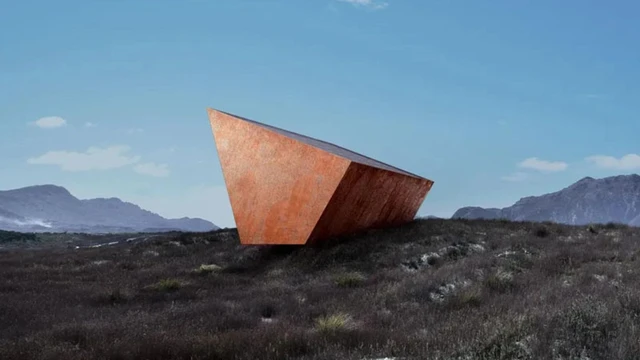
The choice of location was far from arbitrary. Tasmania was identified as a region of exceptional geological and political stability, a critical requirement for a facility designed to endure for centuries. The bunker itself is a massive reinforced concrete monolith, measuring 16 meters in length and 4 meters in height. The structure is engineered to withstand the most devastating natural disasters, from high-intensity hurricanes to seismic shifts. The complex's energy autonomy is ensured by solar panels integrated into the roof and protected by a layer of tempered glass, allowing the system to operate independently of external power grids.
Inside this technological vault lies a sophisticated array of equipment: data storage clusters, redundant power systems, and terminals for autonomous network connectivity. The primary engineering challenge here is ensuring the continuity of the record; the system must continue to accumulate information even amidst the total collapse of surrounding urban and industrial infrastructure.
The archive's data architecture is divided into two fundamental layers, providing a multidimensional portrait of the Anthropocene. The first layer consists of "hard" scientific metrics. This includes atmospheric carbon dioxide concentrations, temperature readings from land and the global ocean, ocean acidification levels, land-use dynamics, and biological extinction rates. These figures document the physical state of the planet, rendering it a measurable object.
Yet, raw data alone cannot explain the causality of these shifts, which is why the second layer is dedicated to the human element. This archive captures political decisions, protocols from climate summits, publications from leading media outlets, and even vast datasets from social networks. It is an attempt to document the societal response—the levels of collective denial or, conversely, profound despair. In this way, future generations will see more than just a temperature gradient; they will see exactly how society reacted to these signals, the compromises brokered in boardroom meetings, and the discourse shared in personal blogs.
Data collection commenced in 2021, coinciding with the COP26 summit in Glasgow, and the volume of information has grown steadily since. Thanks to modern compression algorithms and multi-level archiving, the current system is capable of operating seamlessly for 30 to 50 years. However, the project's creators are looking further ahead. In the long term, they plan to transition to storage methods that are independent of electronics and magnetic media—specifically, exploring the possibility of engraving data onto steel plates capable of surviving for millennia.
Earth’s Black Box transcends the boundaries of a mere engineering project. It is simultaneously an artistic statement and an instrument of ultimate public accountability. The archive's creators openly acknowledge that the bunker will not stop the glaciers from melting nor prevent droughts. Its purpose is to serve as an honest mirror reflecting humanity's entire trajectory in the face of a global challenge, precluding any possibility of historical revisionism in the future.
 The Economic Paradox of the GeForce RTX 5090