The pursuit of absolute black has always occupied the intersection of fine art and fundamental physics. Where traditional pigments merely darken a surface, modern nanomaterials possess the capacity to virtually erase an object from visual perception. Researchers in Singapore have introduced a coating that renders a vehicle a spatial anomaly, absorbing nearly all incident light. This technology re-envisions the concepts of form and volume, transforming a luxury asset into a silhouette of absolute void.
Within the realm of high-end automotive design, black has long transcended its role as a mere palette choice, evolving into a symbol of status and understated power. However, current market demands—particularly within the ultra-luxury segment of the Asian region—have driven a search for materials that push beyond the boundaries of conventional optics. The result is a new super-black composite developed by NIPSEA, which creates a "void in reality" effect, effectively erasing all visible surface contours.
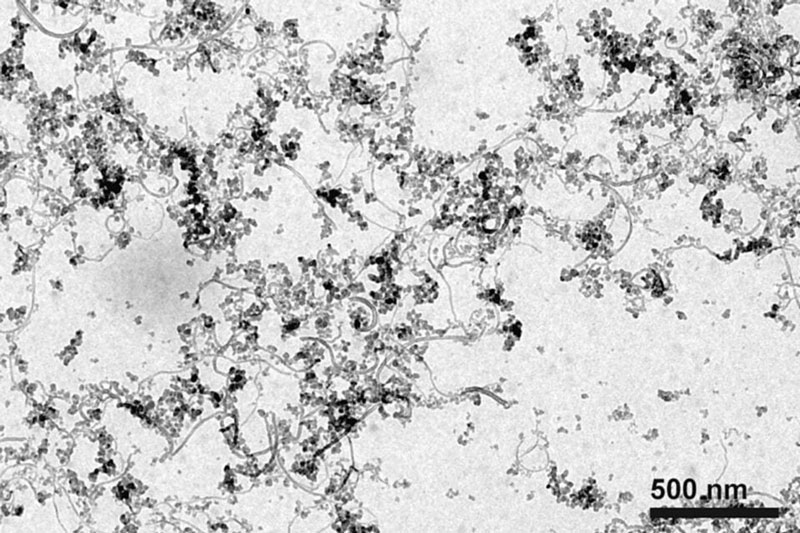
The secret to this visual phenomenon lies in the synergy of two distinct light-absorption mechanisms. While conventional black paints rely on carbon particles to absorb photons in a standard mode, this new coating employs what is known as structural absorption. A water-based composite mixture, consisting of carbon black and carbon nanotubes, forms a complex microstructure. Rather than simply reflecting or absorbing light at the surface, incoming photons are repeatedly scattered within this "trap," becoming lost in a labyrinth of nanotubes until they are completely extinguished. The results are staggering: average absorption in the visible spectrum reaches 99.90%, with a negligible reflection coefficient of just 0.08%.
Experiments with "absolute black" are not entirely unprecedented. Roughly seven years ago, the world witnessed a BMW X6 coated in Vantablack. Despite a similar reliance on carbon nanotubes, Vantablack consists of a strictly vertically aligned array of tubes, rendering its structure fragile and notoriously difficult to apply. Consequently, Vantablack never transitioned into a mass-market automotive product, finding its niche instead in highly specialized military applications, such as submarine camouflage.
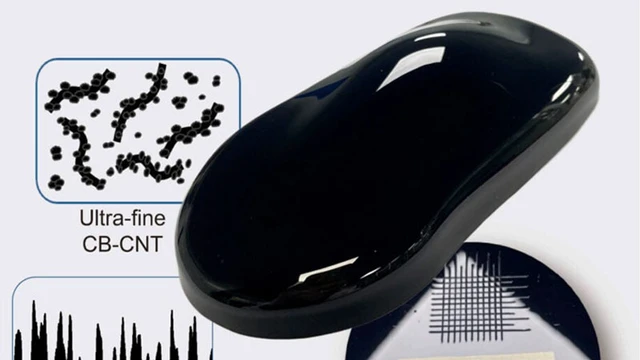
However, from the perspectives of cognitive psychology and road safety, "perfect black" presents a significant challenge. When the human brain can no longer discern surface details, shadows, or the curves of a chassis, the object is perceived as a two-dimensional void. This disorients other drivers and pedestrians, creating a genuine risk of accidents. To mitigate this effect, the Singapore-based developers proposed shifting the coating's texture from matte to glossy. This luster reintroduces minimal light accents, allowing the brain to perceive the object's volume while maintaining a deep, almost mystical black hue.
Beyond its optical properties, chemical resilience has emerged as a critical factor. Previous nanotube-based coatings suffered from poor adhesion and high sensitivity to moisture. The Singaporean team focused heavily on durability: samples were subjected to rigorous testing, including ten-day immersion in water at 40°C and prolonged exposure to 95% humidity. The material demonstrated high stability, showing no signs of peeling or degradation.
Nevertheless, the journey from laboratory prototype to mass production is far from complete. Before this coating hits the streets, it must undergo full certification according to industrial application standards and prove its wear resistance in real-world conditions—where the impact of road salts, ultraviolet radiation, and mechanical damage will be far more aggressive than in the sterile environment of a test lab.
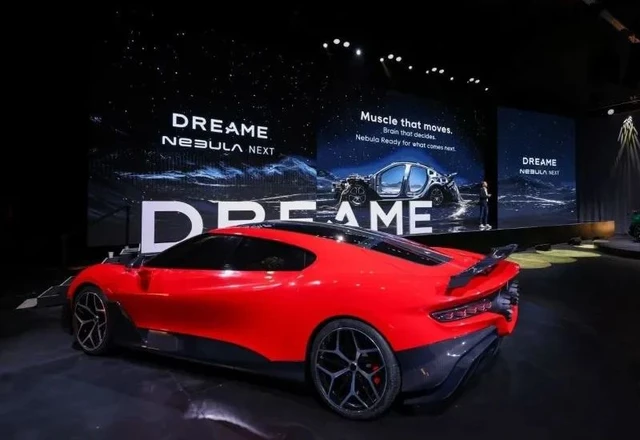 The Shattered Illusion of the Dreame Jet Hypercar