For decades, the fight against cancer has relied on the blunt force of aggressive chemical and radiation therapies. Today, however, modern science is shifting toward a new paradigm: the precision-engineered physical eradication of pathogens. A pioneering method, based on the concept of a "molecular jackhammer," enables the literal rupture of cancer cell membranes. This approach paves the way for a new therapeutic frontier—one defined by high efficacy and minimal systemic side effects.
In modern oncology, the search for viable alternatives to chemotherapy and surgical intervention remains a paramount priority. Traditional modalities are often excessively invasive or induce systemic toxicity, indiscriminately damaging healthy tissues. The solution may lie in a paradigm shift from biochemical intervention to purely mechanical disruption—where the instrument of tumor eradication is not a cytotoxic agent, but high-frequency vibration at the molecular scale.
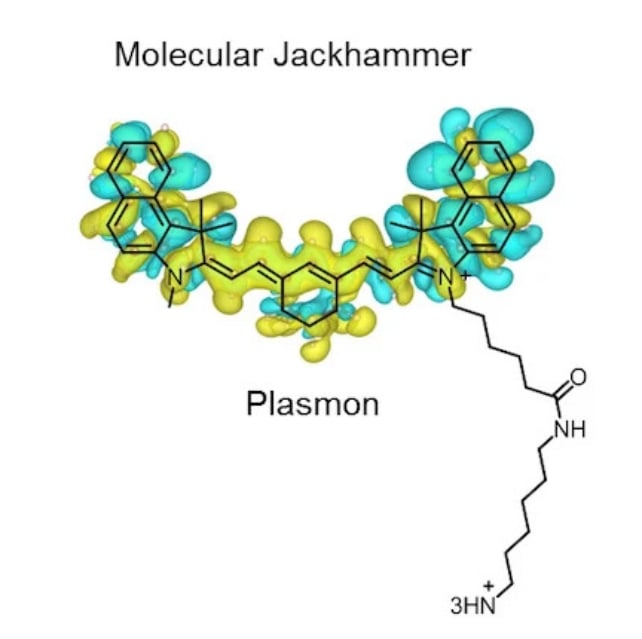
At the heart of this breakthrough is the use of aminocyanine molecules—synthetic dyes long utilized in medical imaging for cancer diagnostics. These compounds are characterized by their stability in aqueous environments and their ability to adhere effectively to cell membranes. However, researchers have discovered that under a specific external stimulus, these molecules can be transformed from passive markers into active weapons.
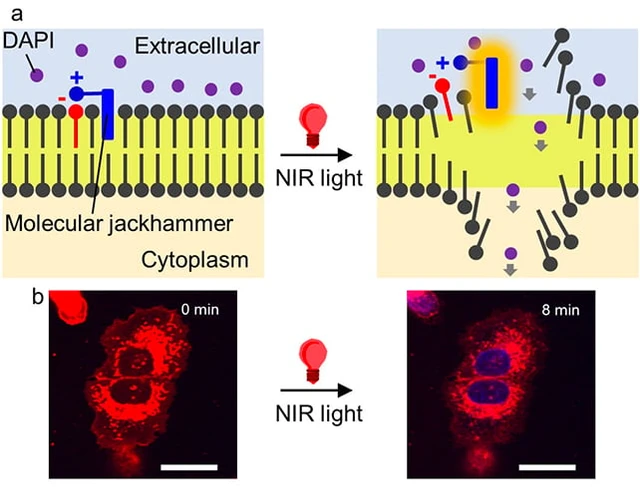
The activation mechanism relies on near-infrared (NIR) radiation. The selection of this specific spectrum is strategic: infrared light possesses the ability to penetrate deeply into biological tissues, potentially allowing for the treatment of tumors in internal organs and bones non-invasively. Under the influence of this radiation, electrons within the aminocyanine molecules form plasmons—collectively oscillating structures.
These plasmons drive the entire molecule into a state of synchronous vibration at an incredible frequency—approximately 40 trillion times per second. In essence, this creates a "molecular jackhammer" that, once embedded in the membrane of a cancer cell, physically ruptures its structure. The process is rapid: cell destruction occurs within minutes, even at low drug dosages.
The efficacy of this method has been validated in a series of studies published in Nature Chemistry and Advanced Science. In laboratory settings, researchers achieved a 99% eradication rate of cancer cells. Furthermore, trials using murine melanoma models demonstrated that half of the test subjects were completely cured of the disease.
From a scientific perspective, this approach represents an evolutionary leap in the concept of molecular machinery, specifically Feringa-style molecular motors. While previous developments focused on creating complex nanomechanisms, the "molecular jackhammer" optimizes the process by leveraging the resonant properties of dyes to achieve a destructive effect.
One of the primary strategic advantages of mechanical disruption is the circumvention of drug resistance. Cancer cells possess a remarkable ability to adapt to chemical agents, developing defense mechanisms and altering transporter proteins. However, adapting to the physical rupture of the cellular envelope is virtually impossible—it is a fundamental structural collapse for which biological systems have no evolutionary defense.
Safety and toxicity profiles have also been rigorously analyzed. The findings indicate that in their inactive state, aminocyanine molecules are harmless to the organism; they are rapidly absorbed and cleared by healthy cells without causing systemic failure. Consequently, the therapeutic effect is triggered only within the precise zone of the infrared beam, providing surgical precision without the need for a scalpel.
Although the technology is in its nascent stages, the development of various iterations of these "molecular hammers" allows the method to be tailored to different types of cancer, positioning it as one of the most promising frontiers in contemporary nanomedicine.
 Pushing the Boundaries of Energy Density in Lithium-Based Systems