The automotive industry is on the cusp of a paradigm shift in energy storage. Solid-state batteries promise to finally eliminate "range anxiety" and drastically slash charging times for electric vehicles. While Li Auto is making strategic strides toward adopting this technology, the road to mass-market deployment remains fraught with challenges. Scaling from laboratory prototypes to industrial-grade production demands the resolution of formidable engineering hurdles. This technological leap has the potential to completely redefine the benchmarks for efficiency and reliability in modern electric mobility.
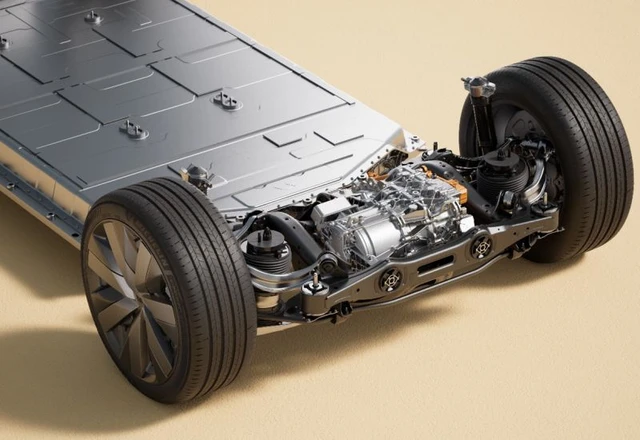
The trajectory of traction battery evolution is currently shifting away from liquid electrolytes. Solid-state solutions offer manufacturers extraordinary potential: significant weight reduction, enhanced safety by eliminating combustible components, and—critically for northern climates—resilience against extreme low temperatures. In this context, Li Auto's ambitions appear well-founded, albeit cautious.
According to internal roadmaps, the first limited batches of vehicles equipped with solid-state batteries are expected to hit the roads between 2027 and 2028. However, beneath this optimism lies the harsh reality of industrial scaling. Liu Zhimin, Director of Traction Batteries, openly acknowledges that establishing a reliable foundation for mass production is a protracted process. Company forecasts suggest that a full-scale transition to this technology will not occur for at least another five years, pushing the tipping point for mass adoption to 2032.
Interestingly, Li Auto has already completed an initial proof-of-concept phase, though it did so quietly. Starting in December 2025, the company began offering customers smart glasses powered by solid-state cells. This venture served as a testing ground for chemical stability; however, the chasm between powering a wearable gadget and the power architecture of a multi-ton vehicle is vast. Scaling requires more than just increasing volume; it demands a complete overhaul of the production chain, guaranteed long-term durability, and, most importantly, achieving a commercially viable unit cost.
Li Auto’s strategy relies on a dual-track approach: the company continues to advance proprietary R&D initiated back in 2020 while simultaneously integrating into the ecosystems of industry titans. Close collaborations with Sunwoda and CALB are already yielding results in the form of current-generation batteries powering the L6 and L8 hybrids, as well as the i8 and i9 electric vehicles. This creates the necessary foundation for the transition to solid-state electrolytes, where Li Auto handles the engineering and design while its partners provide the manufacturing capacity.
The competitive landscape in China has reached a fever pitch. Giants like CATL and BYD are also targeting the launch of small-series solid-state batteries by 2027. Meanwhile, Chery is pursuing an incremental path, implementing hybrid electrolytes that serve as a bridge to fully solid-state systems. Even more aggressive is FAW, which claims it will be ready to sell production EVs with this power source as early as next year.
Against this backdrop, a critical regulatory issue has emerged. To prevent marketing sleight-of-hand, Chinese regulators have imposed a strict ban on using the term "solid-state" when referring to semi-solid or gel-based batteries. This distinction is essential to ensure consumers clearly understand the difference between transitional technologies and a true technological breakthrough.
The ultimate goal of this race is breaking the 1,000-kilometer range barrier on a single charge. Achieving this milestone, coupled with ultra-fast charging speeds, will transform the electric vehicle from a compromised alternative into the undisputed leader of the transportation market.
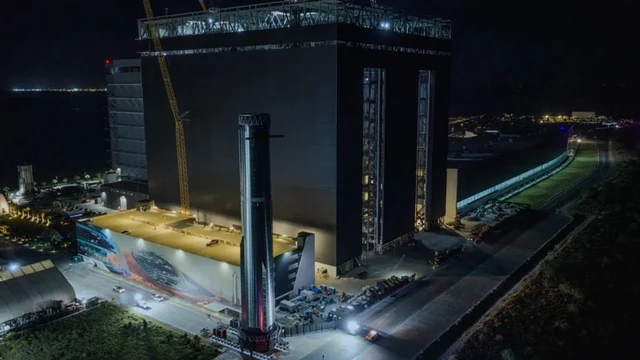 Starship’s Orbital Breakthrough