The race for space supremacy is entering a new phase, one where the line between experimental flight and commercial viability is becoming increasingly blurred. SpaceX is gearing up for its most ambitious Starship test to date—a pivotal moment marking the transition from suborbital "hops" to a full-scale orbital insertion. This launch serves as the ultimate stress test for the most powerful launch vehicle ever engineered. The mission's outcome will dictate the deployment velocity of next-generation global connectivity networks and pave the way for deep-space exploration.
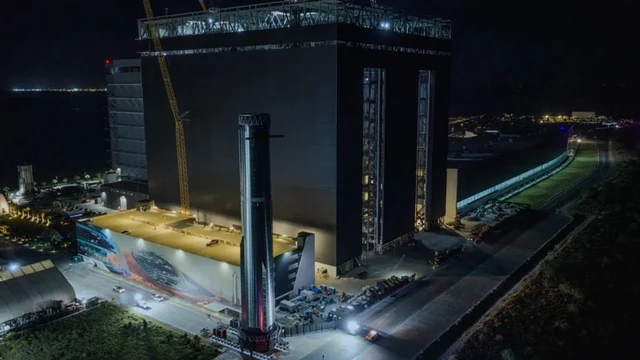
Preparations for Starship's 14th test flight have entered their final phase: the colossal Super Heavy booster has already taken its place on the launch pad at the Starbase complex in South Texas. Despite a schedule adjustment pushing the launch to September 28, the scale of the upcoming event remains unchanged. For SpaceX, this flight transcends a mere engineering experiment to become a historic milestone, as the spacecraft is slated to achieve a full Earth orbit for the first time.
The mission's primary operational objective will be the orbital deployment of a Starlink V3 satellite payload. These spacecraft are significantly more massive and voluminous than their predecessors, placing heightened demands on payload capacity and injection precision. The previous 13th flight already demonstrated the system's ability to handle such loads; however, those satellites remained on a suborbital trajectory and inevitably incinerated in the dense layers of the atmosphere. Now, the goal is to establish a sustainable orbital presence.
The flight profile envisions a distinct division of labor between the two stages. After providing the initial impulse, the Super Heavy booster will separate from the spacecraft and, seven minutes post-launch, execute a controlled descent, culminating in a splashdown in the Gulf of Mexico. Meanwhile, the upper stage—the Ship itself—will continue its ascent, reaching low Earth orbit (LEO) to deploy 26 next-generation satellites.
The orbital phase will serve as a rigorous endurance test. The spacecraft is slated to complete approximately six revolutions around the planet, spending roughly ten hours in the vacuum of space. Upon completing its primary objective, the vehicle will initiate a series of reentry maneuvers. The final splashdown point will be off the coast of Chile in the Pacific Ocean—a shift in landing zone compared to previous missions in the Indian Ocean, underscoring an expansion in testing geography and the search for optimal return trajectories.
It is critical to recognize that the current strategy of ocean splashdowns is merely a transitional phase. The Starship philosophy is rooted in the concept of absolute reusability. Ultimately, both Super Heavy and Ship are intended to return directly to the launch tower, where they will be intercepted by the "Mechazilla" mechanical arms. However, at this stage, the risk of damaging costly infrastructure remains too high; consequently, SpaceX is opting for a conservative approach with splashdowns, deferring the "chopstick" capture for future launches.
The success of Flight 14 will provide the foundation for the system's full operational iteration. More formidable technological hurdles lie ahead: the mastery of orbital refueling—the linchpin for lunar and Martian missions—and the transition to fully autonomous recovery of both stages at the spaceport. Starship is evolving beyond a mere rocket; it is becoming a universal transport hub capable of radically transforming the economics of space access.
 The Hidden Hydrological History of Early Mars