The concept of the autopilot, long relegated to a mere assistive tool, is evolving into a comprehensive replacement for human intervention. Modern aviation stands on the precipice of a paradigm shift, moving toward a future where aircraft operation is a fully autonomous process. Joby Aviation’s recent success with its transcontinental flight underscores the technical maturity of current machine vision and flight control systems. This milestone paves the way for a new era of global logistics and strategic supply chain management.
The irony of aviation history lies in the fact that the term "autopilot" was adopted by the automotive industry, even though in the skies, it remained a fragmented tool for decades. Traditional automation systems helped pilots maintain a course at a specific flight level, but the critical phases—takeoff, ground maneuvering, and landing—always remained the sole prerogative of the human pilot. This paradigm shifted with the emergence of new control algorithms that allow an aircraft to operate completely independently across every stage of its journey.
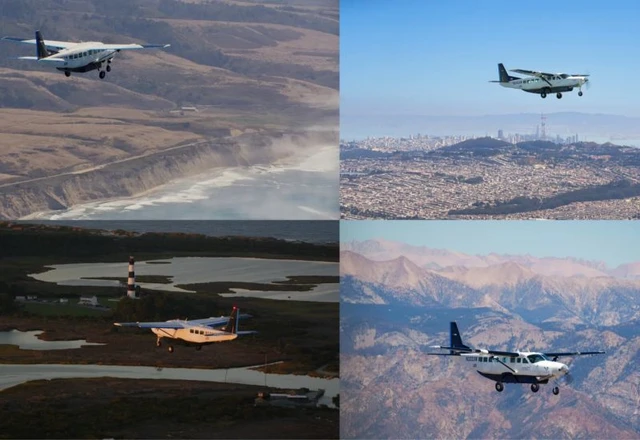
A recent flight of a Cessna Caravan served as a vivid demonstration of this technological pivot. The aircraft covered a distance of 5,148 kilometers without a single instance of human intervention. Although a pilot was physically present in the cockpit for safety reasons, they remained a passive observer. The autonomous control system independently managed taxiing on the runway, ascent, cruise, and the intricate process of descent and touchdown.
This flight was more than a mere demonstration of capability; it was a comprehensive real-world stress test. A route featuring intermediate stops allowed the autopilot to be tested across various weather scenarios and in interaction with ground infrastructure of varying complexity. Particular emphasis was placed on the reliability of communication links: operators in California and South Carolina monitored the flight continuously, positioned up to 3,738 kilometers away from the aircraft.
It is poetic that the destination was North Carolina—in close proximity to where the Wright brothers achieved the first controlled flight in history in 1903. If that first leap heralded the era of human piloting, today's success by Joby Aviation marks the transition to the era of intelligent machines.
The technical bedrock of this achievement was laid in 2024 following the integration of Xwing's developments. To date, the autonomous control stack has been flight-tested in over 400 missions, totaling approximately 800 hours. This extensive data set has enabled the creation of a system capable of seamless integration into existing aviation infrastructure, unlocking immense potential for logistics, search-and-rescue operations, and military resupply.
The pragmatic utility of autonomy is already backed by concrete metrics. Demonstrations have proven that unmanned transport can deliver mission-critical payloads and spare parts a full day faster than traditional military logistics chains. Furthermore, the ability to remotely operate the aircraft from over 6,400 kilometers away was confirmed, effectively erasing geographical constraints for the operator.
Having completed its transcontinental sprint, the Cessna Caravan is now preparing for its return. The upcoming journey across seven states—from North Carolina to Oregon—will be the next iteration in the process of transforming the skies into a fully automated space, where algorithmic precision and efficiency replace human intuition.
 The Societal Barrier to the Expansion of Neural Networks