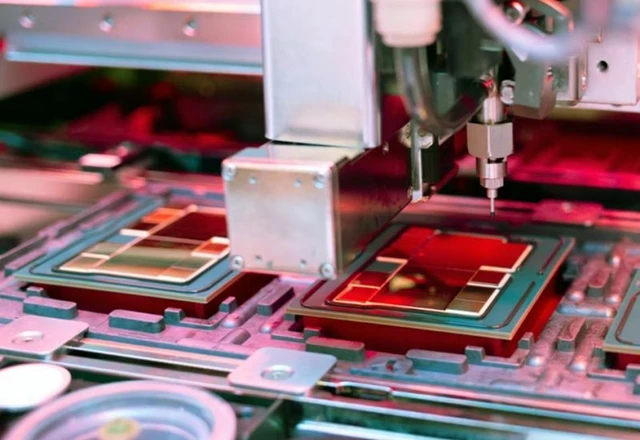
The global semiconductor landscape is undergoing tectonic shifts, as centers of influence migrate from traditional hubs toward emerging industrial corridors. India is positioning itself to become a pivotal node in this ecosystem, evolving beyond simple device assembly toward the fabrication of sophisticated technological components. Substantial state-led investments are designed to sever the nation's reliance on critical chip imports. This strategic pivot signals India's metamorphosis from a primary consumer market into a global manufacturing powerhouse.
The Indian government's success in localizing electronics production has already become a significant catalyst in the global market. By the spring of this year, a quarter of all iPhones sold worldwide were assembled within India. This milestone is the direct result of an aggressive strategy to attract tech giants and the creation of a highly favorable ecosystem for their contractors.
However, the assembly of finished devices is merely the opening gambit of a much larger blueprint. The next phase focuses on the deep localization of component manufacturing, with a primary emphasis on semiconductors. Under the new Semicon 2.0 state program, Indian authorities have allocated nearly $20 billion to develop a national electronics and chip industry. This initiative is designed to define the sector's trajectory for the coming years, transitioning the country from a mere assembly hub into a comprehensive center for research and development.
The allocation of funds is strategic: approximately one-third of the budget is dedicated to supporting domestic smartphone production, while the remainder is earmarked for building the infrastructure necessary for chip design and fabrication. The ultimate goal is ambitious—the achievement of full technological sovereignty. By cultivating its own chip designers, India aims to minimize risks associated with external supply chains. According to the Semicon 2.0 roadmap, the first fully integrated semiconductor fabrication plant is slated for launch by 2028.
To stimulate market growth, the government is implementing a system of flexible subsidies for locally assembled smartphones. The state covers between 2.5% and 5% of their cost, with an additional 1.5% incentive available if the share of local components increases. This approach compels manufacturers not only to relocate their assembly lines but to actively develop a robust internal supply chain.
Industry titans are already deeply embedded in this process. Apple's primary contractors, including Tata Electronics and Foxconn, have effectively shifted the production of nearly the entire current iPhone lineup to India. Simultaneously, Samsung Electronics is aggressively scaling its manufacturing footprint within the country.
Semicon 2.0 is not an isolated project; it builds upon the foundation of a previous 2021 initiative that provided $10 billion in subsidies. This incremental approach is already yielding tangible results: U.S.-based Micron Technology has announced the establishment of a memory chip packaging and testing facility with a total project budget of $2.75 billion.
From a global economic perspective, India's maneuvers align perfectly with the "China Plus One" strategy, as corporations seek to diversify production risks and reduce their dependence on China. The transition from assembly and testing to full-scale lithographic production represents a formidable technological leap requiring massive capital expenditure and precision execution. However, it is precisely this leap that will allow India to emerge as a new center of power in the global digital economy.

 The Horizon of China's Technological Sovereignty in Lithography