The race to return humans to the lunar surface has entered a phase of critical technical validation. SpaceX is currently finalizing Starship V3, a system engineered to fundamentally disrupt the paradigm of interplanetary travel. Recent static fire tests have set the stage for the thirteenth test flight—a pivotal milestone that will determine the viability of some of the most ambitious engineering feats in the history of modern aerospace.
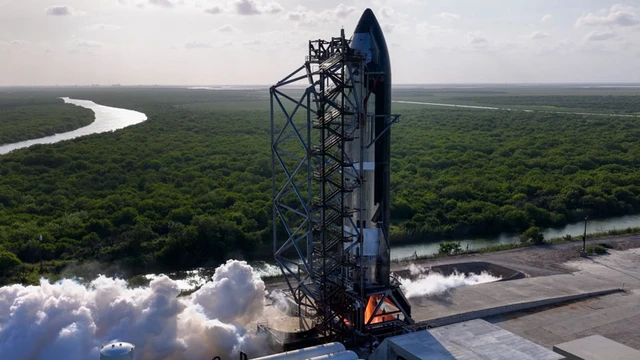
Preparations for Starship's thirteenth test flight have shifted into high gear. A pivotal milestone in this phase was the first static fire test of the ship's latest iteration. During the trial, a single Raptor 3 atmospheric engine was ignited for 15 seconds, allowing engineers to verify system integrity and performance ahead of the full-scale launch.
Such static fires are a standard pre-flight protocol. These tests ensure that the propulsion system can withstand extreme thermal and vibrational stresses while remaining secured to the launch pad. The Starship V3 configuration utilizes six Raptor 3 engines: three optimized for the dense layers of the atmosphere and three engineered for maximum efficiency in the vacuum of deep space.
The thrust management logic evolves according to the mission phase. Following separation from the Super Heavy booster, the ship engages all six engines simultaneously to achieve its target trajectory. However, during the final stage of atmospheric reentry, only a single atmospheric engine is activated—the very component subjected to the recent tests. This engine is critical for the vehicle's controlled deceleration and precise positioning.
The Starship V3 represents the current zenith of the project's evolution. Standing at 124.4 meters, it is the most imposing and powerful iteration of the launch vehicle created by SpaceX. These formidable dimensions are driven not only by the desire to increase payload capacity but also by the necessity of fulfilling the complex mission requirements mandated by NASA.
The central technological challenge for V3 is the orbital propellant transfer demonstration system. Under the current lunar exploration architecture, Starship is designated as the primary landing and return vehicle. However, due to its immense mass and the energy required to escape Earth's gravity, the ship's tanks are largely depleted by the time it reaches orbit. To reach the lunar surface and return safely, the craft must be refueled directly in space.
The realization of orbital refueling would be a watershed moment for humanity. The success of this operation will serve as the foundation for all future interplanetary missions, transforming near-Earth space into a fully functional logistical nexus. Without mastering this technology, any ambitions regarding the colonization of Mars or the establishment of permanent lunar bases remain purely theoretical.
The current testing cadence, which includes ship static fires and subsequent booster trials, suggests that the thirteenth launch could occur by late summer. The window for SpaceX and NASA is narrow: a political mandate requires the return of American astronauts to the lunar surface by January 20, 2029. Given this rigid deadline, every Raptor 3 test is a decisive step toward a new era of lunar exploration.
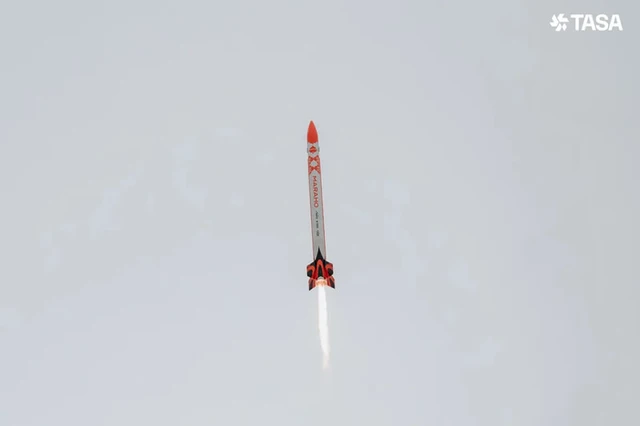 Taiwan's Space Program: The First Major Milestone