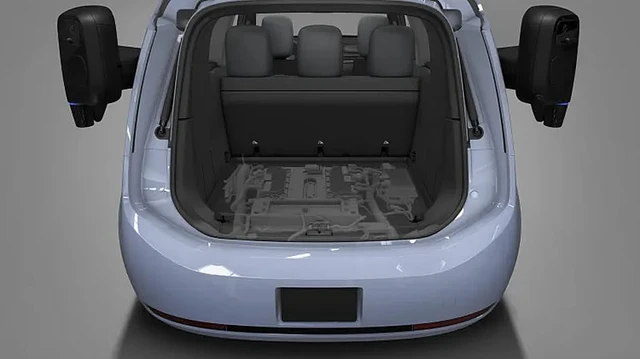
The boundary between automotive engineering and high-stakes spectacle often blurs when pushing machinery to its absolute limits. For years, "vertical loops" were seen as the exclusive domain of stripped-down supercars or purpose-built stunt vehicles. However, a recent demonstration in Wuhan has challenged this paradigm, effectively weaponizing the laws of physics as a potent marketing tool. The case of the Passion S EV proves that the synergy of raw power and precision electronics can defy gravity, even within a production-grade vehicle.
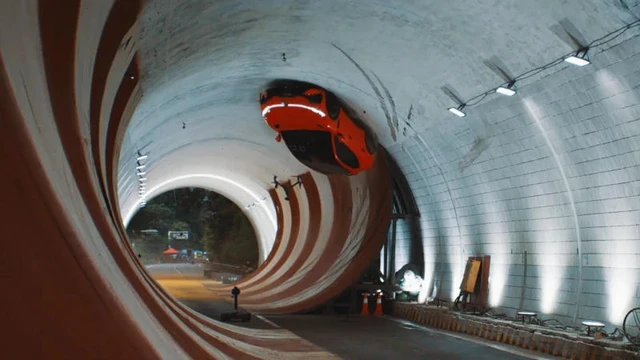
The genesis of this audacious stunt lies in the automotive marketing aesthetics of a decade ago. Sixteen years ago, the world was captivated by an iconic video featuring Michael Schumacher in a Mercedes-Benz SLS AMG performing a virtual wall-ride loop inside a tunnel. Despite the enduring debate over who was actually behind the wheel—the Formula 1 legend or a professional stunt driver—the feat became the gold standard for dynamics and daring. Today, Voyah has decided to reinterpret this experience, albeit with a far more daunting technical challenge: replacing the lightweight sports car with a mid-size SUV.
The primary obstacle was mass. Unlike a supercar, an electric vehicle carries a massive battery pack and a suite of intelligent systems that cannot be stripped away without compromising its status as a "production model." To compensate for this weight and defy gravity, the laws of physics demanded absolute precision. The vehicle had to reach a speed of 130 km/h and enter the curve at a strictly calibrated angle of 16°. At this precise juncture, centrifugal force becomes the dominant factor, effectively "pinning" the car to the tunnel ceiling and enabling a full 360-degree rotation.
The critical factor here was the razor-thin margin for error regarding speed. A deficit of just 3–5 km/h would mean an instantaneous loss of traction and an inevitable crash. Under such conditions, any dip in power delivery could prove fatal, shifting the focus from driver skill to the engineering excellence of the powertrain.
The technological foundation of this success is a dual-motor all-wheel-drive system delivering a combined 475 kW (637 hp) and 765 Nm of torque. However, the key was not raw power, but energy transmission efficiency. The implementation of a Silicon Carbide (SiC) based platform operating at 800V allowed the electric drivetrain to achieve an efficiency rating of 93.8%. SiC semiconductors are significantly more efficient than traditional silicon; they handle higher voltages with lower thermal losses, which is critical during sudden peak loads.
To prevent component overheating during extreme acceleration, an active grille shutter system was employed. Intelligent thermal management ensured that the power units would not enter thermal throttling exactly when the vehicle reached the apex of the loop.
From a commercial perspective, the Passion S is positioned as a high-tech product for the mass market. Pre-sales launched in July, with the top-tier trim priced at 309,900 yuan (approximately $45,600). The official market launch and final retail pricing are slated for mid-August, transforming this stunt from a mere spectacle into a large-scale technical demonstration ahead of the product's full rollout.
 Driver Attention Monitoring in Tesla Electric Vehicles