Digital transformation is systematically eradicating physical media from the mass market, relegating optical discs to a niche pursuit for enthusiasts. As industry titans exit the market in succession, they leave behind a widening void in hardware manufacturing. While Japan's Buffalo is fighting to sustain this segment, it is colliding with a brutal economic reality: the cost of accessing physical data archives is climbing in direct proportion to the scarcity of the essential components required to maintain them.
The era of physical media dominance is drawing to an inevitable close. Only a few decades ago, Blu-ray was hailed as the gold standard for home cinema, offering a bitrate and color depth that early streaming services simply could not match. Today, however, the industry is undergoing a painful contraction: the production of optical drives has become economically unviable, and the supply chains for critical components are rapidly disintegrating.
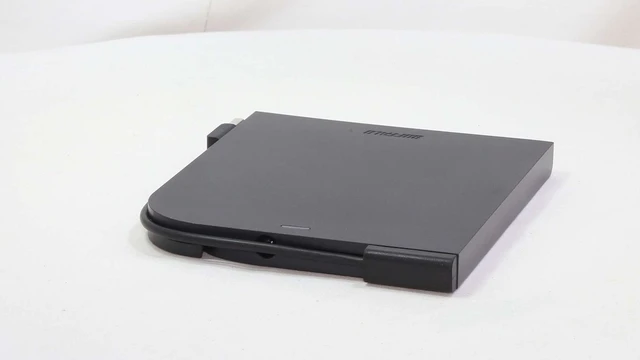
Japanese peripheral manufacturer Buffalo has found itself at the epicenter of this crisis. In February, the company planned to completely cease production of its latest Blu-ray drive models by July 2026. However, a strategic pivot has allowed them to temporarily delay this finale. Buffalo announced it will continue producing the devices, albeit with one substantial caveat: equipment costs are set to skyrocket.

Driven by economic pragmatism, the company is passing these increased overheads directly to the consumer. The most significant impact will be felt in the BRXL-PTV6U3 series, where prices are expected to jump by 51.3%. The BRXL-PT6U3 and BRXL-PTWOU3 models will see price increases of 43.8% and 33.3%, respectively. Furthermore, the company offers no guarantees regarding the long-term availability of these products—production will cease the moment existing stocks of necessary components are exhausted.
The situation at Buffalo is merely a symptom of a broader systemic shift. The Blu-ray drive market has effectively become a "graveyard" for tech giants. Samsung exited the arena back in 2019, and LG followed suit in 2024. Sony, the company that essentially pioneered the standard, is also winding down its operations; it exited the drive market in February of this year and plans to completely abandon physical game releases by 2028, repurposing its production facilities in Austria.
Nevertheless, Japan presents a unique phenomenon: a resilient demand for physical copies. The culture of anime collecting and the traditional movie rental market remain profitable niches, creating a sort of "island of resistance" against total digitalization. In this context, initiatives from companies like Verbatim and IO Data, which have pledged to support the market with new drives and discs, appear as attempts to preserve the infrastructure for a narrow circle of loyalists.
Ultimately, Blu-ray is transitioning from a mass-market consumer technology into a category of specialized equipment. For the average user, this transition will be virtually imperceptible; but for archivists and connoisseurs of high-fidelity imagery, access to physical media is becoming a luxury.
 iPhone 17: Dominating the Global Market