The mobile computing landscape is evolving, transitioning from an era of incremental optimizations to an age of comprehensive on-device intelligence. Modern smartphones are transcending their role as mere gateways to the cloud, evolving into autonomous computational powerhouses. The new Snapdragon 8 Elite series epitomizes this fundamental shift, delivering unprecedented performance-per-watt density. At the heart of this evolution is Qualcomm's ambition to architect an ecosystem where AI is no longer a mere feature, but a foundational layer of the operating system itself.
This technological leap is rooted in a fundamental shift: the transition to a 2-nanometer process. At the heart of the new Snapdragon 8 Elite Gen 6 platform lie six Qualcomm Oryon cores, divided into two high-performance clusters: two prime cores capable of hitting 5 GHz, and four efficiency cores clocked up to 4 GHz. This configuration, paired with 16 MB of Flex Cache, delivers a notable 13% increase in CPU performance while slashing power consumption by an impressive 37%. This creates the necessary thermal headroom for the graphics subsystem, which has seen a 44% boost in speed and a 40% gain in efficiency.
The real paradigm shift, however, emerges with the Elite Extreme variant. While the standard version focuses on general performance, the Extreme transforms the smartphone into a full-fledged terminal for advanced AI agents. These are systems that do more than simply respond to queries; they deeply analyze user context, habits, and environmental surroundings to autonomously execute complex chains of actions across multiple applications.
To realize this vision, Qualcomm has leveraged the synergy between the Oryon CPU, the Hexagon NPU, and a specialized Sensing Hub. The Extreme version is capable of running Mixture of Experts (MoE) architecture models locally, with sizes exceeding 30 billion parameters. To sustain such a workload, the memory allocated to the NPU has been increased by 50% compared to the base model. The internal architecture of the neural processor is a sophisticated complex of scalar, vector, tensor, and element blocks supporting a wide array of data formats—from INT2 to FP16—allowing for flexible precision tuning depending on the specific task.
Of particular note is the Sensing Hub, which integrates two small NPUs for processing sensor data and voice, alongside two ISPs for video stream analysis. This allows the device to maintain a state of continuous, context-aware environmental monitoring without engaging the power-hungry primary cores. Consequently, the smartphone can autonomously edit content or draft correspondence mimicking the owner's style, even without an explicit text prompt.
The graphics department is powered by an Adreno solution featuring Neural Fusion technology. This allows a portion of AI computations to be offloaded from the general graphics pipeline to specialized blocks, reducing the load on the primary GPU and cutting power consumption by 12%, thanks to 18 MB of high-performance memory. Neural Fusion is specifically responsible for intelligent resolution scaling and frame generation, ensuring fluid visuals even in the most demanding scenarios.
Multimedia capabilities have ascended to a professional grade. Support for 8K recording at 60 FPS and 4K at 240 FPS is complemented by real-time color grading. The system can independently process skin tones and sky hues during capture, utilizing low-light noise reduction algorithms and the professional APV audio codec. The audio subsystem introduces AI Audio Separation for isolating voice from ambient noise and a Spatial Audio Renderer for immersive 3D sound with head-tracking.
Connectivity is handled by the Qualcomm X105 modem, granting access to the 5G Advanced standard. Data transfer speeds reach 14.8 Gbps for downloads and 4.2 Gbps for uploads. A critical strategic addition is the support for direct satellite connectivity via NR-NTN and NB-NTN standards, effectively eliminating the concept of connectivity "dead zones." Network interaction is managed by the FastConnect 8800 module, supporting Wi-Fi 8, Bluetooth 6.0, UWB, and the Thread protocol.
Rounding out the specifications is support for cutting-edge LPDDR5x/LPDDR6 memory up to 24 GB and UFS 5.0 storage. Display output capabilities are equally impressive: ranging from standard 4K at 120 Hz to QHD+ at 240 Hz, while external monitor support allows the system to output 8K at 30 Hz.
The first devices powered by the Snapdragon 8 Elite Gen 6 and Elite Extreme are expected to arrive this year, marking the dawn of a new era for mobile gaming and personal artificial intelligence.

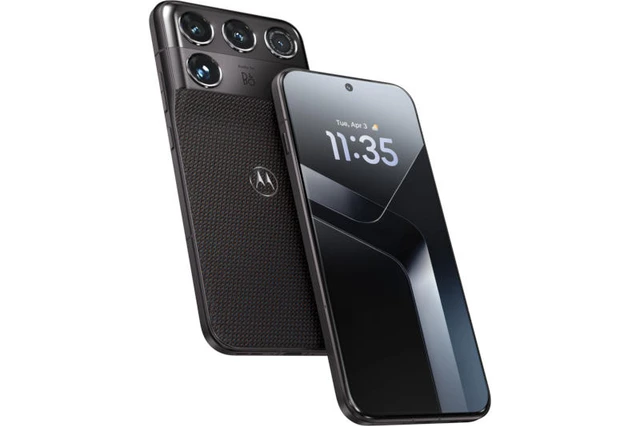 Motorola Signature 27 and the New Qualcomm Standard