For decades, modern space exploration has been tethered to solar energy—a reliance that created a critical dependency on illumination and stifled expansion into deep space. The shift toward compact nuclear power sources promises to dissolve these constraints, unlocking access to the Moon's permanently shadowed regions and the furthest reaches of orbital space. A recent SpaceX launch marked a pivotal milestone, representing the first commercial deployment of such technology. The BOHR satellite is specifically designed to validate the viability of betavoltaic cells within the unforgiving environment of open space.
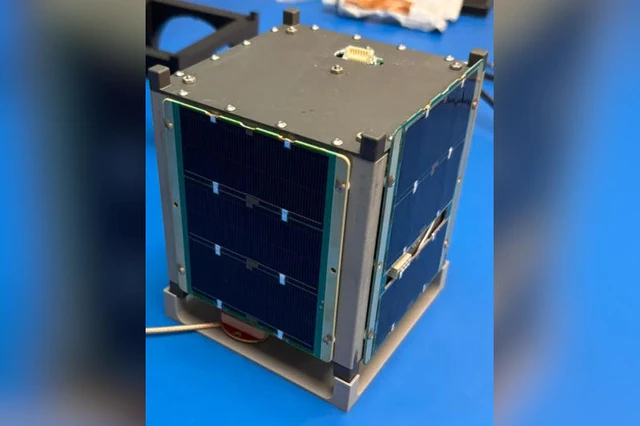
The SpaceX Transporter-17 mission, launched from the Vandenberg Space Force Base, was far more than a routine deployment of payloads. While the Falcon 9 rocket delivered 81 assets into orbit, the expert community has focused its attention on one in particular: the unique BOHR (Betavoltaic Orbital High-Reliability) satellite, developed by Florida-based City Labs. This compact CubeSat is not merely an engineering feat, but a comprehensive testbed for a fundamentally new approach to powering space systems.
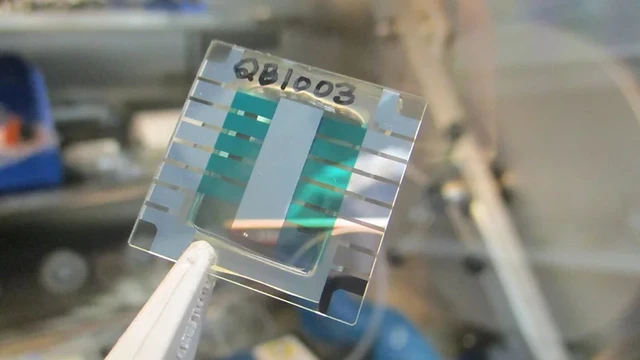
At the heart of BOHR lies the innovative NanoTritium betavoltaic element. Unlike traditional Radioisotope Thermoelectric Generators (RTGs), which convert the heat generated by isotopic decay into electricity, betavoltaics operate on a different principle. They directly convert the kinetic energy of beta particles emitted during the radioactive decay of tritium into an electric current using semiconductor structures. In essence, it is a nuclear battery that requires neither external illumination nor complex cooling systems.
The current mission is a demonstration of concept: NanoTritium is not intended to fully power all of BOHR's systems, but rather to serve as a tool for verifying technological feasibility. However, the strategic potential of this development is immense. Creating power sources that are entirely independent of solar radiation paves the way for deploying infrastructure in the harshest reaches of the Solar System. This is particularly critical for the permanently shadowed regions (PSRs) of the lunar poles, where deposits of water ice are concentrated, but where conventional solar panels are useless.
One of the key factors enabling this project was the specific physical properties of tritium. Its low level of ionizing radiation makes such systems relatively safe to handle, transport, and integrate. This allowed City Labs to develop a device that meets the stringent safety standards of commercial launches without posing critical risks to the primary launch vehicle or other satellites within the shared payload pool.
The regulatory aspect of this mission is as significant as the technical one. The BOHR project, funded under a contract with the U.S. Department of Defense, marks the first commercial flight of a nuclear power source to receive official approval from the Federal Aviation Administration (FAA). Overcoming this administrative barrier creates a precedent that could radically reshape the landscape of the space industry.
The success of this pilot mission could catalyze a surge in new developments in autonomous power supply. In the long term, this will lead to the emergence of a new class of long-lived satellites and probes capable of functioning for decades in deep space or under conditions of extreme shading, providing unprecedented reliability for both defense and civilian research programs.
 SpaceX’s Hundred-Billion Dollar Leap into Louisiana