The global climate crisis has emerged as the defining existential challenge of our era, threatening the very foundations of the world as we know it. In a bid to document an accurate chronology of this collapse, humanity is engineering a vessel designed to outlast its architects. Currently under construction on the coast of Tasmania, "Earth's Black Box" serves as a monumental data archive documenting the planetary state—transforming sterile statistics into a profound historical testament for whoever inherits the earth after us.
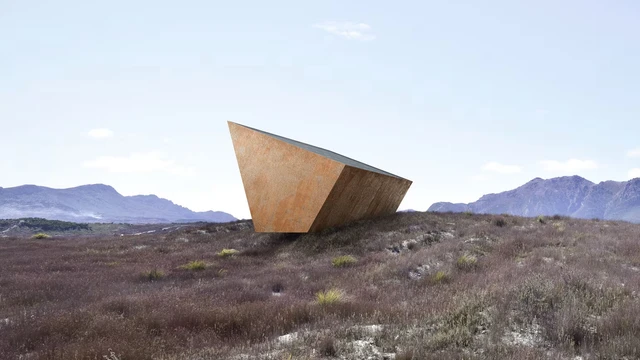
The project's conceptual framework draws upon a familiar aviation metaphor: much like a flight data recorder that reconstructs the events of a crash, this installation is designed to serve as an objective witness to the fate of the biosphere. By the end of 2026, a steel monolith—comparable in size to a city bus—will be completed on the western coast of Tasmania. Its 7.5-centimeter-thick walls are engineered to withstand aggressive environmental conditions and ensure data integrity for decades.
Inside this technological ark lie storage arrays that accumulate real-time data on the planet's condition. This encompasses more than mere quantitative metrics, such as air temperature or sea-level dynamics; it includes a qualitative analysis of the era, archiving scientific publications and political discourse. These disparate data streams converge into the "Vital Index"—a continuously updated health metric for Earth, synthesized from telemetry provided by space agencies, meteorological services, and the world's leading universities.
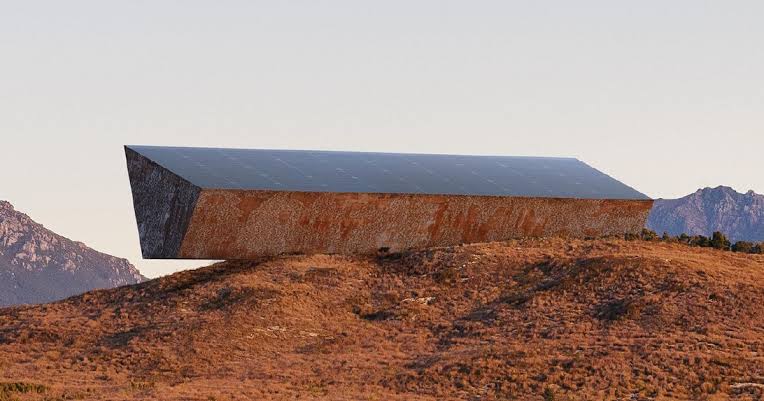
The technical execution of the project addresses the formidable challenges of autonomy and longevity. Power is supplied entirely by a network of 36 tempered-glass solar panels, rendering the site independent of external infrastructure. However, the creators are acutely aware of the limitations of digital media: even with advanced compression and archiving algorithms, the estimated lifespan of the storage drives is only 30 to 50 years. To bypass this temporal barrier and mitigate "digital decay," the most critical data is engraved directly onto steel plates. This method of ultra-long-term preservation ensures that information remains legible even in the event of a total technological collapse.
The selection of the site was driven by rigorous criteria regarding geological stability and distance from major industrial hubs. Tasmania emerged as the ideal location, offering minimal risk of anthropogenic interference and providing the necessary natural isolation.
The project's philosophical undertone is profoundly pessimistic yet bracingly honest. The authors envision a scenario in which humanity fails to mitigate the climate crisis. In such an event, the "Black Box" will serve as a legacy for any future beings or civilizations, allowing them to reconstruct the chain of events that led to the catastrophe.
The journey from concept to realization has been fraught with obstacles. The vision was first unveiled at the COP26 climate summit in Glasgow back in 2021, with construction slated for 2022. Despite repeated delays, the installation is expected to be fully operational by the end of the current year, serving as a digital monument to the Anthropocene.
 The Horizon of China's Technological Sovereignty in Lithography