Solar activity stands as one of the most significant threats to modern digital infrastructure and global communication networks. For years, predicting the arrival time of coronal mass ejections (CMEs) on Earth was plagued by substantial margins of error, severely limiting the window for effective real-time mitigation. The deployment of NASA’s PUNCH mission has catalyzed a paradigm shift in heliospheric observation; predictive precision has now increased tenfold, paving the way for a truly resilient defense system for our global technological ecosystem.
At the heart of modern space security lies the threat of Coronal Mass Ejections (CMEs)—colossal streams of plasma and magnetic fields unleashed by the solar corona. When these structures collide with Earth's atmosphere, they trigger geomagnetic storms capable of inducing cascading failures in power grids, degrading satellite navigation signals, and even causing temporary paralysis of internet connectivity. Until recently, humanity relied on instruments that could track only a fraction of these particles' journey from the Sun to Earth, leading to critical inaccuracies in calculating arrival times.
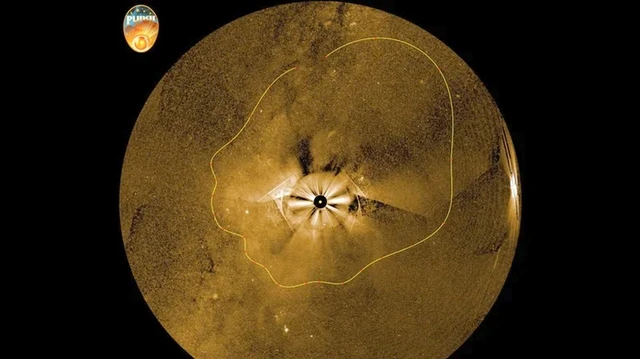
The turning point came with the launch of the Polarimeter to Unify the Corona and Heliosphere (PUNCH) mission. This system comprises four specialized microsatellites providing continuous, 24/7 surveillance of the Sun. The primary technological advantage of PUNCH is its ability to track CMEs across their entire trajectory through interplanetary space. With a high data refresh rate—capturing images every four minutes—scientists can now analyze the dynamics of ejection boundaries in real time with unprecedented granularity.
The operational methodology has been fundamentally overhauled: acquired data is integrated into sophisticated computational models that analyze the evolution of the plasma cloud's structure. In recent trials, the model successfully predicted the timing of a solar storm's impact on Earth just 12 hours after the initial ejection. The result was striking: the margin of error was slashed to thirty minutes, whereas previous methods allowed for deviations of up to five hours.
This leap in precision is akin to the transition from steam engines to internal combustion. It represents not merely a quantitative improvement, but a qualitative transformation in how we monitor space weather. Operators of critical infrastructure can now act preemptively, switching satellites into safe mode or adjusting power grid loads long before disturbances begin.
These results, which validate the PUNCH concept, are currently undergoing peer review in the specialized journal Space Weather. This work lays the foundation for a global early warning system that will transform unpredictable solar flares from catastrophic risks into manageable technical challenges.
 Breaking the Lithography Barrier in China