11 Aug 2026
 OpenAI’s Capital Management: Financial Mechanisms and Strategic Architecture
In today's AI landscape, the widening chasm between explosive private-market growth and the eventual transition to a public offering has become a pivotal challenge for talent management. As the anticipated IPO remains deferred, companies are compelled to engineer alternative liquidity events for their early stakeholders. OpenAI has opted for secondary share sales—a strategic maneuver that enables shareholders to realize gains without disrupting the overarching equity structure. This approach underscores management's resolve to maintain tight strategic control over the company's trajectory while simultaneously satiating the financial expectations of both institutional investors and key personnel.
11 Aug 2026
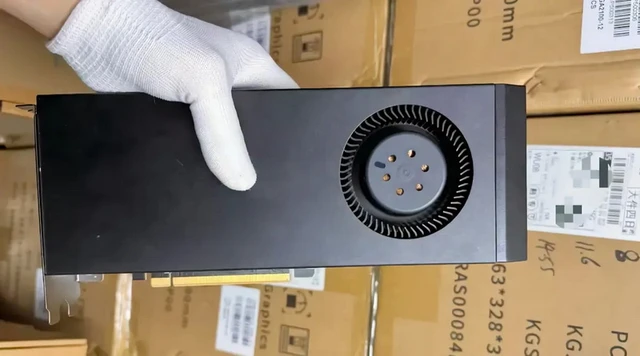 The GeForce RTX 4080 Memory Expansion Phenomenon
The global surge in demand for AI compute has catapulted video memory (VRAM) into one of the most critical bottlenecks of the modern tech industry. While hardware vendors maintain rigid product segmentation strategies to protect their margins, Asia's grey market is pioneering ingenious workarounds to bypass these artificial hardware constraints. In China, there is a proliferation of mass-produced modified GPUs, where consumer-grade cards are being repurposed into professional-tier tools. This trend underscores the desperate market hunger for accessible, high-capacity VRAM essential for operating large-scale neural networks.
11 Aug 2026
 The Right to Cognitive Liberty for Employees
The boundary between human consciousness and digital data is becoming disturbingly porous. As neural interfaces migrate from sterile laboratories into the consumer market, the threat of corporate surveillance is descending to a biological level. California is now racing to establish a regulatory firewall around brain privacy before "mind reading" evolves into a standard tool for HR departments. This precedent marks the dawn of a global struggle for individual cognitive autonomy.
10 Aug 2026
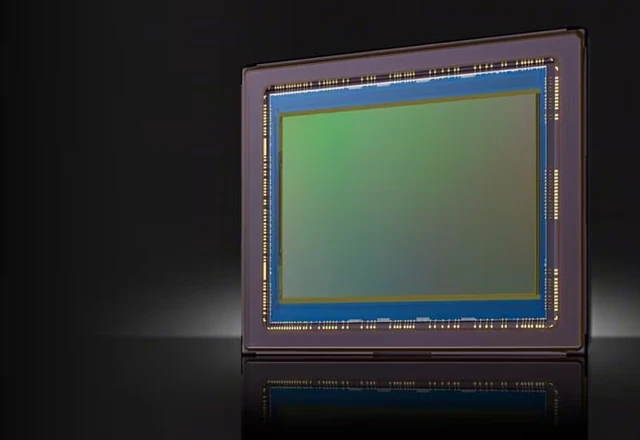 Sony and TSMC: A Strategic Alliance in Image Sensor Manufacturing
The semiconductor industry is witnessing a fundamental paradigm shift, as image sensors evolve from simple light-capture tools into sophisticated sensory organs for artificial intelligence. In the global race for dominance in computer vision and autonomous systems, maintaining technological parity has become an existential imperative. The alliance between Sony and TSMC, cemented by multi-billion dollar investments, is designed to establish a new hardware standard for the era of "physical AI." This partnership fuses unique expertise in sensor development with the unparalleled precision of world-class foundry manufacturing.
10 Aug 2026
 The Regulatory Transformation of Moonshot AI
The global AI race is entering a phase of institutional entrenchment, where technological supremacy has become synonymous with national sovereignty. Against this backdrop, Moonshot AI—the Chinese startup behind the Kimi K3 model—is navigating a radical structural overhaul ahead of its anticipated IPO. This transition has evolved into a precarious balancing act, weighing the demands of foreign investors against the stringent mandates of domestic regulators. At the heart of the struggle is a fundamental tension: how to attract and retain global capital while maintaining absolute fidelity to the PRC’s internal directives.
10 Aug 2026
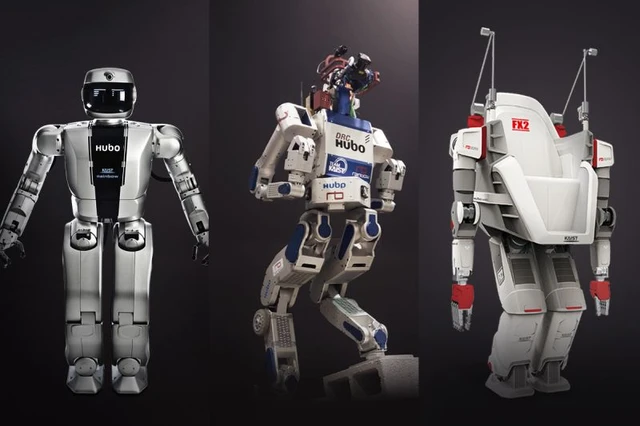 Samsung’s Strategic Push into Humanoid Robotics
The global race to develop general-purpose humanoid robots is evolving from a conceptual pursuit into a full-scale industrial rivalry. While many players remain focused on niche automation tasks, the true tech titans are aiming for something more ambitious: the seamless integration of artificial intelligence and physical embodiment into a unified autonomous system. Samsung, for its part, is leveraging the synergy between its massive manufacturing infrastructure and cutting-edge computational power. This strategic pivot signals the dawn of an era in which the boundary between consumer electronics and robotics is irrevocably blurred.
10 Aug 2026
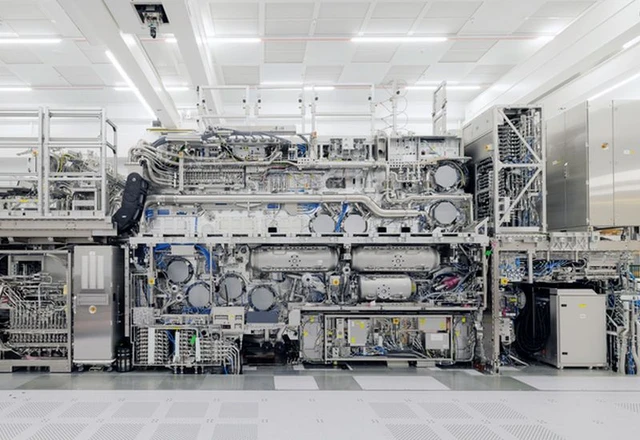 TSMC’s Dominance in the Era of Neural Networks
The modern technological arms race has shifted from the realm of software to the physical architecture of computation. At the center of this pivot stands TSMC, which has effectively become the sole guarantor for the ambitions of the world's largest tech corporations. The company's latest financial performance confirms that demand for cutting-edge semiconductors is not merely growing—it is scaling exponentially. This transformation positions chip fabrication as the primary lever of global economic influence.
10 Aug 2026
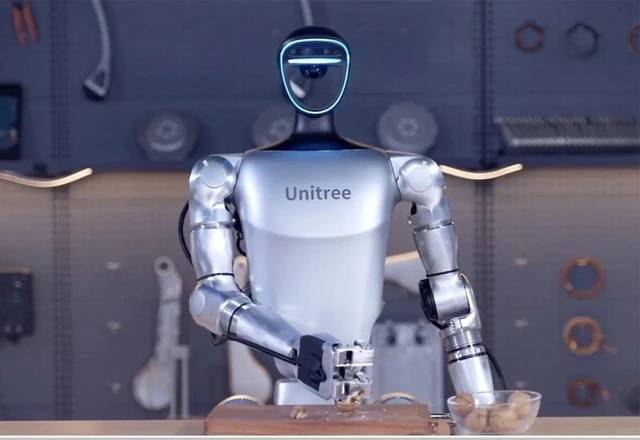 The Technological Triumph of Chinese Robotics
The global anthropomorphic systems industry is currently navigating a phase of aggressive, exponential growth—a surge that has effectively morphed into a unilateral expansion. While Western laboratories remain entrenched in the realm of conceptual prototyping, Eastern markets have pivoted decisively toward mass-scale production. This shift toward single-nation dominance has transcended mere market trends, evolving into a profound geopolitical challenge. We are entering an era where the velocity of deployment is becoming far more critical than the act of invention itself.
10 Aug 2026
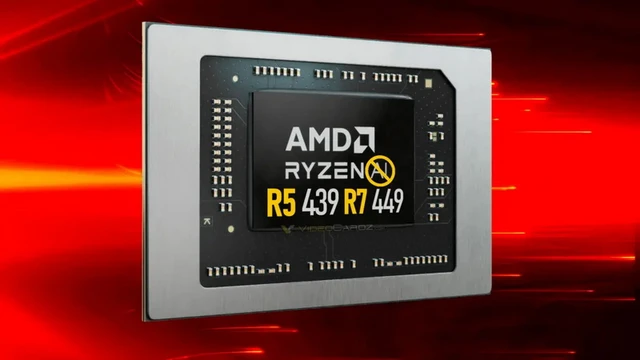 Ryzen Mobile Processors Without NPUs
The semiconductor industry is currently swept up in an AI frenzy, rebranding every new piece of silicon as a cornerstone for the "AI PC." However, real-world market demands often necessitate a more pragmatic approach to hardware resource allocation. AMD is quietly diversifying its mobile processor portfolio, introducing solutions that decouple raw computational throughput from specialized neural processing capabilities. This strategic pivot allows for the optimization of cost and power efficiency without compromising core performance.
9 Aug 2026
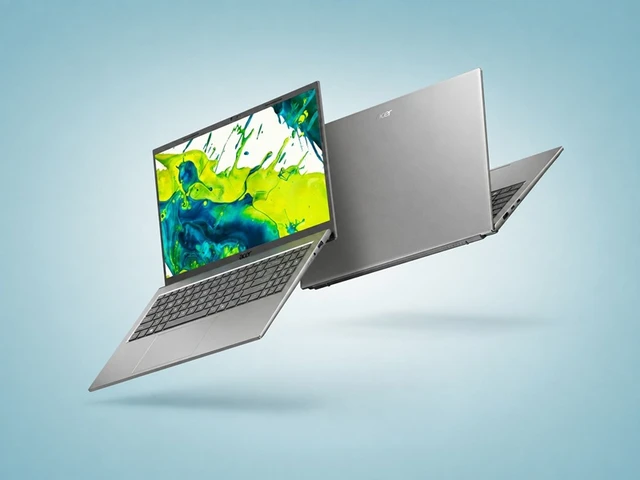 Acer’s Budget Breakthrough Powered by Snapdragon
The global personal computing landscape is undergoing a fundamental pivot toward energy-efficient ARM architectures, challenging the decades-long hegemony of traditional x86 platforms. The introduction of accessible Qualcomm silicon is paving the way for a new generation of mass-market devices that seamlessly integrate extended battery life with integrated AI capabilities. Acer is positioning itself strategically within this shift with the launch of the Aspire Go 15—a device tailored for users who prioritize mobility without the steep price tag of premium branding. In doing so, this laptop becomes a pivotal instrument in democratizing modern computing power for students and general productivity.
8 Aug 2026
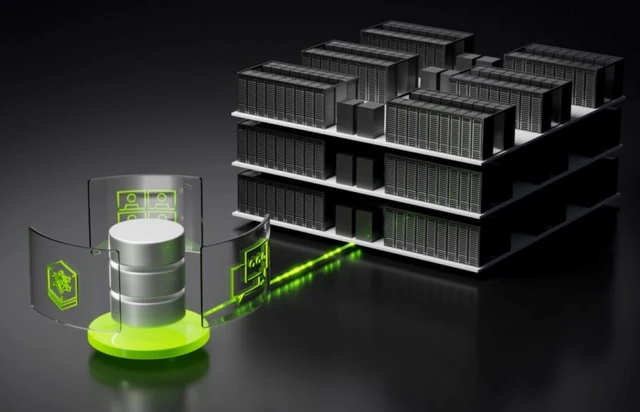 NVIDIA cuFile: An Open Standard for Data Exchange
Modern AI workloads are hitting a critical wall: the data transfer bottleneck between storage systems and GPUs. The legacy architecture, which relies on the CPU as a mediator, has become prohibitively slow when handling terabyte-scale datasets. Nvidia’s decision to open-source the cuFile API signals a strategic shift toward establishing a universal industry standard for high-performance storage. This initiative is designed to fundamentally streamline the data pipeline by slashing latency and eliminating redundant memory copies.
8 Aug 2026
 Strategically Bolstering Intel's Commercial Division
Facing an increasingly cutthroat semiconductor landscape, Intel is pivoting toward a phase of aggressive strategic optimization. The company has recognized that technical superiority alone is insufficient without a seamless distribution ecosystem and a profound understanding of customer pain points. The appointment of Dean Garnak emerges as a pivotal catalyst in this transformation, designed to synchronize the firm's engineering prowess with commercial viability. This move marks a decisive shift away from traditional corporate inertia toward a model of agile, dynamic market responsiveness.
