The global race to develop general-purpose humanoid robots is shifting from the realm of laboratory experimentation to the phase of industrial scaling. Chinese tech titan Xpeng is making a strategic move, unveiling dedicated production facilities tailored for its "Iron" project. This milestone marks a pivotal transition from conceptual proof-of-concepts to the mass production of sophisticated cybernetic systems. The focus has shifted beyond the mere engineering of the machine itself toward the architecture of an efficient manufacturing ecosystem—one with the potential to reshape the economics of the high-tech sector.
Xpeng's ambition to transcend the boundaries of the EV and flying taxi markets is taking a tangible form in the Iron robot. The company is effectively redefining its identity, pivoting from an automotive manufacturer to a developer of complex autonomous systems. The launch of a dedicated humanoid assembly facility marks the culmination of this phase, signaling Xpeng's readiness for mass production by the end of the current year.
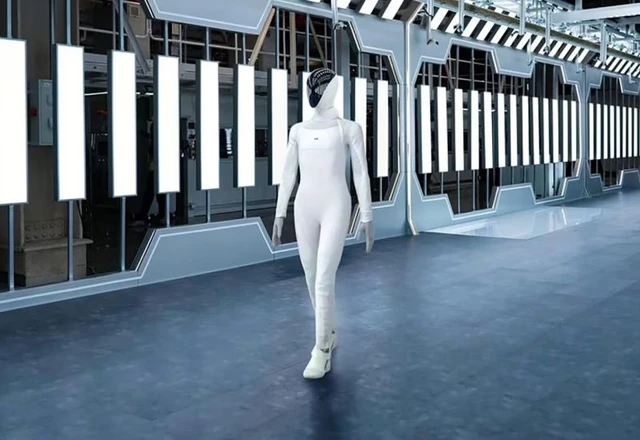
The new plant is a masterclass in modern industrial automation, with over 80% of operations executed without human intervention. This level of automation is critical for ensuring the repeatability and precision required for complex mechanisms, where the slightest misalignment could compromise systemic stability. The opening was punctuated by the debut of the first production-line Iron unit, which demonstrated basic locomotion across the factory floor. Despite the milestone, Xpeng remains conservative in its projections: a full commercial rollout for external and international clients is slated for 2027. Until then, the robots will undergo rigorous internal testing and be showcased in corporate showrooms.
The technological foundation of Iron was laid back in 2025, with cognitive autonomy serving as its primary competitive edge. The system's "brain" consists of three proprietary Turing AI processors. This architecture enables edge computing, shifting the processing of complex AI tasks directly onto the device, thereby eliminating reliance on remote servers and minimizing real-time latency. This makes the robot significantly more reliable and safe in environments with unstable connectivity.
From a kinematic perspective, Iron exhibits impressive flexibility. The total degrees of freedom (DoF) for the entire body reach 76, with 21 DoF per arm. These specifications bring the machine's capabilities closer to human levels, allowing for intricate object manipulation and adaptation to diverse physical environments. The exterior is wrapped in a flexible mesh skin, serving a dual purpose: ensuring safety during human-robot interaction and providing an aesthetically pleasing, less "mechanical" appearance.
Xpeng's economic strategy posits that the production of anthropomorphic robots could prove more profitable than electric vehicles on a per-unit basis, driven by the high added value of intelligent systems. It is an ambitious calculation. In the long term, the company envisions Iron not merely as a tool, but as a full participant in the social environment—one that may eventually integrate into the domestic sphere. However, this transformation will be gradual, potentially spanning anywhere from ten to fifty years.
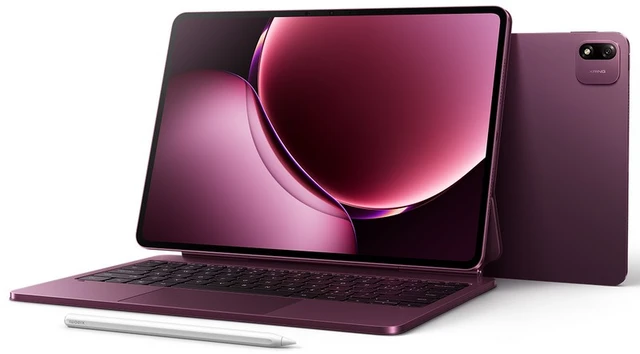 Power and Poise: The Xiaomi Pad 9 Pro Max