The global semiconductor market is undergoing tectonic shifts, as legacy incumbents face an aggressive onslaught from emerging challengers. China’s YMTC has surged forward, disrupting the NAND flash memory hierarchy to secure its place among the top three global producers. Yet, beneath these impressive shipment figures lies a stark strategic disconnect between sheer market presence and actual financial viability. This case illustrates how technological leadership in the mass market can be leveraged as a powerful tool for global influence.
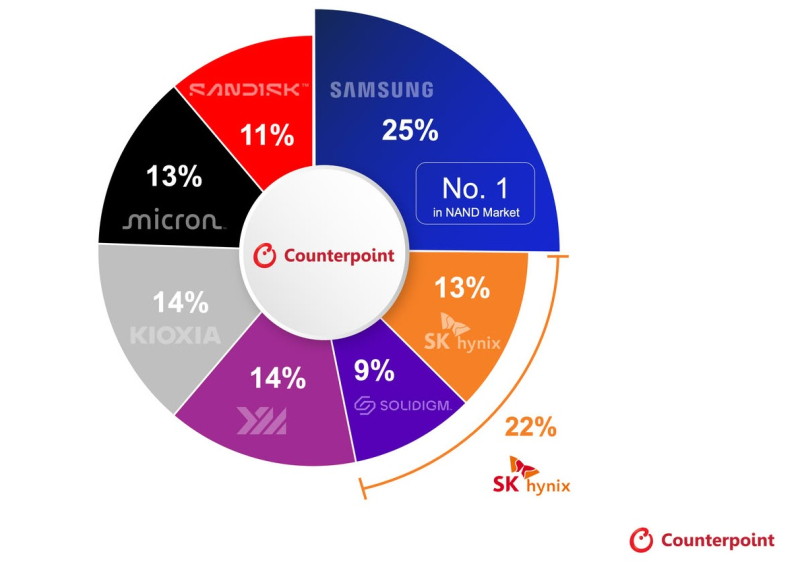
For years, the data storage industry remained an exclusive enclave of a few titans, but recent data from Counterpoint Research suggests that this oligopoly is fracturing. As of the second quarter of this year, YMTC has surged to third place in NAND flash shipments, overtaking established players such as Micron, Kioxia, and Sandisk. Samsung maintains its lead with a 25% market share, followed by the SK hynix and Solidigm alliance at 22%. YMTC has secured a 14% share, demonstrating a year-over-year increase in bit shipments of 22%.
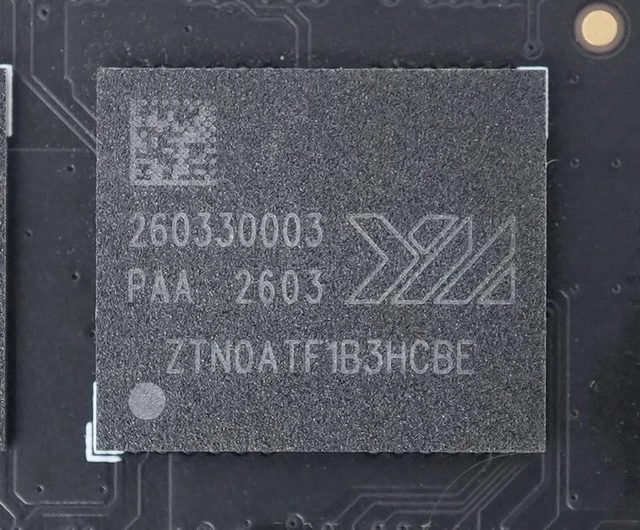
This rapid ascent is the result of an aggressive technological roadmap. At the heart of this success lies Xtacking 4.0—an innovative manufacturing method for multi-layer structures that has enabled the mass production of 267-layer 3D NAND chips. By increasing vertical cell density, YMTC has significantly boosted data capacity per unit of die area, a critical factor for modern hardware. Furthermore, the company is already preparing to transition to architectures exceeding 300 layers by next year, potentially widening the scaling gap between YMTC and its competitors.
However, a closer analysis reveals that volume-based dominance does not always translate into fiscal profitability. Despite ranking third in shipments, YMTC holds only fifth place in terms of revenue. This paradox stems from divergent product positioning: the Chinese manufacturer has focused on the mass consumer segment, where margins are traditionally slim. Conversely, Micron and Kioxia prioritize high-margin enterprise solutions, server systems, and AI infrastructure—sectors where the cost per gigabyte is substantially higher.
Nevertheless, YMTC’s expansion extends far beyond the Chinese domestic market. The company is aggressively embedding itself within global supply chains through strategic agreements with major OEMs. A prime example is its partnership with Lenovo, which has already integrated YMTC SSDs into its laptop lineup. Industry analysts expect this focus on consumer electronics to lead to a ubiquitous presence of YMTC memory in PCs worldwide. Moreover, there are strong indications that even Apple may consider adding the manufacturer to its supplier list—a move that would serve as the ultimate validation of the Chinese player's technical maturity and reliability on the global stage.
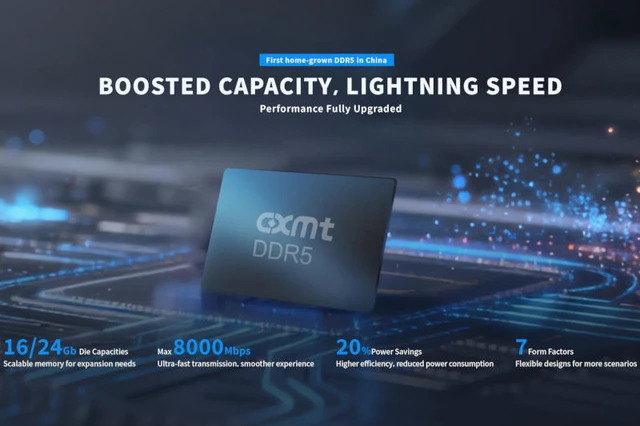 The Price of Acceleration: CXMT’s Rapid Push into Memory