The battle for dominance in the electric vehicle market has shifted from the pursuit of raw power to the mastery of algorithmic precision. The Nürburgring, long regarded as the global benchmark for automotive performance, is no longer solely the domain of professional racing drivers. Today, the definitive challenge lies in the ability of artificial intelligence to independently conquer the "Green Hell" at breakneck speeds. Xiaomi’s latest venture with the YU7 GT signals a new chapter in the evolution of autonomous driving.
Contemporary Chinese automakers have fundamentally reimagined the nature of competition. Where success was once measured in seconds shaved off a lap through driver skill and raw engine displacement, the focus has now pivoted toward intellectual architecture. Companies are now vying for supremacy in autopilot sophistication, utilizing racing circuits as extreme proving grounds to stress-test their software.
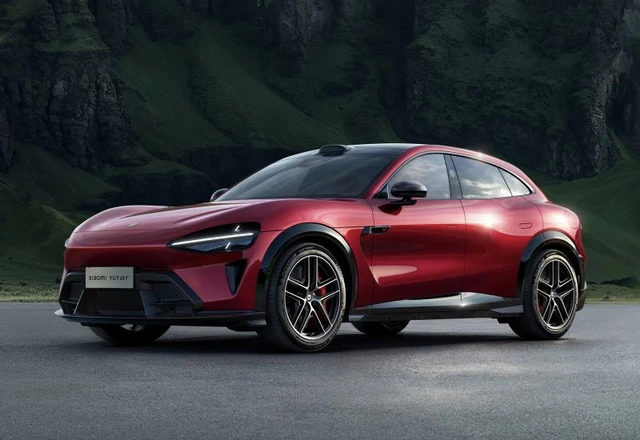
At the center of this technological arms race is the Xiaomi YU7 GT, an electric crossover equipped with a specialized Track Package. The vehicle was put to the test on one of the world's most demanding circuits—the Nürburgring Nordschleife. The result was striking: operating in fully autonomous mode, the car completed the lap in 10 minutes and 29.483 seconds, setting a new world record for autonomous systems in its class.
To put this achievement into perspective, one must look at the performance of the same vehicle under the command of a professional driver. In manual mode, the YU7 GT clocked a lap time of 7 minutes and 22.755 seconds. While a delta of three minutes and seven seconds may seem substantial, it is highly promising within the context of autonomous driving. Navigating a nearly 21-kilometer stretch characterized by abrupt elevation changes, tight corners, and treacherous surfaces without human intervention represents a monumental challenge for sensor suites and neural networks.
It is worth noting that while the run was autonomous, a driver remained in the cabin. Their role was strictly limited to that of a safety overseer in the event of a critical system failure; there was absolutely no manual intervention regarding steering or pedal input throughout the entire lap.
This run is not being framed as a definitive victory, but rather as a baseline. For the engineers, the lap time itself is secondary to the acquisition of high-fidelity data on vehicle dynamics under extreme conditions.
Ultimately, Nürburgring records hold little immediate practical utility for the average consumer, for whom ride smoothness and flawless safety are the primary concerns in urban driving. However, automotive history proves that motorsport is the crucible where solutions are forged that eventually become industry standards for consumer vehicles. The algorithms capable of maintaining a sports car's trajectory under extreme G-forces will, in the future, form the foundation for more sophisticated emergency braking and obstacle avoidance systems on public roads.
 A New Memory Paradigm for AI Accelerators