The global AI arms race is rapidly colliding with the physical constraints of terrestrial infrastructure. The next generation of autonomous agents will demand computational power that dwarfs the capabilities of today's chatbots by several orders of magnitude. Seeking a breakthrough, tech titans are turning their attention toward Low Earth Orbit (LEO). Yet, the migration to space is currently obstructed by a formidable economic barrier, threatening to render orbital computing prohibitively expensive.
The AI industry is on the verge of a paradigm shift. The transition from simple conversational systems to fully realized AI agents—capable of complex planning and autonomous problem-solving—will necessitate a colossal surge in resources. Preliminary estimates suggest that the computational load per task could spike by 10,000 to 40,000 times. This exponential growth renders the traditional approach to expanding terrestrial data centers virtually impossible.
Energy scarcity has become the primary bottleneck. By 2026, global power consumption by data centers is projected to reach 460 TWh, a figure comparable to half of Japan's total power generation. The long-term forecasts are even more staggering: demand could soar to 3,700 TWh by 2040. Currently, the bulk of this infrastructure is concentrated in the US and China, which together account for nearly 80% of all new construction.
The core of the problem is that ground-based construction has hit a resource "glass ceiling." In the United States, the process of connecting a new facility to the power grid can drag on for seven years, while lead times for gas turbines extend to the end of the decade. Furthermore, the liquid cooling systems essential for modern GPU clusters are in direct conflict with dwindling freshwater reserves. Against this backdrop, the rising cost of labor and construction materials is turning terrestrial expansion into a logistical nightmare.
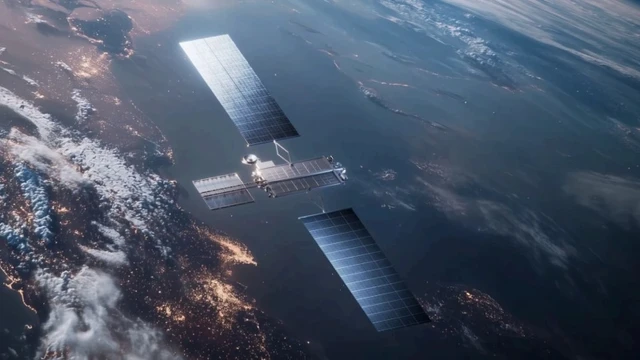
These constraints make the concept of orbital data centers compelling, even if they currently appear financially utopian. The cost of establishing a hypothetical 1 GW space-based data center is estimated at approximately $170 billion—more than triple the cost of a terrestrial equivalent. Crucially, the lion's share of these expenses—roughly 60%—is attributed not to the hardware itself, but to launch costs and the construction of the orbital platform.
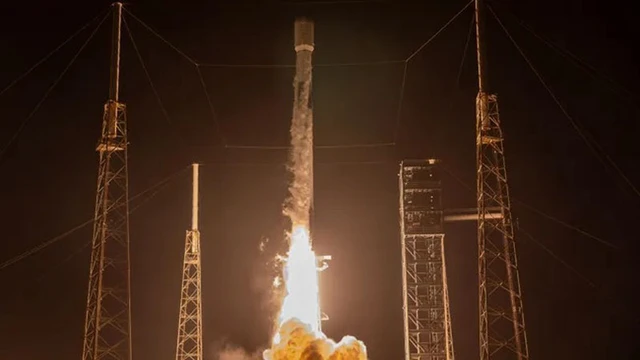
For space-based computing to become economically viable, the cost of delivering payloads must drop by another 70%. The only path to achieving this is the continuation of the trend toward the exponential cheapening of launches. Recent years have already yielded impressive results: the implementation of reusable rockets has slashed launch costs by 90% compared to the era of expendable vehicles. In 2025, the number of orbital missions reached 324, with over 4,500 satellites deployed, the vast majority of these operations driven by private capital.
This landscape is currently dominated by the alliance between SpaceX and xAI. Their ambitions are nearly inconceivable: a plan to deploy 100 GW of computational capacity annually, which is ten times the combined goals of all other market players. Effectively, the orbital computing sector is transforming into an exclusive club for American companies, while the combined share of all other nations in this segment does not even reach 0.5 GW.
Nevertheless, the alternative of terrestrial construction offers no guarantee of affordability. Projections indicate that between 2026 and 2040, capital expenditures (CapEx) for creating new ground-based capacity (approximately 395 GW) will amount to roughly $9 trillion.
Consequently, the industry finds itself facing a stark choice. On one side are the tangible physical and bureaucratic constraints of Earth; on the other is a massive price gap favoring terrestrial solutions. Orbital data centers remain a strategic bet on the future: they will only become a reality if the cost of space access continues its precipitous decline, transforming orbit from an elite frontier into a viable industrial zone.
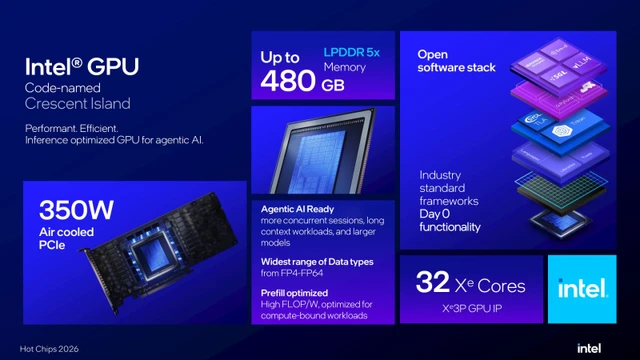 A New Memory Paradigm for AI Accelerators