The global AI arms race has migrated from the realm of algorithms to the domain of hardware. Amidst Nvidia's near-absolute hegemony, the titans of cloud computing are striving to dismantle their dependence on a single supplier by engineering their own proprietary silicon. Amazon is now taking a decisive leap, transforming its internal innovations into commercial products for the open market. This strategy is designed not only to drive down costs but to fundamentally reconfigure the very structure of the compute market.
The modern AI compute market is currently grappling with an acute shortage. Demand for training Large Language Models (LLMs) has so drastically outpaced supply that access to silicon has become the industry's primary strategic asset. In this climate, Amazon is redefining its role within the ecosystem: the company intends to begin shipping its proprietary Trainium AI accelerators to third-party data centers.
Until now, Trainium functioned as an exclusive infrastructure privilege reserved for Amazon Web Services (AWS) clients. While industry giants such as OpenAI, Anthropic, and Uber already leverage these capabilities, Amazon is now prepared to step beyond the confines of its own cloud. This represents a direct challenge to Nvidia, whose GPU dominance has become a systemic bottleneck for the entire sector.
This strategic pivot is far from accidental. Google previously laid the groundwork for this approach by supplying its Tensor Processing Units (TPUs) to a select circle of partners for deployment in their own data centers. Amazon is following suit, recognizing that the market demands greater flexibility—particularly regarding the rising demand for "sovereign clouds" in Europe and other regions. Local data residency laws often mandate that companies store and process data strictly within national borders, rendering centralized US-based cloud services insufficient. By delivering physical racks of Trainium chips, Amazon can penetrate these markets without requiring clients to migrate their data into the AWS environment.
The technical viability of Trainium is underscored by its market performance. The third generation of the accelerator, which entered service earlier this year, is virtually sold out. This provides a robust foundation for the launch of fourth-generation chips, expected to debut next year. Notably, Amazon's leadership is not concerned about cannibalizing its own cloud business; the current "compute hunger" is so pervasive that selling hardware to third parties does not diminish the demand for AWS capacity rentals.
However, Amazon's strategy extends beyond AI accelerators. The company is systematically building a vertically integrated compute ecosystem where Trainium works in tandem with Graviton general-purpose processors. The latter have seen impressive adoption rates—over the past three years, Amazon has integrated more Graviton chips into its systems than any other processor. The fact that Meta has begun utilizing Graviton underscores the industry's confidence in the energy efficiency and performance of Amazon's in-house silicon.
Consequently, Amazon is transforming from a mere infrastructure provider into a full-fledged player in the semiconductor market. The shift toward selling hardware complexes to third parties is a calculated move to occupy the niche between closed-loop cloud giants and specialized chipmakers, forging a new reality where access to AI compute is increasingly decentralized.

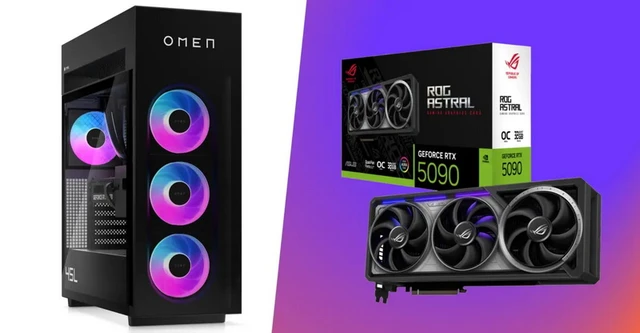 The Economic Paradox of the GeForce RTX 5090