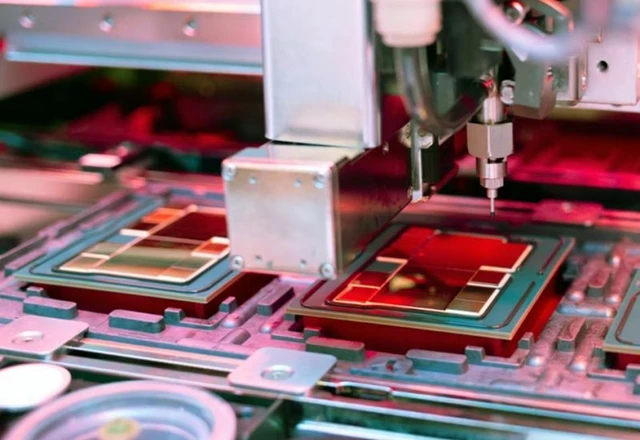
The current AI arms race is colliding not only with the limits of raw processing power but with the fundamental physical constraints of data transmission. As traditional electrical interconnects emerge as a critical bottleneck, silicon photonics is becoming the bedrock for next-generation infrastructure. Against this backdrop, Taiwanese giant UMC is aggressively scaling the production of optical components at its Singapore facilities. This strategic maneuver allows the company to carve out a dominant position within the data transmission ecosystem, catering to the high-performance demands of the world's largest technology corporations.
In the semiconductor industry, Taiwan's UMC has long operated in the shadow of its larger counterpart, TSMC. However, a strategic pivot toward specialized market niches has allowed the company to secure a commanding second position in its home market and is now propelling it toward a new echelon of technological leadership. The launch of advanced photonic chip production in Singapore is more than a mere portfolio expansion; it is a direct response to the AI industry's urgent demand for a paradigm shift in data transmission speeds.
The pivotal technical milestone here is the scaling of manufacturing capabilities: the transition from 200mm to 300mm silicon wafers. In the semiconductor realm, such a move signifies more than just increased throughput; it represents a qualitative leap in process maturity. The deployment of more sophisticated equipment significantly reduces signal attenuation and enhances overall component energy efficiency. For artificial intelligence systems, where thousands of GPUs must interact with near-zero latency, these optimizations are not merely incremental—they are an existential requirement for the entire system architecture.
The supply chain UMC is cultivating underscores the sheer scale of this strategic move. The first major client is Singapore-based Silith Technology, which in turn supplies components to market leaders in optical transceivers, such as Innolight and Coherent. The ultimate beneficiaries of this technological pipeline are Nvidia and Google, whose massive compute clusters depend directly on the efficiency of silicon photonics.
UMC’s roadmap is built for the long term, emphasizing deep integration with premier research institutions. A collaboration with IMEC in Belgium aims to create a next-generation photonic chip platform that will be available to a broad client base as early as next year. Particular attention is being paid to innovative materials, specifically thin-film lithium niobate (TFLN). This material enables optical interconnects with significantly higher transmission speeds and lower power consumption compared to conventional silicon-based solutions.
By 2027, the company plans to master Co-Packaged Optics (CPO) technology, which allows photonic chips to be integrated directly onto processor substrates. This solution effectively blurs the line between electrical and optical signaling, minimizing latency within computing systems. By 2028, UMC intends to introduce an open platform, providing clients with flexible tools to design their own proprietary optical solutions.
While UMC lacks access to the most cutting-edge lithography nodes (such as 3nm or 2nm), the company is demonstrating remarkable strategic agility. By focusing on critical interfaces and data transmission methodologies, it is creating an indispensable infrastructural layer that will remain vital regardless of further advancements in packaging technology. The Singapore division, with its expanding workforce, is evolving into a center of excellence where Taiwanese theoretical breakthroughs are transformed into scalable industrial solutions for the global AI market.

 The Horizon of China's Technological Sovereignty in Lithography