The digital age has given rise to a paradox where the seamless convenience of cloud storage obscures the precarious nature of actual data ownership. When stringent security protocols collide with human fallibility, the result is often the permanent erasure of one's personal digital history. A high-profile case involving the loss of access to a long-term archive within the Microsoft ecosystem exposes the ruthless efficiency of automated defense systems. This friction between encryption standards and recovery mechanisms underscores a systemic vulnerability in modern identity management.
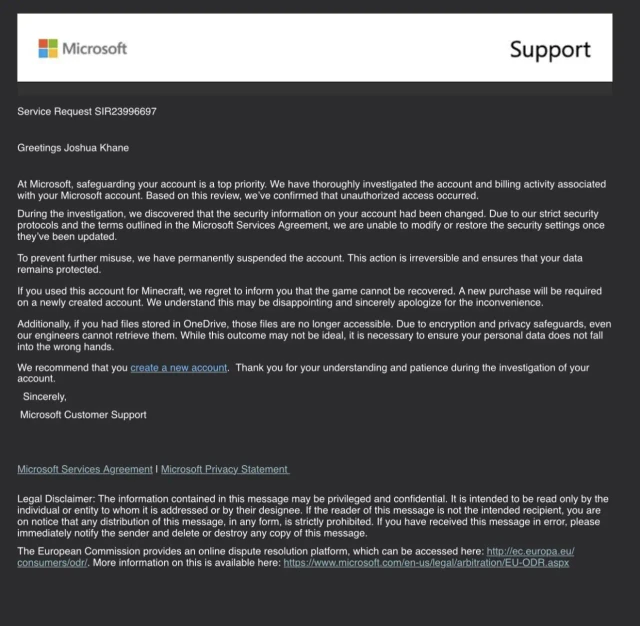
A quarter-century of data loss has become a stark cautionary tale of digital catastrophe. The case of a user stripped of access to their Microsoft account illustrates the chilling divide between system security and owner rights. Following a successful breach, attackers altered every recovery parameter, effectively rewriting the owner's digital identity. Despite the corporation officially acknowledging the hack and confirming the user's ownership of the account, access was never restored.
At the heart of this tragedy lies a rigid internal corporate mandate. According to support services, security protocols strictly prohibit employees from manually modifying or recovering accounts where security settings have been altered. While this policy is framed as a necessary measure to prevent further abuse, in practice, it renders the legitimate owner a mere bystander. The lockout becomes absolute, and every attempt at appeal collides with an impenetrable wall of corporate standards.
The technical justification for the impossibility of data recovery is cryptographically sound but humanly fatal. The company cited the use of AES-256—one of the world's most robust symmetric encryption standards. Each file is encrypted with a unique key, and access to these master keys is inextricably linked to the account's state. Once an account is locked or its security parameters are modified by an attacker, the link to these keys is severed. Consequently, the data is reduced to a useless string of bytes that cannot be decrypted, even on the server side.
The losses in this instance extend far beyond simple email access. We are talking about the total liquidation of a digital legacy: from years of achievements in gaming worlds to personal family archives and photographs. In a cruel irony, the vendor's only solution was to suggest purchasing those same services and games anew on a fresh account. The economic damage, totaling thousands of euros, becomes secondary to the emotional weight of the lost data.
From a legal standpoint, Microsoft is operating strictly within the bounds of its user agreement. The document explicitly provides for the locking of accounts upon suspicion of fraud. Although the agreement suggests that access can be restored after identity verification, in practice, this mechanism proved unavailable or was simply not offered to the user, creating a dangerous precedent of "digital erasure."
In analyzing the causes of the incident, one cannot ignore a critical failure on the part of the owner: the absence of two-factor authentication (2FA). In today's landscape, MFA (Multi-Factor Authentication) is no longer an optional feature; it is basic security hygiene. It was precisely the lack of this protective layer that allowed attackers to seize full control of the account, altering associated emails and phone numbers.
This case has sparked significant public outcry, triggering a wave of similar admissions from other users. It serves as a grim reminder that in the world of centralized cloud services, we do not truly own our data—we merely rent access to it. When an algorithm decides that system security outweighs individual rights, a digital life can be erased by a single systemic decision.
 The Horizon of China's Technological Sovereignty in Lithography