The lifecycle of modern hardware is governed by the rigid laws of planned obsolescence. Apple has officially designated several iconic MacBook models as "obsolete," effectively signaling the end of their full support lifecycle. This move underscores the company's stringent internal policies regarding product lifecycle management. For users, this marks the transition from "vintage" status to a state where official repairs are virtually impossible to secure.
Within the Apple ecosystem, there is a rigid hierarchy governing device aging. Once five years have passed since a model's last sale, it is designated as "vintage." At this stage, service centers can still perform repairs, provided the necessary components remain in stock. However, after seven years, the device transitions to "obsolete" status. In practical terms, this signals the end of spare parts production and the refusal of official service centers to perform most types of repairs.
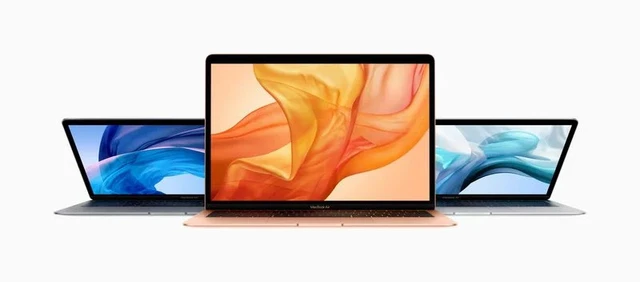
This list now includes the 2018 MacBook Air Retina, the 2018 13-inch MacBook Pro with four Thunderbolt 3 ports, and the 2017 13-inch MacBook Pro with two Thunderbolt 3 ports.
For owners of these machines, only one avenue remains: Apple commits to providing access to new batteries for ten years from the date of release. Consequently, even if the logic board or display becomes irreparable, replacing the battery in a 2017/2018 MacBook Pro or a 2018 MacBook Air remains possible.
Analyzing these models reveals pivotal milestones in the evolution of Apple's laptops. The 2018 MacBook Air represented a true watershed moment for the lineup, introducing Touch ID and the Retina display for the first time. Prior to this, the Air had spent years relying on legacy panels with low resolution and muted color reproduction. The 2018 model brought more than just a visual overhaul of the screen; it introduced a radical chassis redesign with slim bezels, bringing the Air closer to the aesthetics of the Pro series.
As for the MacBook Pro, the 2017 model powered by Intel Kaby Lake processors was an evolutionary rather than revolutionary update. While there were gains in CPU performance, the overall concept of the device remained unchanged. The 2018 MacBook Pro was more significant, implementing True Tone technology to adapt the display's color temperature to ambient lighting.
However, this era is equally remembered for a contentious engineering choice: the "butterfly" keyboard. The 2018 version utilized the third generation of this mechanism, which, despite Apple's attempts to resolve reliability issues, remained a critical failure point. The current reclassification of these models as obsolete effectively closes the chapter on Intel processors and problematic keyboards, making way for the new era of Apple Silicon.
 The Strategic Alliance of Nvidia and MediaTek