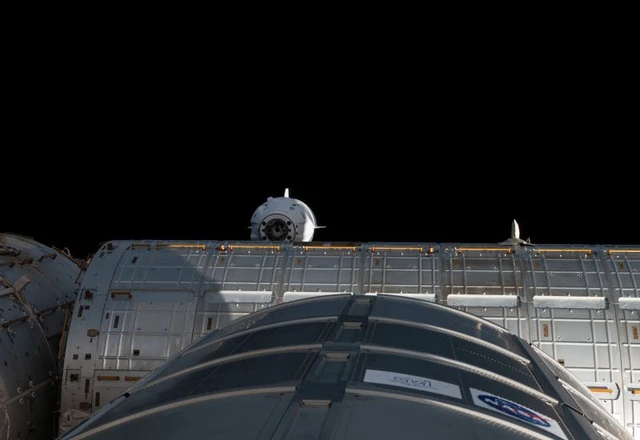
Deep space exploration has always been fraught with the risk of abrupt strategic pivots and staggering financial losses. The Gateway lunar outpost, envisioned as a strategic hub for future missions, has collided with a critical realignment of NASA's priorities. The abandonment of the HALO habitation module represents more than a mere technical setback; it signals a fundamental shift in the overarching strategy of the Artemis program. The focus has now shifted toward establishing a direct presence on the lunar surface, effectively consigning billions of dollars in orbital infrastructure investments to the archives of history.
The Gateway project, as currently envisioned, is drawing to a close. NASA has effectively abandoned the HALO habitation module, which was intended to serve as the cornerstone of the lunar orbital station. The decision to halt operations, communicated to Northrop Grumman, has triggered a massive reorganization, with the majority of the project's specialists already being reassigned to other agency programs.
The financial magnitude of this failure is staggering. Northrop Grumman received over one billion dollars for the development and production of HALO, excluding multi-million dollar contracts awarded to a network of subcontractors. In the wake of this abrupt strategic pivot, these funds will be written off as total losses.
This shift in strategy became evident during a NASA briefing in March. The Artemis program has undergone a profound revision, resulting in a new priority: the construction of a fully realized lunar base directly on the surface of the moon. In this new paradigm, the concept of Gateway as an orbital waypoint and temporary sanctuary for astronauts has lost its relevance.
However, not every component of the station is destined for the scrap heap of history. The Power and Propulsion Element (PPE) has been successfully integrated into another ambitious plan. It will serve as the foundation for a nuclear-powered spacecraft designed for a mission to Mars in 2028. Consequently, while the propulsion systems have been granted a second life, the HALO habitation module has hit a technological dead end.
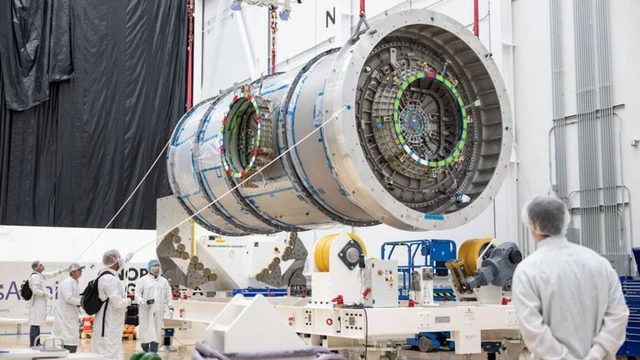
Northrop Grumman's attempts to salvage the project and integrate HALO into the revised Artemis framework proved unsuccessful. The obstacles were both physical and technical. With a mass of approximately nine tons, delivering the module to the lunar surface is impossible given current transport capabilities. Furthermore, concerns have emerged regarding the structural integrity of the unfinished hull, which reports suggest may have suffered corrosion.
The collapse of HALO marks the final act in the story of Gateway. Stop-work orders were issued not only to the prime contractor but also to Paragon Space Development, the firm responsible for the module's critical life-support systems.
The module's technical foundation was international: the hull was manufactured by the European company Thales Alenia Space, leveraging the heritage of the Cygnus cargo spacecraft. The module was delivered to the United States in the spring of 2025 for final integration with the power block. However, HALO's hyper-specialization—designed for a very specific orbital station configuration—rendered it useless in the current reality. In the short term, this technological giant will remain nothing more than a monument to the shifting priorities of the new space race.
 The End of the Falcon 9 Era