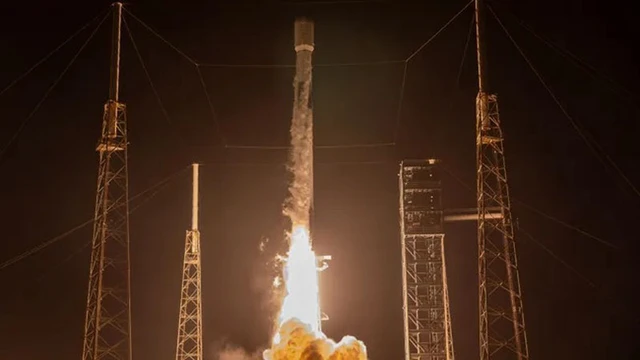
When a private titan goes public, it invariably triggers a seismic shift across global markets. The SpaceX IPO did more than just reshape the aerospace landscape; it fundamentally redefined the parameters of individual wealth in the modern era. Despite the inherent volatility of the tech sector, the company's core team has secured an unprecedented financial bedrock. Ultimately, this is a narrative less about rocket science and more about the strategic allocation of capital among the architects of orbital logistics.
SpaceX's entry into the public markets marked one of the most seismic asset revaluations in the history of modern business. At the center of this financial whirlwind was Elon Musk, whose stake in the company surged past the $1 trillion mark following the IPO. Yet, the founder's triumph was merely the tip of the iceberg; the rapid escalation in capitalization minted a new circle of billionaires, comprising trusted confidants, master strategists, and operational executives.
The market dynamics of SpaceX follow a textbook trajectory of hype followed by correction. In the early days of trading, ambitious blueprints for the colonization of Mars and the deployment of the Starlink global internet constellation galvanized investors to such an extent that the company's market value briefly eclipsed behemoths like Amazon and Microsoft. Today, following a cooling-off period, the capitalization has stabilized at $2.43 trillion. Nevertheless, even after this dip, the shares demonstrate robust growth—up 37% relative to the initial offering price of $135 per unit.
The success of SpaceX is not merely the product of one man's genius, but the result of a formidable network of venture alliances. A pivotal figure in this ecosystem is Antonio Gracias, head of the private investment firm Valor Equity Partners. His stake is valued at a staggering $96.6 billion, although a significant portion of these funds belongs to the firm's clients. Gracias is more than just an investor; he is a long-time ally of Musk, with influence extending far beyond the SpaceX board to include strategic roles at Tesla and support for government efficiency initiatives.
A special place in the ownership structure is held by the "PayPal Mafia"—the group of alumni from Musk's first payment service who formed the bedrock of modern Silicon Valley. Luke Nosek, a PayPal co-founder and SpaceX board member since 2008, holds a stake worth $6.3 billion. His impact on the tech industry is profound: alongside Peter Thiel, he co-founded venture giants such as Founders Fund and Gigafund, and oversaw the development of DeepMind before its acquisition by Google.
However, beneath the strategic visions and financial flows lies a foundation of rigorous operational discipline. Gwynne Shotwell, President and COO of SpaceX, is the living embodiment of this balance. As one of the company's earliest employees, she now holds assets totaling $2.4 billion. While Musk focuses on macro-level trajectories and long-term goals, it is Shotwell who ensures the seamless functioning of the complex machinery behind daily launches and production management, translating audacious ideas into a viable business.
Completing this inner circle is the company's financial architect, Bret Johnsen. Since 2011, he has been responsible for the long-term financial strategy and the complex operations that allow SpaceX to maintain its aggressive pace of expansion. His expertise, honed at Broadcom and Mindspeed Technologies, helped build a sustainable capital management model, ultimately netting him a personal fortune of $1.2 billion.
Ultimately, the SpaceX IPO was more than a financial event; it was an act of legitimization for a new technological elite. The distribution of equity within the company reflects a clear hierarchy: from the visionary and the venture strategists to the operational leaders who, together, transformed a private rocket launch company into one of the most valuable corporations on the planet.
 The Economic Paradox of the GeForce RTX 5090