The era of standalone AI assistants is rapidly giving way to a pressing demand for robust, enterprise-grade infrastructure. While developers have been quick to integrate LLMs into their daily workflows, organizations are now grappling with the fallout: fragmented context and spiraling costs. JetBrains is addressing this challenge with a unified management layer designed to coalesce disparate tools into a cohesive, synchronized system. This marks a pivotal shift—moving beyond simple chatbots toward a comprehensive ecosystem of intelligent agents.
The current integration of artificial intelligence into software development is often haphazard. It is a "bottom-up" process: one engineer integrates a built-in IDE assistant, another prefers Claude Code, and a third opts for Gemini CLI or Codex. While this diversity offers flexibility and speed at the individual level, it creates organizational chaos. Project context becomes siloed across local machines, successful automation patterns are rarely reused, and leadership loses visibility into actual efficiency and the true cost of the tools being deployed.
JetBrains is reimagining this paradigm with the introduction of AI for Teams and Organizations. Rather than imposing a monolithic tool or a closed ecosystem, the company is building an "orchestration layer." This flexible model allows developers to maintain their freedom of choice regarding interfaces and models, while providing the organization with centralized control over policies, analytics, and shared context.
A cornerstone of this strategy is the decoupling of intelligent processes from the local workstation. With the introduction of cloud agents, long-term engineering tasks are no longer tethered to the resources of a specific machine. These agents can be triggered automatically by repository events or predefined schedules, evolving AI from a mere conversational partner into a first-class citizen of the CI/CD pipeline.
Particular attention is being paid to the issues of "hallucinations" and inefficient token consumption in large-scale projects. JetBrains Context is designed to provide agents with structured access to codebase knowledge—repositories, code samples, and interdependent fragments. This prevents the AI from "wandering" aimlessly through the project in search of the right file, significantly reducing the number of iterations and, consequently, lowering operational overhead.
For administrative oversight, JetBrains Central serves as a unified hub where AI usage data is aggregated, access is managed, and budgets are allocated across teams. To accommodate those who prefer the terminal, JetBrains Central CLI integrates tools like Claude Code or Gemini CLI into the corporate environment, ensuring transparency and security compliance even within the command line.
Strategically, JetBrains is moving away from isolationism. Support for the Model Context Protocol (MCP) and Agent Context Protocol (ACP) allows for the integration of external tools and agents. This is a tacit admission that the modern development stack is far too complex to rely on a single vendor.
Alongside these technical updates, the economic model is evolving. The company is shifting from rigid licensing to a system of AI credits. This is essentially a transition to an "on-demand consumption" model, making resources more fluid: credit validity is extended to 12 months, and distribution between teams becomes more flexible.
Ultimately, these changes reflect a global industry shift. AI is ceasing to be a mere "smart plugin" for writing code and is becoming a fundamental part of the infrastructure. The focus is shifting from the capabilities of a specific language model to agent orchestration, context synchronization, and the transparency of business processes across the entire organization.

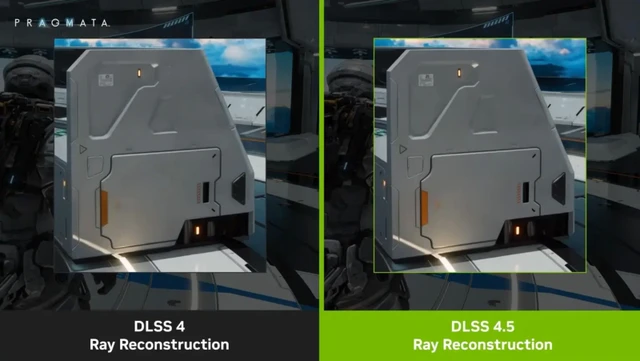 The Evolution of Rendering in DLSS 4.5